
Opinion
Owusu on Africa: The “values trap” is facing the United States once again in Africa – Washington needs to get it right

By Fidel Amakye Owusu
During my undergraduate studies, I enrolled in a course titled “US Foreign Policy in Africa.”
Essentially, the motivations driving US foreign policy were classified into three main categories: security, economy, and values. The primary objectives included safeguarding the nation against external threats, bolstering its economic prosperity through trade and industry, and promoting its core values, with democracy being paramount.
Unfortunately, African nations found themselves gaining independence during the height of the Cold War. Apart from Ethiopia, Liberia, and Egypt, the majority of African states secured their political autonomy during this era marked by ideological tension.
The competitive dynamics of the Cold War led both the United States and the Soviet Union (USSR) to seek proxies in Africa, where the continent’s abundant resources further fueled the rivalry.
This left the US in a challenging position. Ultimately, it placed greater importance on its own physical security and economic interests, sometimes compromising its core values in Africa. In its efforts to counter the influence of the USSR, Washington backed dictators, many of whom perpetrated severe human rights abuses against their own people.
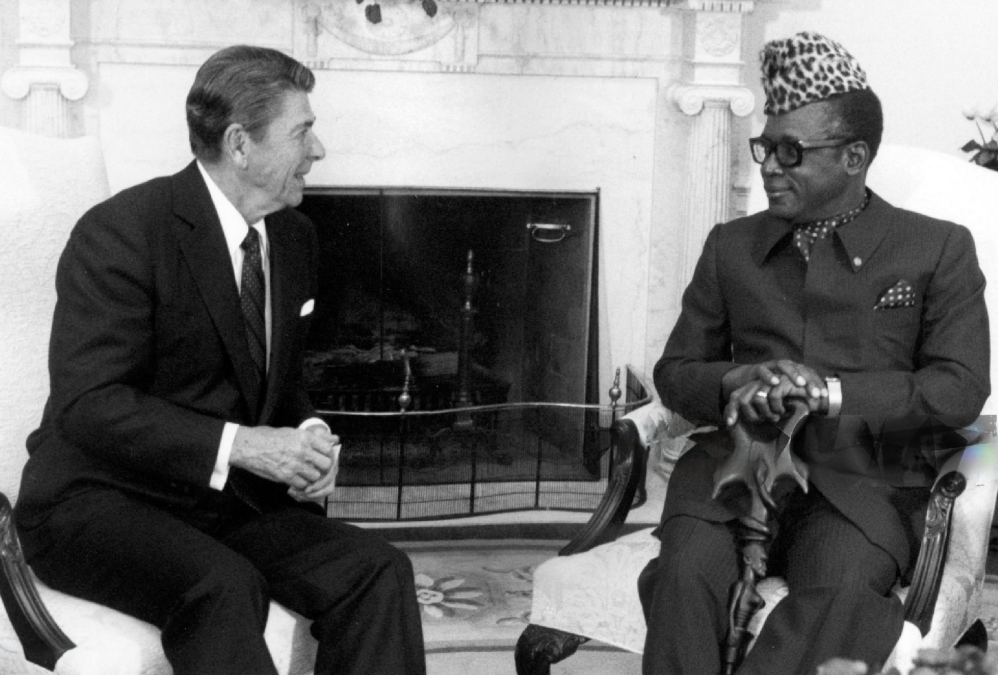
Leaders like Mobutu Sese Seko of Zaire (now the Democratic Republic of Congo) and Hissène Habré of Chad received support and tolerance from Washington. With the exception of the Jimmy Carter administration, several US governments extended support to apartheid South Africa during this period, prompting scrutiny of American principles.
From the perspective of policymakers in Washington, such decisions were justified as serving the national interest.
Following the conclusion of the Cold War, the United States reasserted the primacy of its values. Compliance with these principles became a prerequisite for receiving aid from Washington. African capitals responded positively to this shift, leading to the drafting of new constitutions and the initiation of liberal reforms.
Presently, a new era reminiscent of the Cold War is rapidly emerging in an increasingly multipolar world. Once again, Washington finds itself entangled in the dilemma of upholding its values, much like during the Cold War era. The question of whether the US should align with and support dictators to preserve its influence in Africa looms large as a significant challenge.
This dilemma is exacerbated by the resurgence of coups and the return of military rule. With Russia and other powers showing readiness to engage unconditionally with these authoritarian regimes, Washington faces a crucial decision that requires careful consideration.
The recent declaration by the Niger junta regarding what they perceive as the patronizing behavior of the US didn’t come as a surprise to me. Simply insisting on the restoration of democratic governance in the country is enough to be labeled as “condescending” by them. As I have mentioned before, any hint, whether implied or explicit, suggesting that the junta must relinquish power will be interpreted as an act of aggression. This is the true motive behind their statement.
My recommendation is for the US to remain steadfast in upholding its principles and avoid any appearance of double standards. Instead, it could foster closer ties with nations that are committed to upholding democratic values.
Fidel Amakye Owusu is an International Relations and Security Analyst. He is an Associate at the Conflict Research Consortium for Africa and has previously hosted an International Affairs program with the Ghana Broadcasting Corporation (GBC). He is passionate about Diplomacy and realizing Africa’s global potential and how the continent should be viewed as part of the global collective.
