
Opinion
Owusu on Africa: The Chad referendum – What it says about political systems in Francophone Africa

By Fidel Amakye Owusu
At the dawn of independence in Anglophone West Africa, the different states had to decide on the political systems they wanted.
While democracy was non-negotiable considering the emergence of several political parties before independence, the issue of whether states would adopt federal or unitary constitutions was put before the people.
Before this could be done, experts, led by experienced colonial officers had to provide reports on the pros and cons of federalism and unitarism and the conditions that necessitate each form of government.
In Nigeria, federalism was recommended. The two major factors were the sheer size of the country and the huge and diverse population it had.
Eventually, Nigerians adopted federalism. The opposite happened in Ghana – a relatively small country in land size and population.
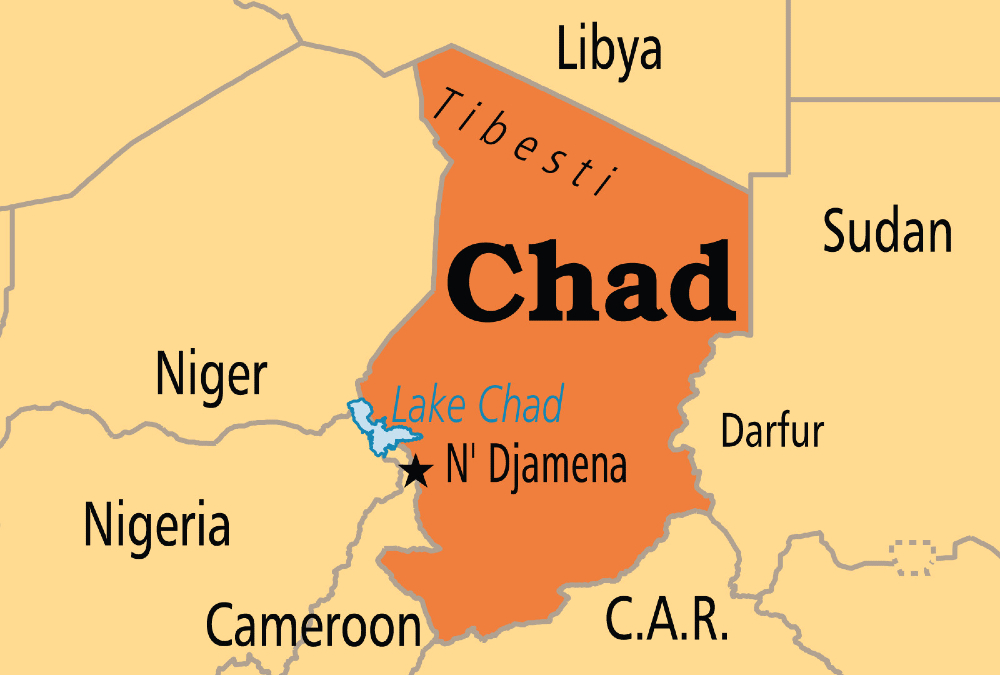
Early this week, on December 17, 2023, Chad held a referendum to decide on whether to adopt a new constitution or hold on to the suspended one under which the father of the current president governed before he died in 2021.
While the referendum had been characterized by overt manipulations, it was the removal of the question of federalism or unitarism that said a lot about Chad’s past and future.
How
Unlike the British, France had a more generic arrangement for its colonies after the Second World War. Almost all of them adopted a unitary system like France. Many other provisions in the French constitution were mimicked by or for the colonies. It is not surprising that almost all of them gained independence in 1960.
Despite Chad having some 200 ethnic groups and a land mass bigger than that of Nigeria (Chad is about 1.4 times bigger than Nigeria), the unitary system was adopted in 1960. Admittedly, the population of Chad is nowhere close to Nigeria’s, however, the diversity and expansive space should have been considered.
Similar situations occurred in Mali, Niger and others.
Although a survey suggested that the majority of Chadians preferred a federal system before this referendum, the transitional government ignored it. Many in the country like what they see in Nigeria.
It is also clear that the central government had gotten used to a strong central power similar to what Charles de Gaulle had in the late 1950s and 60s. The French leader had controlled the independence of Francophone Africa.
Many leaders in these countries do not want to share power with regional politicians that is backed by a constitution. They prefer a unitary state where all power remains centralized.
With the rapind changes happening across Africa, it would be better for leaders to remain open to different ways of doing things. The old ways are not helping.
Fidel Amakye Owusu is an International Relations and Security Analyst. He is an Associate at the Conflict Research Consortium for Africa and has previously hosted an International Affairs program with the Ghana Broadcasting Corporation (GBC). He is passionate about Diplomacy and realizing Africa’s global potential and how the continent should be viewed as part of the global collective.
