
Opinion
Malawi’s Election: A Lesson for Africa on the True Power of the People

By Farhia Noor
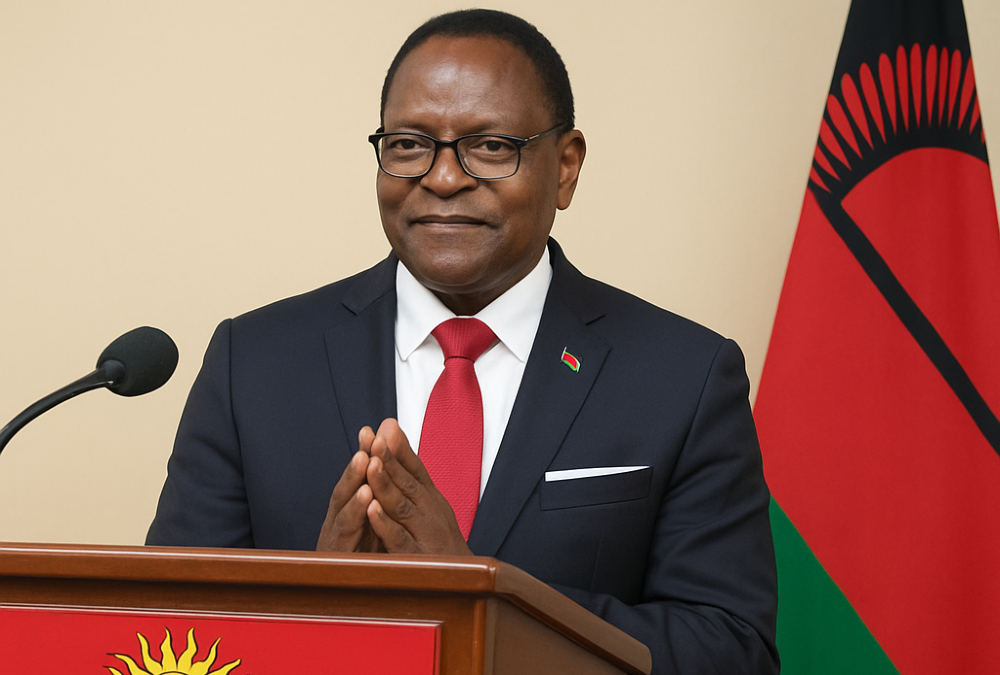
In a moment that reverberated far beyond its borders, Malawi’s President Lazarus Chakwera did something rare – and revolutionary – on the African political stage: he accepted electoral defeat with grace, dignity, and unwavering respect for democracy.
This was no ordinary concession. In a continent where incumbents have long treated re-election as a birthright, Chakwera’s decision to step aside reaffirmed a foundational truth too often forgotten: power belongs not to the palace, but to the people.
For decades, African politics has been shadowed by a grim axiom, famously articulated by Kenyan statesman Musalia Mudavadi: “It is very difficult on African soil to defeat a sitting president seeking a second term.” History has, unfortunately, borne this out.
From constitutional manipulations to state-sponsored intimidation, the machinery of incumbency has frequently turned elections into theater – carefully choreographed performances with predetermined outcomes.
But Malawi has just shattered that script.
A Continental Beacon of Democratic Renewal
Chakwera’s peaceful acceptance of defeat is more than a national triumph – it is a continental beacon. If democracy can prevail in Lilongwe, it can take root in Lagos.
If the will of voters can override the weight of incumbency in Malawi, then hope is alive in Nairobi, Harare, Kinshasa, and Lusaka.
This moment is not merely symbolic; it is strategic. It sends a clear signal to autocrats and would-be authoritarians: the era of treating public office as personal property is ending.
Africa’s greatest asset – its youth – must seize this inflection point. With over 60 percent of the continent under the age of 25, young Africans are not just the leaders of tomorrow; they are the voters, activists, and digital citizens of today.
They must believe, and act on the belief, that their voices shape destinies.
Equally critical is the role of the African diaspora. Armed with capital, global networks, and an unshakable pride in their heritage, diasporans must champion transparency, demand accountability, and invest not just in economies, but in democratic institutions.
Leadership Defined by Letting Go
As the Ashanti proverb wisely reminds us: “When the drumbeat changes, the dancers must also change.” The drumbeat across Africa is shifting – from silence to protest, from apathy to engagement, from resignation to expectation.
Leaders must now learn the new rhythm or step off the stage.
Chakwera’s humility is not weakness. It is the highest form of strength.
True leadership isn’t measured by how tightly one clings to power, but by how willingly one yields it when the people speak.
Malawi’s example proves that real democracy is possible in Africa – not as an imported ideal, but as a homegrown reality. But this dawn will only brighten if citizens everywhere rise to protect it.
The lesson is clear: Power belongs to the people. And Africa must never forget it.
Farhia Noor is a seasoned business consultant based in Dar es Salaam, Tanzania. With a proven track record in developing enterprises and executing turnkey projects across both government and private sectors, she brings deep expertise to the table. Farhia is also a committed advocate for community-led development and is passionate about advancing sustainable, intra-African growth.
