
Opinion
Malawi democracy is more mature than it is given credit for
By Jimmy Kainja
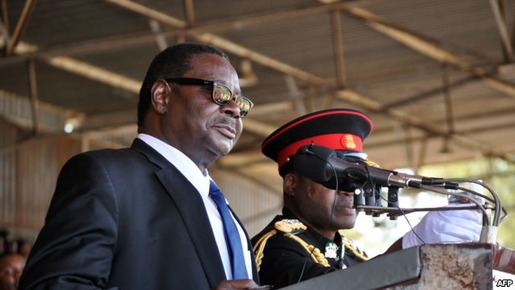
Malawian President Peter Mutharika addresses the nation shortly after he was sworn into office, June 2, 2014. PHOTO/AFP
Slightly over 20 years ago, on June 14 1993, the citizens of Malawi voted in a referendum to decide if they wanted to continue with one-party rule or adopt multiparty democracy. Sixty-four percent of Malawians voted against a one-party system. The referendum thus ended a ban which had been in place for over 30 years, on all political opposition in the country.
Prior to this referendum, the then ruling party Malawi Congress Party (MCP) was the only legitimate political grouping.
By opting for multiparty democracy, Malawian voters not only rejected the one-party system but departed from a certain ideology. Malawi now had a population that was no longer, “united under one ideology.” And when people are ideologically divided, tolerance provides key social threads that knit the societal fabric together.
This past weekend marked 21 years of multiparty democracy in the country. A number of social, economic and political factors indicate that Malawi has some way to go before it can become a truly tolerant society. Like all societies, Malawi has a historical context in which these issues must be understood.
Malawi attained democracy on the backdrop of 71 years of colonialism followed by 30 years of authoritarian rule. These regimes made the people of Malawi inward looking: any concept, culture and way of living deemed unfamiliar to “Malawian culture” was to be rejected and avoided at all costs.
This is what sustains oppressive regimes. It is a huge ask that Malawians become a tolerant society overnight. However, a sober look at the last two decades of the country’s democracy shows it is more mature than most critics would give it credit for.
Malawi has faced challenges that have tested its strength, maturity and resolve including:
