
Opinion
Kenyatta wants to be crowned African single market champion before he leaves office
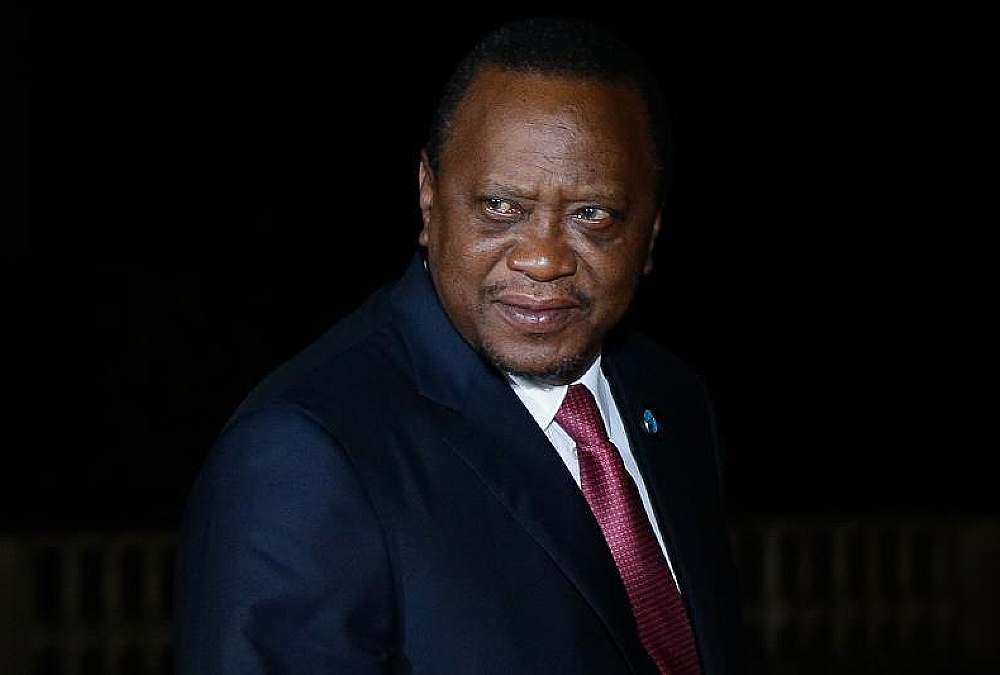
With less than a year to go to the end of his term, Kenyan president Uhuru Kenyatta is worrying about the legacy he will leave behind him. Well away from the battles being fought over his succession, the Kenyan president is working to build a legend around himself as the father of African free trade.
Uhuru Kenyatta, who was a businessman before he was a politician, is using all the power at his disposal to promote free trade in Africa. The Kenyan president will hand over power in August 2022 and plans to leave office shrouded in glory as the prime mover in the creation of the African common market. To help him build his future legend, he cannot count on the African Union (AU). The AU’s single market project, referred to as the African Continental Free Trade Area (AfCFTA), is a long way from becoming reality. On 26 April, the pan-African body inaugurated the Dispute Settlement Body, which it presented as the cornerstone of the future free trade area, but its plans to reduce customs tariffs by 90 percent in what it bills as the first stage of development of the AfCFTA are due to be staggered over 10 years.
Kenyatta is counting on East Africa to help him establish himself as Africa’s free trade champion. He has mobilized part of the Kenyan government and his own business supporters to work with the presidency to make maximum use of regional organizations to support Kenya’s trade diplomacy. The start of the term of Kenya’s Peter Mathuki as secretary general of the East African Community (EAC) on 23 April brought the bloc under the influence of the Kenyan presidency. Mathuki is a member of the board of the Kenya Investment Authority.
The East African Business Council (EABC), which is the private sector equivalent of the EAC, is already headed by Nicholas Nesbitt, another Kenyan who is close to Kenyatta. Nesbitt, a former general manager of IBM East Africa who has since become an adviser to the Boston Consulting Group (BCG), is also chairman of the Kenya Private Sector Alliance (KEPSA). As such, he is in charge of organizing the business side of Kenyatta’s official visits abroad.
Like Mathuki, Nesbitt works directly with Adan Mohamed, the cabinet secretary for the East African community and regional development, who is, like them, a member of Kenyatta’s inner circle. A former managing director of Barclays Bank in East and West Africa, he joined the government immediately after Kenyatta’s election in 2013 as cabinet secretary for Industrialization and Enterprise Development. As head of the EAC’s council of ministers, he oversaw Mathuki’s induction on 23 April. Mohamed is Kenyatta’s leading strategist in his battle against customs tariffs in the region, but he is rarely sent abroad as an emissary, operating mainly from Nairobi and, occasionally, from Arusha.
Tanzanian and Ugandan aid sought
The Kenyan head of state has been sending the stars of his government to campaign on his behalf outside the country. On 10 April, he sent Amina Mohamed, his unsuccessful choice as candidate to be head of the World Trade Organization, to Dar es-Salaam to try to win the support of new Tanzanian President Samia Suluhu Hassan. Although she has kept her almost honorary title as cabinet secretary for sport, Mohamed, who was trade cabinet secretary during Kenyatta’s first term in office, is one of the head of state’s leading business ambassadors. She invited Suluhu Hassan to Nairobi and promised that the Kenyan president would visit Tanzania shortly.
Kenyatta has taken full advantage of the opening created by the death of John Magufuli in mid-March and the investiture a few days later of his vice president. Suluhu Hassan is already trying to open up the ruling Chama cha Mapinduzi (CCM) party to the outside world and Kenyatta has worked to negotiate reductions in customs tariffs with the new Tanzanian foreign and trade ministers. Protectionism increased steadily during the Magafuli era.
Trade cabinet secretary Betty Maina has been given the job of negotiating with Uganda. Maina, a former head of the Kenya Association of Manufacturers, and her delegation, spent a week as guests of President Yoweri Museveni and his ministers in mid-April. The aim of the visit was to end the trade war between both countries.
The operation bore fruit. Maina got Uganda to lower customs duties on some Kenyan products, including alcoholic drinks. In return, Kenya has agreed to regularize imports of Ugandan sugar, which has been the main source of dispute between the two countries. This measure will mostly benefit the Madhavani Group, Uganda’s leading sugar producer, and the business dynasty which runs it. In July 2020, Kenya blocked imports, claiming that the sugar which was being imported did not always come from Uganda.
Africa Intelligence © Copyright 2021
