
A Diaspora View of Africa
Is Democracy and Governance Waning in Africa?
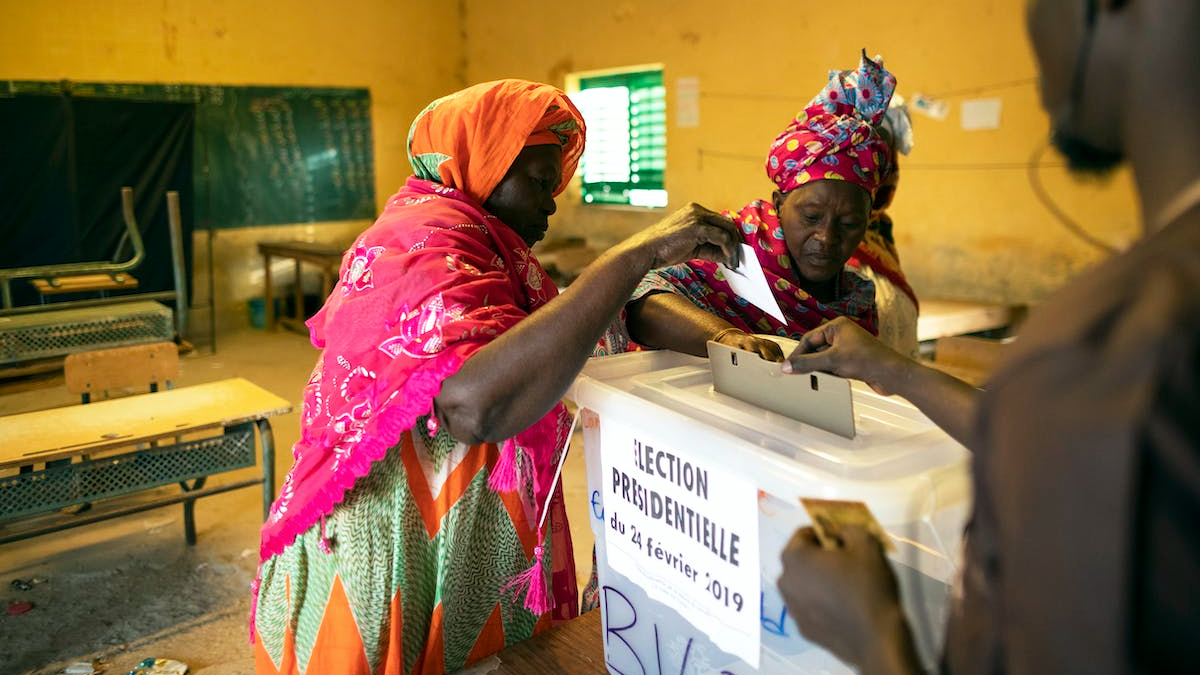

Freedom House, in its Freedom in the World 2023 report, states that democracy and governance declined around the world for the 17th consecutive year but that the pace of that decline has slowed and we could be approaching a “turning point.”
The rise of authoritarianism and the erosion of democracy have been among the most notable global trends of the past decade, the report said, suggesting that while those trends continued in 2022, there is cause for optimism. However, does that hold true for African countries as well?
According to the Freedom in the World 2023 report, democracy and governance in Africa is a mixed bag:
“Chronic problems such as corruption and misgovernance, combined with the economic impacts of the COVID-19 pandemic and the war in Ukraine, have left African states more vulnerable to irregular seizures of power by military or executive officials. Despite these threats, however, several countries held free and fair elections that ushered in new governments and reinforced democratic institutions,” the report stated.
The report cited the 2022 Kenyan election as a point of progress, even though the result had to be affirmed by the Supreme Court. Lesotho’s status improved from partly free to free
due to the formation of a new government following competitive parliamentary elections, though
the country continued to face serious security and governance challenges.
However, two recent coups in Burkina Faso were seen as undermining gains made in the 2014 transition, causing the country to now be rated not free. In total, the report said that 46% of African countries, containing 50% of the continent’s population, lived under governments rated as not free. Another 37% lived in countries that were only partly free with 43% of the continent’s population. Only 17% of the countries, representing just 7% of African people, were rated as free.
So, should we expect that the state of democracy and governance in Africa will get better in the near term? The Freedom House report questions hope of progress under current circumstances due to powerful outside influences.
“The leaders of China, Russia, and other dictatorships have succeeded in shifting global incentives, jeopardizing the consensus that democracy is the only viable path to prosperity and security while encouraging more authoritarian approaches to governance,” the report says.
The authoritarian examples provided by these countries, the report said, seem to have led too many African governments to engage in authoritarian behavior in which human rights abuses and often violent behavior by police and security forces, coupled with economic deprivation, have led to an increase in Africans joining militant extremist groups.
According to the United Nations Development Programme (UNDP) report called Journey to Extremism in Africa: Pathways to Recruitment and Disengagement, while deaths worldwide from terrorism have declined over the past five years, attacks in sub-Saharan Africa have more than doubled since 2016, and in 2021 they comprised almost half of the global total. This situation is most acute in the continent’s Sahel region, but it also has affected Mozambique and the Democratic Republic of the Congo.
“Sub-Saharan Africa has become the new global epicenter of violent extremism with 48% of global terrorism deaths in 2021. This … threatens to reverse hard-won development gains for generations to come,” said Achim Steiner, the UNDP administrator.
Ambassador Charles Ray, in an article for the Foreign Policy Research Institute last year, pointed out that when the European colonial powers ended their rule over Africa, they were replaced by local governments lacking effective governing institutions or true national identities.
Two years ago, the Africa Center for Strategic Studies reported that authoritarian governments in Africa brought a shadow on the continent’s prospects:
- Three-quarters of the African countries facing armed conflict (12 out of 16) had either autocratic or semi-authoritarian governments.
- Of the 12 armed conflicts with authoritarian-leaning governments, 8 were political conflicts or civil wars.
- The four democratizing governments that were experiencing armed conflict, by contrast, were all facing militant Islamist insurgencies.
- Armed conflicts in Africa’s authoritarian-leaning countries had been ongoing for roughly twice as long, on average, as those in democratizing countries.
- 7 of the 9 autocracies facing armed conflict had leaders who had come to power via a coup or prolonged their time in office by evading term limits.
- 8 of the 10 countries of origin for Africa’s record level of forced displacement were autocratic or semi-authoritarian.
- 9 of the 10 African countries facing the most acute food insecurity were autocratic or semi-authoritarian.
- Overall, 9 of Africa’s 16 autocracies — 56 percent— were experiencing armed conflict.
- None of Africa’s democracies, by comparison, were in conflict.
The Rise of Authoritarianism in Africa
The tendency for African governments to drift toward authoritarianism must be placed in a historical context, as former Ambassador Charles Ray wrote in an article for the Foreign Policy Research Institute last year. He pointed out that when the European colonial powers ended their rule over Africa, they were replaced by local governments lacking effective governing institutions or true national identities.
While the post-independence leaders often adopted the putative democratic constitutions of their colonizers, the challenges of state-building caused many of them to quickly turn to authoritarian rule, he stated. This was caused in part by the patterns of governing they had inherited from colonial rule; the influence of the ideological conflict of the Cold War, when many countries felt abandoned by the West and turned to the USSR and China; and the fact that in many of these new countries, the military was the only institution with any leadership or organizational capacity.
“In the 1990s, with the end of the Cold War and the demise of the Soviet Union, Africa saw a wave of democratization. This golden age of constitutional rule, rule of law, and peaceful transfer of power, however, did not last long. Many of the democratically elected leaders attempted to establish family dynasties, ethnic or clan-based rule, or, in many cases, direct rule by the military. These rulers have learned how to use the ‘democratic’ process to subvert truly representative government—curtailing freedom of speech and association, muzzling the independent media, and violating human rights with impunity,” Ray wrote.
Nevertheless, Aloysius Uche Ordu, Senior Fellow, and Director of the Africa Growth Initiative, Global Economy and Development, at the Brookings Institution expressed optimism for the continent in the 2023 edition of the Foresight Africa report. He cited African governments’ resilience in the face of challenges such as COVID, the Ukraine war, strained global supply chains, and rising global inflation rates.
“This optimism is buoyed by several factors: an enhanced collaboration that culminated in the operationalization of the African Continental Free Trade Area (AfCFTA); the coming together of African institutions (the African Union, Africa CDC, United Nations Economic Commission for Africa, African Export-Import Bank, and others) to secure funding for vaccines; and the region’s rapid adoption of technological innovations to address practical problems — as evidenced by the innovative digital services that boomed during the pandemic,” Ordu writes.
Foresight Africa shares an imperative with the Habari Network, which is that neither of us shies away from presenting the facts, however problematic they may be, but we both strive to put those facts in context. By understanding not just that something is happening but examining why it is taking place, one can reasonably envision proposed solutions to problems and assess the continent’s prospects for democracy and governance in a light that is not as harsh as it may seem at first glance.
Initiatives such as Prosper Africa depend on a clear-eyed view of Africa to inform U.S. corporations interested in commercial operations on the continent. The Prosper Africa concept is to offer a concrete commercial opportunity that is mutually beneficial to the country and its citizens providing certain regulatory and administrative reforms are put in place. Yet even such a proposal would not be thinkable if there is no certainty that the rule of law and good governance are possible in the short run and sustainable in the long term.
In this blog post, I have presented both troubling and optimistic views of democracy and governance in Africa. Identifying the places where foreign investment can succeed provides good examples for other African countries. Businesses coming from countries with a higher tolerance for risk than American companies have succeeded. It isn’t just the “low-hanging fruit” that promises profits. Africa offers far too much opportunity to stand on the sidelines of investment because of issues with democracy and governance. Selecting the right investment destination based on comprehensive research will yield positive results overall. European and Asian investors have shown that this is true.
Are democracy and governance waning in Africa? In some places it is, but democracy and governance yet live on the continent. Find where it flourishes and where it can develop with encouragement, and you can profit while helping people to thrive where you do business.
As former Ambassador Andrew Young often has said, “You can do well by doing good.”
Gregory Simpkins, a longtime specialist in African policy development, is the Principal of 21st Century Solutions. He consults with organizations on African policy issues generally, especially in relating to the U.S. Government. He also serves as Managing Director for the Morganthau Stirling consulting firm, where he oversees program development and implementation. He further acts as a consultant to the African Merchants Association, where he advises the Association in its efforts to stimulate an increase in trade between several hundred African Diaspora small and medium enterprises and their African partners.
