
Opinion
How foreign aid has failed Haiti
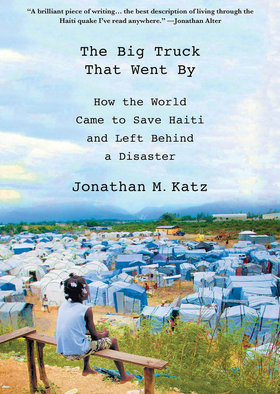
The billions promised to Haiti also included significant amounts in debt relief. But it’s strange to count this as “aid,” Katz argues. After all, for people living in rubble and scrounging for food, it’s meaningless to hear that their government doesn’t have to pay back money it didn’t have in the first place.
When countries do give money, much of it goes to international aid organizations whose spending habits are difficult to trace and often questionable. Such groups frequently spend extraordinary amounts on their own administrative costs, money that doesn’t get anywhere near suffering beneficiaries – in this case, the people of Haiti.
Huge chunks of aid funds are spent on on goods ranging from SUVs to personal security guards to luxury hotel suites, not to mention many, many plane tickets, because, after all, aid workers are a peripatetic bunch. Many spend only a few weeks in a disaster zone, and the constant change in personnel means lots of time is wasted getting newcomers up to speed.
Even more direct government spending yielded some gems, Katz found. Why did the earthquake prompt the U.S. Coast Guard to spend US$4,462 on a deep-fat fryer, Katz asks, noting that the figure is years of income for the typical Haitian. Then there was the US$18,000 contract the U.S. Navy signed for a jungle gym from a Georgia company – which it could have bought online for one-third that amount.
Many of the contracts signed post-quake were with non-Haitian companies, which is understandable to a degree considering the lack of capacity in the recently disaster struck country. But, Katz argues, “it’s misleading to call such spending ‘money for Haiti,’ especially when it gives the impression that any Haitian could have misappropriated or even profited from it. If anything, much of the money was a stimulus program for the donor countries themselves.”
But what to do with your US$20? Give it to the people of Haiti themselves? Katz, in effect, argues yes. Do research, find groups that have long-standing experience in Haiti with people who speak the local languages and actually understand the situation on the ground.
Katz also questions the conventional wisdom that the Haitian government is too corrupt to be entrusted with more of the money. He argues that the Haitian government has been so left out of the loop, and received so little direct aid, that it has not had a chance to prove its worth.
The Big Truck That Went By is hardly a statistical analysis or a mere policy book. It probably could have devoted a hundred more pages to the question of aid and remained riveting. Instead, Katz elegantly uses personal anecdotes and the stories of Haitians whose lives were turned upside down to paint a portrait of a struggling yet beguiling country.
