
Opinion
From Resource Supplier to Value Creator: Africa’s Untapped Economic Destiny

By Kelly Mua Kingsly
Africa is the silent engine of the global economy – its soil rich with the very minerals that power electric vehicles, its sun and wind capable of lighting continents, and its oil and gas still fuelling industries from Berlin to Beijing. Yet, despite supplying the raw materials for global prosperity, Africa remains economically marginalized, its people caught in cycles of poverty, underemployment, and unfulfilled potential.
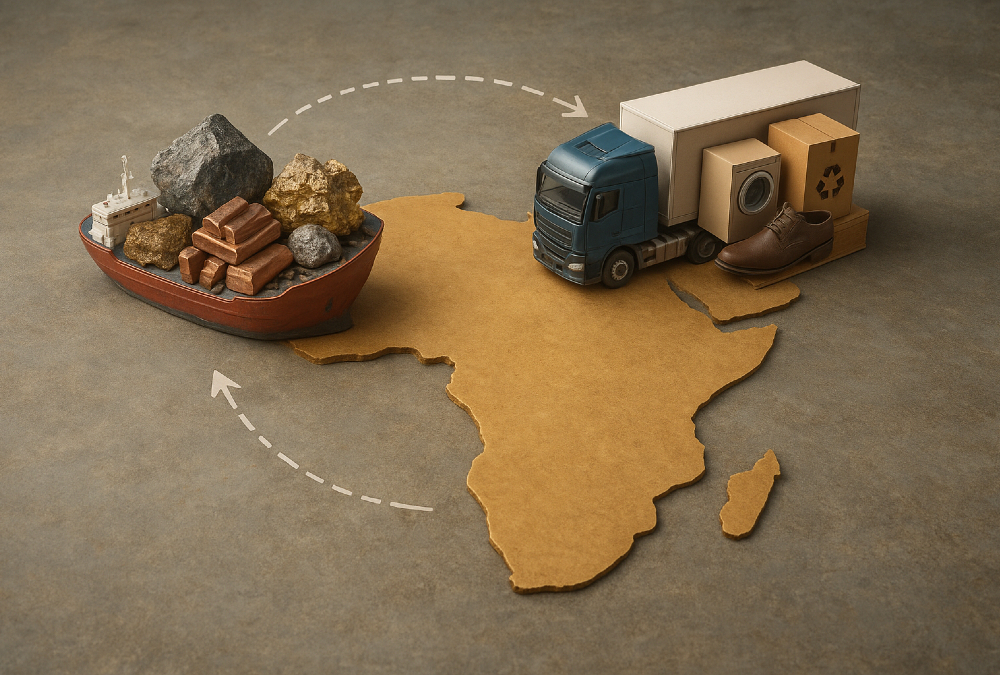
This is not a story of scarcity, but of systemic extraction. While the world races toward a green and digital future, Africa continues to export raw commodities – cobalt, lithium, copper, oil – and import back finished goods at a fraction of the value those resources could generate at home.
The result? A continent that fuels global growth but captures little of its rewards.
The Stark Economic Disparity
By 2026, Africa’s combined GDP is projected to reach US$3.32 trillion – a figure that, while reflecting steady progress, pales in comparison to global economic giants: the United States (US$31.8 trillion), China (US$20.7 trillion), Germany (US$4.7 trillion), and even India (US$4.2 trillion). Africa’s economy remains less than one-tenth the size of America’s, despite holding a disproportionate share of the world’s critical resources.
Worse still, advanced economies are expected to grow by just 1.5 percent in the coming years – growth often underpinned by African inputs, yet rarely reciprocated with equitable investment or technology transfer.
Five Hard Truths About Africa’s Place in the Global Economy
- Africa supplies the world’s energy and critical minerals – from cobalt in the Democratic Republic of Congo to lithium in Zimbabwe and vast offshore gas reserves in Mozambique and Senegal.
- It remains the least industrialized region globally, with manufacturing contributing less than 10 percent to GDP in most countries.
- It has the world’s youngest population, with over 60 percent under the age of 25 – yet youth unemployment remains among the highest globally.
- Its growth starts from an extremely low base, meaning even double-digit GDP increases often fail to translate into meaningful improvements in living standards.
- True wealth departs before transformation begins – value is added elsewhere, jobs are created overseas, and profits flow out of the continent.
The consequences are stark: chronic underinvestment, crumbling infrastructure, limited skills development, and a persistent trade imbalance that locks African economies into dependency rather than dynamism.
Beyond Extraction: Aligning Global Goals with African Realities
The Sustainable Development Goals (SDGs) offer a roadmap – but only if implemented with genuine partnership and accountability:
- SDG 7 (Affordable and Clean Energy): Africa must harness its own renewable potential – not just export sun and wind as raw potential, but build grids, storage, and local capacity to power homes, factories, and innovation.
- SDG 8 (Decent Work and Economic Growth): Fair trade, local content policies, and investment in small and medium enterprises can turn resource wealth into dignified employment.
- SDG 9 (Industry, Innovation, and Infrastructure): Industrialization isn’t optional – it’s existential. Processing minerals locally, developing special economic zones, and investing in digital infrastructure are non-negotiable steps.
- SDG 10 (Reduced Inequalities): A just energy transition must include fair pricing, equitable royalties, and community ownership models that ensure Africans benefit from their own assets.
- SDG 17 (Partnerships for the Goals): True collaboration means moving beyond aid to co-investment, technology sharing, and transparent contracts that prioritize African development over foreign extraction.
The Path Forward: From Supplier to Sovereign Value Creator
Africa holds the keys to the world’s clean, digital, and secure future. But keys are only useful if the door opens inward.
The continent must shift from being a passive supplier to an active architect of its own industrial destiny.
This requires bold policy reforms, regional integration (through the African Continental Free Trade Area, or AfCFTA), strategic public-private partnerships, and – critically – a reimagining of global trade rules that have long favored incumbents over emerging economies.
The world needs Africa more than ever. The question is: will Africa finally be allowed – and empowered – to benefit from its own abundance?
Kelly Mua Kingsly brings extensive expertise in public finance and strategic leadership. He currently serves as the Head of Finance Operations at the Ministry of Finance of Cameroon, while also holding a dual role as Project Finance Manager at the Ministry of Economy, Planning, and Regional Development, and Censor at the Central Bank of Central African States (BEAC). He has previously served as Chairperson of the Board of the African Trade & Investment Development Insurance (ATIDI) and as a Director on the Board of Quantum Blockchain Capital. Driven by a strong passion for Africa’s economic transformation, he is deeply committed to advancing the continent’s path toward industrialization.
