
Opinion
Forget the Next Podcast: Why Africa Needs More Agro-Processing Plants

By Curtis Akunfu
The future of Africa isn’t being streamed – it’s being shaped. Not in soundbites, but in supply chains. Not in viral quotes, but in value addition.
Across the continent, a powerful narrative has taken hold: Africa’s time has come. We hear it on podcasts, see it in branded merchandise, and read it in influencer captions.
But while the message is inspiring, the reality remains stubbornly unchanged. Africa’s true transformation won’t come from content.
It will come from capacity – specifically, from agro-processing.
The Content Delusion vs. the Industrial Imperative
There’s no shortage of African voices calling for change. From Lagos to Nairobi, young creatives and motivational speakers dominate social media, urging a continent to rise.
Yet too often, these calls are delivered from studios equipped with imported microphones, uploaded to cloud servers abroad, and monetized on platforms headquartered in Silicon Valley.
Meanwhile, Africa continues to export raw materials – cocoa, cashews, cotton, shea, maize, sesame – and then import them back as finished goods: chocolate, clothing, cosmetics, cooking oil, and packaged juice. This isn’t trade. It’s a leakage of wealth, jobs, and sovereignty.
Consider the facts:
- Africa produces 60 percent of the world’s cashews, yet 98 percent are exported raw, with processing happening in Vietnam and India.
- The continent grows 70 percent of global cocoa, but processes less than 16 percent into intermediate or finished products.
- Raw cotton is shipped to Asia, turned into fabric, and sold back to Africans as expensive imported garments.
This cycle isn’t just inefficient – it’s extractive. We’re exporting employment and importing dependency.
The Value Chain We’re Losing
Every time Africa exports unprocessed agricultural goods, we surrender the most valuable part of the value chain: transformation. That’s where the jobs are.
That’s where the innovation happens. That’s where profits accumulate.
The irony? The very products made from African raw materials – refined, branded, and repackaged – return to African markets at a premium.
A bar of chocolate made from Ghanaian cocoa, processed in Europe, sells for five times the price of the beans it came from. And the farmer? Often left out of the equation entirely.
Until we own the means of processing, not just production, economic sovereignty will remain a slogan – not a system.
The Proof Is in the Processing
Look at Vietnam: once a minor player in cashews, it’s now the world’s largest exporter of cashew kernels – not because of better soil, but because of better infrastructure and policy. They invested in processing plants, not podcasts.
India transformed its agro-processing sector into a global force, turning smallholder farms into suppliers for international food and cosmetics brands. South Korea, Germany, and China didn’t rise on motivational speeches – they rose on manufacturing, scale, and strategic industrial policy.
Yet Africa contributes less than 3 percent of global manufacturing output. In a world where industrialization drives development, that’s not just a gap – it’s a crisis.
The Call to Build – Not Broadcast
You can’t podcast your way into economic independence. You can’t TikTok your way to trade balance.
And you can’t “build in public” if you’re not building anything at all. Real change starts on the ground – literally.
It starts with:
- A mango drying facility in Burkina Faso that turns seasonal harvests into year-round exports.
- A rice milling plant in Sierra Leone that keeps value – and jobs – local.
- A groundnut oil press in Senegal that transforms raw nuts into premium, export-ready products.
- A cotton-to-cloth factory in Ethiopia that closes the loop from farm to fashion.
- A shea butter and cosmetics hub in Ghana that turns raw shea into high-margin skincare sold globally.
These aren’t pipe dreams. They’re possibilities – waiting for entrepreneurs, investors, and policymakers to act.
The New Narrative: From Talk to Transformation
Africa doesn’t need fewer dreamers. It needs more doers. More builders. More industrialists.
The next generation of African leaders shouldn’t just be content creators – they should be value creators. The most powerful form of storytelling isn’t a monologue on a podcast.
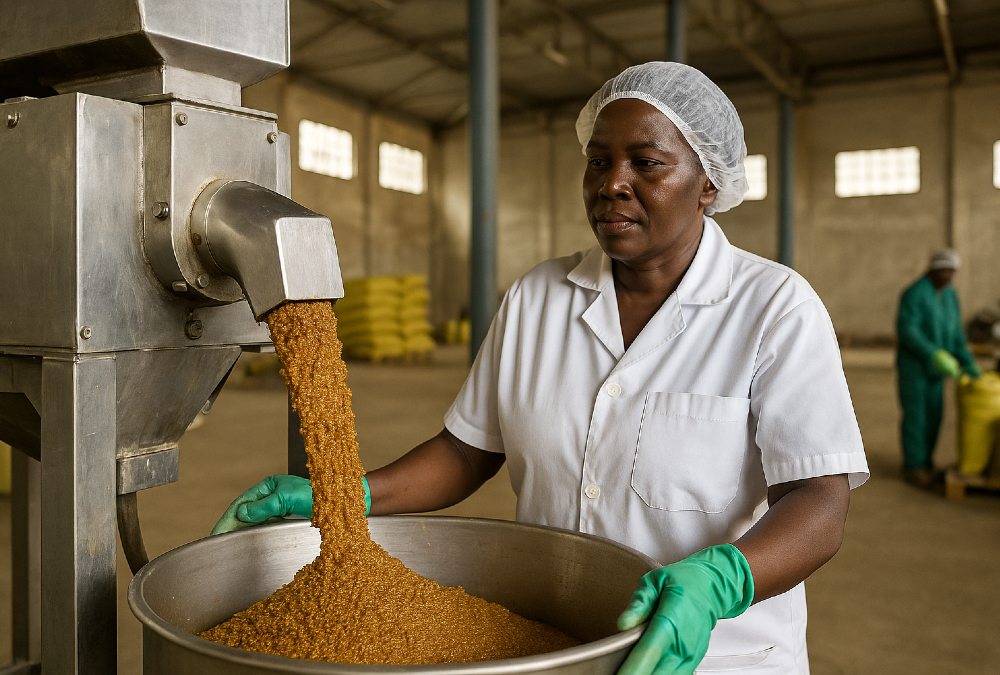
It’s a factory humming at dawn. It’s a shipment of African-made chocolate leaving port for Europe. It’s a woman in a rural village earning a living wage at a processing plant that didn’t exist a year ago.
Ownership of the narrative is powerful. But ownership of the process is transformative.
So if you want to change Africa – stop talking. Start processing.
Because the revolution won’t be televised. It will be agro-processed.
Curtis Akunfu is the Managing Director of Duapa Agri, a vertically integrated agribusiness operating across West and East Africa. With nearly 20 years of leadership in Africa’s agri-commodities sector, he also serves as a Global Council Member and Chair of the Agricultural Finance and Investment Working Group at the World Agriculture Forum.
