
Opinion
Enhanced AGOA will benefit both the U.S. and Africa’s economies
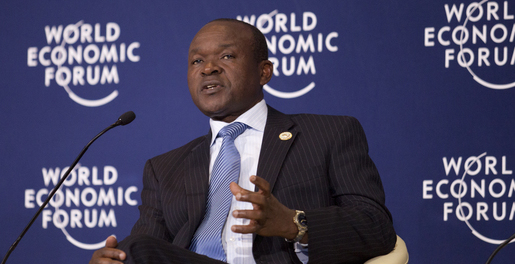
By Erastus Mwencha
A few days ago, in meetings with both members of the United States Congress and the Obama Administration, each of the officials reaffirmed their commitment not just to a timely renewal of the African Growth and Opportunities Act(AGOA); everyone was much keener on a more progressive partnership between the United States and the 54 states that make up the African Union (AU).
In these high level discussions, I conveyed the appreciation of the African Heads of State for the commitment to Africa as expressed by President Obama during the U.S. – Africa Summit of August 2014. Following this, in their Decision (AU/555/XXIV), the Assembly of African Heads of State called upon the US Congress to preserve AGOA as the cornerstone of Africa-US trade and investment partnership by ensuring the timely reauthorization of AGOA co-terminus with the Third Country Fabric Provision.
Essentially, AGOA can be even more effective as a developmental tool if the program is renewed within the first quarter of 2015. Short of this, textile executives will cancel their orders with African garment manufacturers – leading to huge losses that Lesotho, Mauritius and Kenya can barely afford. The adverse consequences of these losses are even worse for AGOA employees.
Like Congress and the Obama Administration, we as the African Union believe that enhanced trade and investment between the United States and Africa will improve not only Africa’s economy but also America’s economy, national security and standing in the world – charting the course to expand American exports and create good jobs for Africa and America.
Invariably, while AGOA has led to some economic development in Africa, the program has also fallen short of its original goal, with oil producing countries and textile/garment exporters garnering more from AGOA than most beneficiaries. This was what prompted the African Union’s AGOA 2.0. white paper. Written in line with Ambassador Michael Froman’s address to the 2013 AGOA Forum in Addis Ababa, we hoped that by now, with less than six months before AGOA expires, the United States Congress would have renewed AGOA and its third country fabric provision for a long enough period to encourage investment in Africa’s industry.
Additionally, on top of recommending that AGOA’s rules of origin be updated to help effectively insert Africa into global supply chains, we suggested that AGOA’s eligibility criteria and review processes be amended to provide opportunities for AU member states. This would enhance Africa’s continental integration and structural transformation agenda. Then, to ensure that more African countries could export their comparative advantage commodities, we urged that those tariff rate quota (TRQ) products currently excluded from AGOA be admissible into the United States under the program’s duty-free, quota-free provisions.
To the latter point, some AGOA beneficiaries have whispered to me that although they understand how including certain products in AGOA could either slow up the process of expedited renewal, or lead to more questions around the financing of Africa’s market access provisions, the reality is also that until countries like Ghana, Ivory Coast and Nigeria can add value to their cocoa product, they will not benefit as much as those who sell chocolate to the United States. If sugar and dairy tariff rate quotas are lifted so that African countries can add more than 10 percent sugar or milk to cocoa, diversification of exports can happen much faster in these and in more countries.
There’s also no doubt that those countries that have the capacity to export their groundnuts, cotton, leaf tobacco and sugar would relish the opportunity to do more business with the United States. Thus, in spite of what is currently happening in Congress, and in the American political system, Congress has this narrow chance within its power to provide AGOA beneficiaries with the additional economic stimulus via agriculture.
