
Opinion
Deportation of Dominicans of Haitian descent from Dominican Republic is ‘akin to apartheid’
By Raymond Joseph
Officials in the Dominican Republic, are poised to deport thousands of Haitian migrants and Dominicans of Haitian descent to Haiti in an ethnic-cleansing folly with wide-range repercussions.
The Dominican officials, who fancy their country as being white, are determined to rid the Dominican Republic of as many people as possible who “look Haitian,” meaning too black for their taste. (Although of fairer skin than Haitians, the overwhelming majority of Dominicans would be classified as black in the United States.)
The latest crisis began in September 2013, after the highest Dominican court issued a ruling stripping Dominican-born Haitians of their citizenship retroactive to 1929.
I would be among the thousands of “denationalized” Dominican-born Haitians if I had accepted an offer of Dominican citizenship made to me in 1976 by the Dominican Consul General in New York. I had gained notoriety when my byline appeared in The Wall Street Journal on articles about corruption in the Dominican government. I thanked the consul and told him I had chosen Haitian nationality at age 18. Although I was born in 1931 near San Pedro de Macoris, I was never issued a Dominican birth certificate. When my parents fled after the 1937 massacre, I got my birth certificate in Haiti.
By mentioning 1929, the court pointed fingers at the United States. It was in the 1920s that Haitian workers were trucked to the Dominican Republic by American sugar interests to do the back-breaking job in the sugar cane fields. The United States occupied Haiti from 1915 to 1934 and the Dominican Republic from 1916 to 1924. That facilitated the informal human trade without documentation.
At a time that sugar fetched a high price internationally, the development of the Dominican sugar industry depended on cheap laborers from Haiti who were housed and guarded in the bateyes – those makeshift camps with rudimentary facilities. It was akin to slave labor.
Fluctuation in the price of sugar dictated the treatment of Haitians. During the depression of the 1930s, the price of sugar tanked and Haitians became expendable. So expendable that the then president of the Dominican Republic, dictator Rafael Leonidas Trujillo ordered the massacre of 20,000 to 30,000 in October 1937.
That “Caribbean Holocaust” had little echo in the world, as if to say “Black Lives Didn’t Matter.”
Trujillo remained an ally of the United States, which provided his country a substantial sugar quota after 1934. In the 1950s, when the price of sugar rebounded, Trujillo signed a pact with Haitian President Paul Magloire for Haitian laborers. This practice continued during the nearly 30-year dictatorships of the Duvaliers. Haitian laborers were sold for a fee.
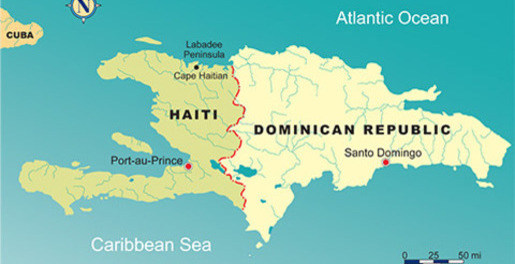
Obviously, the presence of so many Haitians and Dominicans of Haitian descent in the Dominican Republic resulted from economic interests on both sides of the border of Hispaniola – the island shared by the two nations.
