
Opinion
Deportation of Dominicans of Haitian descent from Dominican Republic is ‘akin to apartheid’
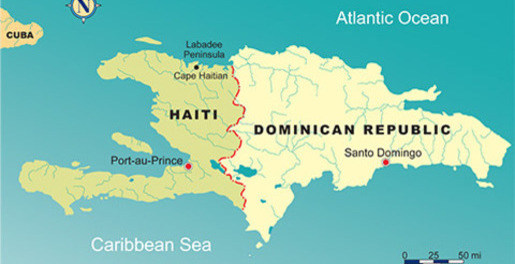
But the sugar industry does not need them anymore. From 1928 to 1937, sugar represented more than 50 percent of Dominican exports. But in 2014, the CIA’s World Factbook reported that the Dominican agricultural sector, including sugar, employed 14.6 percent of the labor force and accounted for only 6.3 percent of the country’s gross domestic product (GDP).
The economy of the Dominican Republic relies mainly on its services sector, including tourism, telecommunications and free trade zones, employing 63.1 percent of the labor force and contributing 61.6 percent to GDP. Industry accounts for the remaining 32.1 percent.
The decline of sugar has pushed the Haitians and Dominicans of Haitian descent from the bateyes. They now compete for jobs in the cities. Thus the outcry of the “silent invasion” and the “Haitianization” of the Dominican Republic.
It is in this context that the Dominican officials changed their laws in 2004 to deny citizenship on the basis of birthright – jus soli – and declared that jus sanguinis, or blood relation, to be the ultimate rule of citizenship. To benefit from Dominican nationality, one must have Dominican blood through at least one parent.
Politics also play a role in the anti-Haitian campaign. The ruling PLD, or Party of Dominican Liberation, fears that the PRD, or the Revolutionary Dominican Party, would benefit from Dominicans of Haitian ancestry. The PLD is haunted by the ghost of José Francisco Peña Gomez, the late leader of the PRD who was of Haitian ancestry. Twice elected mayor of Santo Domingo, the capital, he would have been elected president were it not for the color of his skin. Will he be “denationalized” posthumously? Born in 1937, he died in 1998.
Dominican officials have been defiant in carrying out ethnic cleansing. Twice, in 2005 and 2014, the Court of the Inter American Human Rights Commission of the Organization of American States ruled against the Dominican Republic in cases related to their treatment of Dominicans of Haitian descent. Both times, the Dominican High Court thumbed its nose at the hemispheric court. Finally, in November of last year, it annulled participation of the country in the Inter American Court on the basis that the Dominican Congress had not validated that membership.
By imposing a system akin to apartheid, the Dominican Republic runs the risk of becoming a pariah state. Reputable international organizations and personalities have expressed concern about the situation. A resolution in the U.S. Congress, sponsored by Rep. Gregory Meeks, D-N.Y., emphasizes “the right to nationality without arbitrary deprivation by any state, as articulated in article 15 of the Universal Declaration of Human Rights.” The resolution calls on the U.S. ambassador to the Organization of American States to pursue a multilateral approach to promptly address the political crisis in the Dominican Republic.
New York Mayor Bill de Blasio may be the most outspoken critic of the Dominican officials. He issued a statement in English and Spanish on June 17 expressing his “extreme concern.” Last Sunday, he had a press conference in Washington Heights, home of the largest Dominican community in New York. The Dominican government, he said, is “defying our common sense of humanity. It’s clearly an illegal act, it is an immoral act, it is a racist act. And it is happening because the people are black. And it cannot be accepted.”
A multilateral approach should have been followed from the beginning of the crisis, as the Caribbean Community (CARICOM), wanted to do. Instead, the Haitian authorities pursued a bilateral approach – to their detriment and that of the country.
Five years after the devastating earthquake of 2010 that killed about 250,000 and made 1.5 million homeless, Haiti faces a man-made tragedy with thousands of deportees already arriving. With about 70,000 homeless from the 2010 earthquake still living in tents, Haiti can hardly absorb the new homeless.
