
Owusu on Africa
Brazil welcomes Nigeria as new BRICS Partner: Implications and Significance

By Fidel Amakye Owusu
When the Bretton Woods institutions – the World Bank and the International Monetary Fund (IMF) – were established in the aftermath of the Second World War, only a few African nations were independent.
At the time, Ethiopia, Egypt, Liberia, and, to some extent, South Africa were the only sovereign states on the continent. Consequently, these institutions were not designed with Africa’s needs in mind.
Their primary focus was on rebuilding war-torn European economies.
As African nations gained independence and joined the World Bank and IMF, these institutions gradually adapted to include African economies in their scope, albeit with mixed results.
Similarly, the processes and concepts that led to the formation of the current league of emerging economies, institutionalized as BRICS, did not initially consider Africa. South Africa later joined the bloc when regional balance became critical to its global legitimacy – a strategic move.
Recent Developments
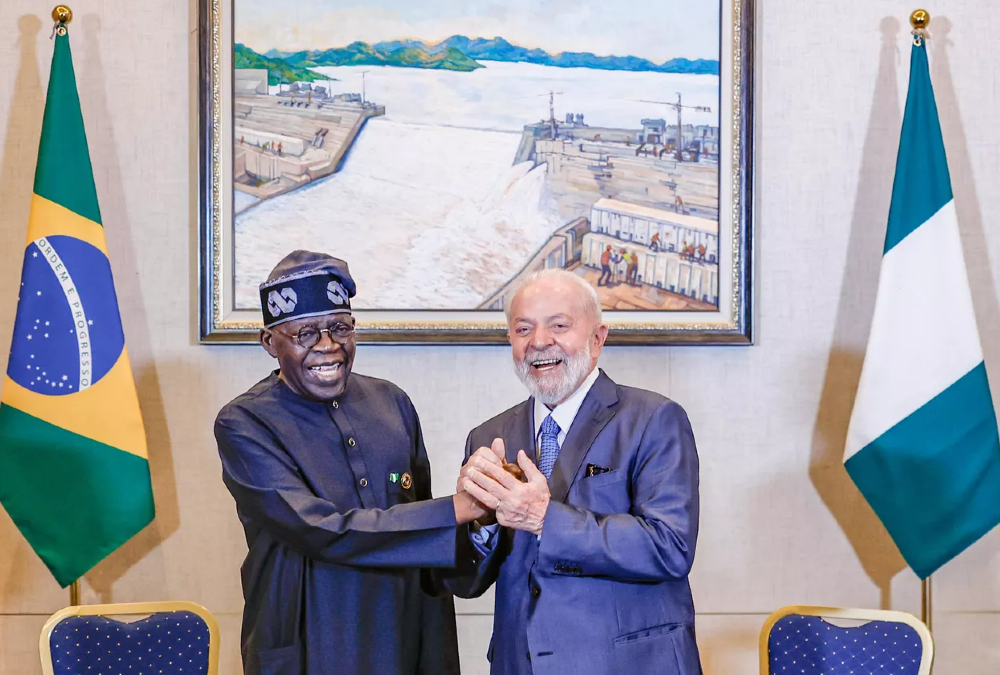
On January 17, 2025, Brazil announced that Nigeria had been accepted as a partner in the growing BRICS bloc. As the bloc’s current president, Brazil stated that Nigeria has been “strengthening cooperation in the Global South and reforming global governance,” as reported by Reuters.
Nigeria, one of Africa’s top three economies and its most populous country, also holds the position of the continent’s leading oil producer. Globally, it has the sixth-largest population, surpassing Brazil, and demonstrates a high economic growth rate.
Nigeria’s admission as a partner brings it closer to full membership in the bloc, a status currently held by only three African nations: South Africa, Egypt, and Ethiopia. As a partner, Nigeria will be invited to attend BRICS Foreign Ministers’ meetings and participate in summits, though its involvement will depend on consensus among members. Nigeria may also choose whether to endorse summit declarations and other official documents.
The Broader Context
With several African nations expressing interest in joining BRICS, 2025 may witness additional African countries attaining partner status. In his inaugural address last week, Ghana’s president highlighted that the expanding bloc reflects rapidly changing global dynamics, underscoring the need for developing countries to adapt.
Currently, BRICS comprises nine members, with Asia represented by four countries, Africa by three, and South America and Europe by one each.
A growing number of nations, including Turkey, Azerbaijan, and Malaysia, have also applied to join the bloc.
The Way Forward
This is not the first opportunity for African states to integrate into global organizations. However, this moment presents a unique chance for these nations to leverage their involvement in BRICS to improve the living standards of their populations and strengthen their influence on the global stage.
Fidel Amakye Owusu is an International Relations and Security Analyst. He is an Associate at the Conflict Research Consortium for Africa and has previously hosted an International Affairs program with the Ghana Broadcasting Corporation (GBC). He is passionate about Diplomacy and realizing Africa’s global potential and how the continent should be viewed as part of the global collective.
