
Opinion
Africa’s Youth Boom: A Global Game-Changer with Tremendous Promise and Peril


By Des H Rikhotso
Africa is home to the youngest population in the world – and the numbers tell a compelling story.
As of 2020, the continent’s median age stood at just 19.7 years, far below that of any other region globally. More than 60 percent of Africa’s population is under the age of 25, and over a third fall within the critical 15–34 age bracket – a demographic window that can either spark unprecedented growth or fuel widespread instability.
This youth bulge is not just a regional phenomenon – it’s a global inflection point. With the right investments, Africa’s young population could become the engine of economic transformation, not only within the continent but across the world.
The Numbers Behind Africa’s Youthful Advantage
Africa’s youthful profile is unmatched. While the median age in Europe hovers around 43 and in North America nears 37, Africa remains dramatically younger. In fact, several countries on the continent have median ages in the early teens.
Niger leads the list with a staggering median age of just 15.1 years, followed closely by Uganda and Angola.
According to population projections, this trend is set to continue – and even intensify. By 2100, Africa’s youth population is expected to surge, while other regions face stagnation or decline due to aging demographics and lower birth rates.
The Opportunity: A Demographic Dividend Waiting to Be Unleashed
A large, youthful population can be a powerful asset – if properly nurtured. Economists refer to this potential surge in productivity as the “demographic dividend.” When young people are healthy, educated, and gainfully employed, they can drive innovation, boost consumer markets, and increase national output.
Africa’s youth are already reshaping industries – from tech startups in Kenya’s Silicon Savannah to creative enterprises across Nigeria and South Africa. But to fully realize this potential, governments and international partners must prioritize education, job creation, healthcare, and digital infrastructure.
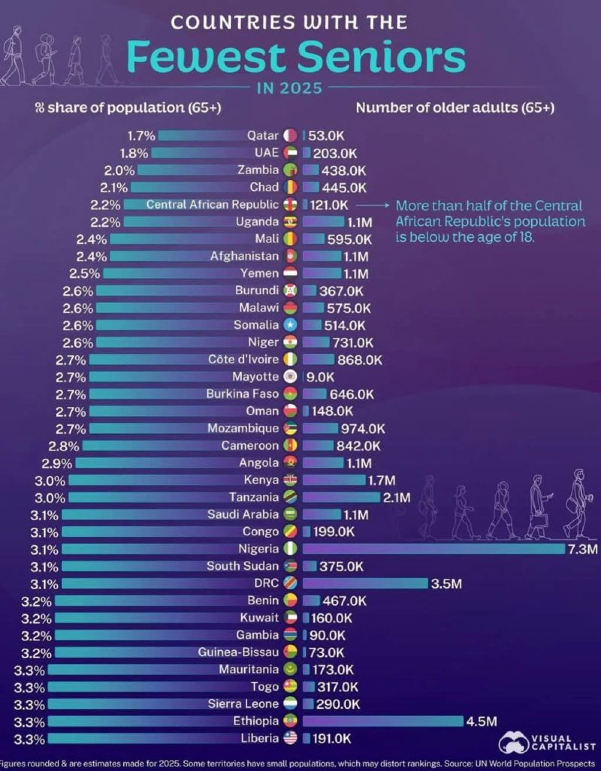
Africa population growth infographic. Credit: Visual Capitalist
The Risks: A Ticking Time Bomb of Unemployment and Discontent
However, the flip side of this youth boom is sobering. A growing population of unemployed or underemployed young people can become a catalyst for social unrest, migration pressures, and political instability.
Across the continent, youth-led protests and uprisings have already signaled rising frustration over lack of opportunity.
Without meaningful investment in skills development and economic inclusion, Africa risks squandering its most valuable resource – its people.
The Global Stakes: How Africa’s Youth Will Shape Our Shared Future
What happens in Africa won’t stay in Africa. As the continent’s population grows – projected to account for more than half of global population growth by 2050 – its youth will increasingly influence global labor markets, cultural trends, and geopolitical dynamics.
Policymakers, business leaders, and development partners must act now. Supporting Africa’s youth is not just a moral imperative – it’s a strategic one.
Africa’s future is being written today – and it’s being written by its young people. The question is whether the world will help them turn potential into progress.
Des H Rikhotso (PgDip-BA, MBL) is a seasoned C-suite Multi-Industry business executive with 25+ years of Business Leadership Experience across the South, East and Western Sub-Sahara Africa Region. Based in Kampala, Uganda he serves as East Africa Region Business Executive, driving Business Strategic Growth and Operational Excellence – contributing his Leadership Voice and Clarity to the Region. Des has held Business Leadership roles at BMW Group Africa, Volkswagen Group Africa, Peugeot Motors South Africa, Toyota/Lexus South Africa, Nissan Group of Africa, G.U.D Holdings (Africa Exports Operations Division) and The HDR Group of Companies. He holds Under-Graduate and Post-Graduate business degrees from the University of the Western Cape, Wits University, and the University of South Africa.
