
Business
Zimbabwe’s Raw Mineral Export Ban Reshapes Africa’s Resource Bargain
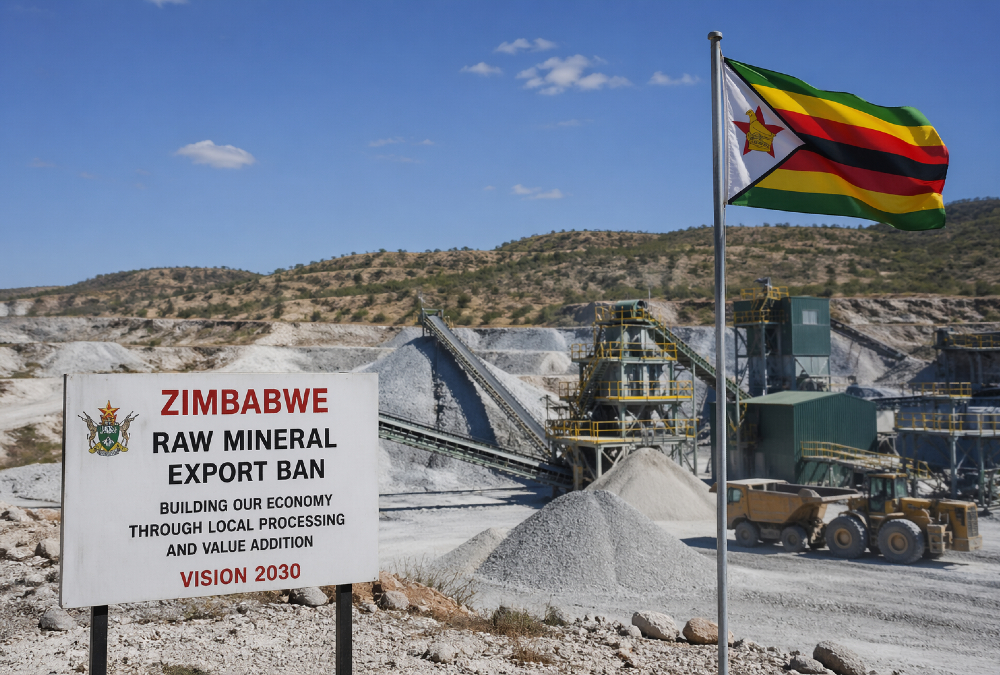
Zimbabwe’s sweeping ban on raw mineral exports, announced in February, is redefining how resource-rich African nations engage with global powers – and may signal a continental shift in resource policy.
Harare moved abruptly, banning all exports of unprocessed minerals and lithium concentrates ahead of an originally scheduled January 2027 deadline. The decision is a central pillar of the country’s Vision 2030 framework, which prioritizes domestic processing and value-added manufacturing.
Minister of Mines Polite Kambamura said the government would engage industry on “new expectations and the way forward.”
The Ministry of Mines also cited “continued malpractices during the exportation of minerals” in a letter to the Zimbabwe Chamber of Mines, warning of system-wide reforms to curb revenue leakage.
Zimbabwe holds Africa’s largest lithium reserves – a critical material for electric vehicle batteries and consumer electronics. The country exported 1.128 million metric tons of lithium-bearing spodumene concentrate in 2025, up 11 percent year-over-year.
Mining accounts for 14.3 percent of GDP, second only to manufacturing, according to World Bank data.
Analysts say the ban signals a broader transformation in Africa’s economic relationships with major powers. The traditional extraction model – in which foreign companies mine raw materials for processing abroad – is giving way to an investment-linked framework that conditions market access on local processing commitments and technology transfer.
For multinationals dependent on African supply chains, participation in downstream development may become the price of entry.
