
Opinion
Africa’s Oil Paradox: Why Resource-Rich Nations Import Their Own Fuel

By John Kourkoutas
Nigeria possesses 37.1 billion barrels of proven oil reserves – more than the United Kingdom and Norway combined. Yet the West African nation imports nearly all its gasoline.
This isn’t merely an economic curiosity. It’s a stark illustration of how global commodity markets perpetuate wealth extraction from the developing world.
The Mathematics of Modern Exploitation
The numbers tell a damning story. Nigeria ships crude oil to European refineries at market prices, then purchases refined petroleum products at markups approaching 1,000 percent. Libya, sitting atop 48.4 billion barrels, imports diesel.
Angola’s 8.3 billion barrels don’t prevent fuel shortages. Algeria, with 12.2 billion barrels of reserves, remains dependent on imported refined products.
The pattern emerges with uncomfortable clarity: Africa extracts the raw material, Europe captures the value, and the wealth gap endures.
The Refinery Question
The obvious question – why doesn’t Africa simply build its own refineries? – masks a more complex reality. African nations have been attempting precisely that for decades, often encountering systematic obstacles that appear almost designed to maintain the status quo.
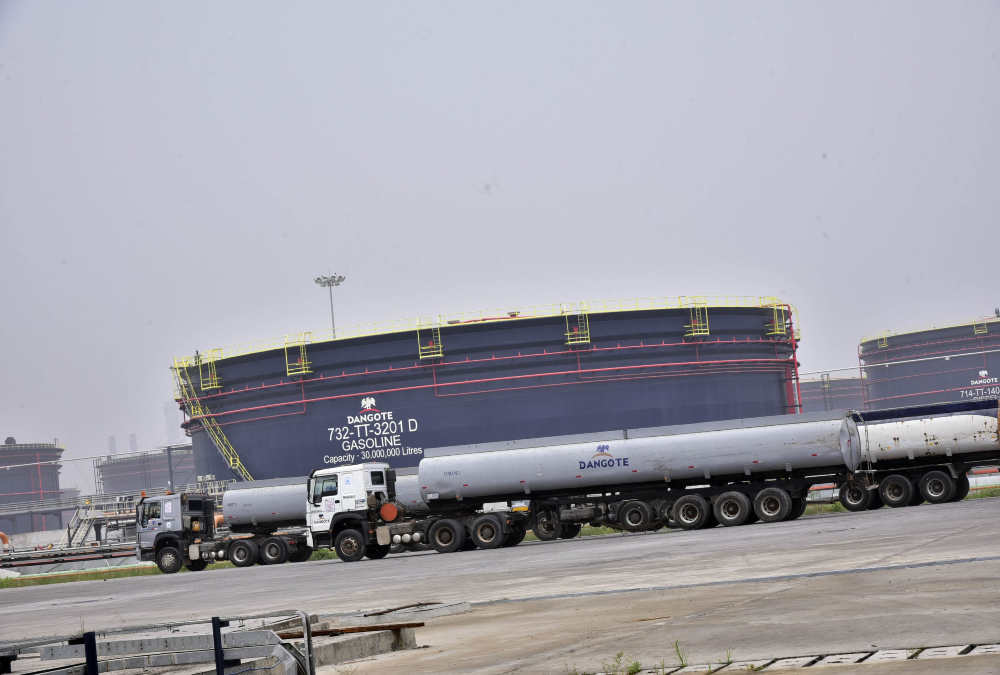
Consider the Dangote Refinery in Nigeria, a 650,000-barrel-per-day facility that became Africa’s largest upon completion. One private-sector project fundamentally altered Nigeria’s gasoline import dependency.
The fact that a single refinery could reshape an entire nation’s fuel economics reveals how artificially constrained Africa’s refining capacity has been.
Invisible Hand That Restricts
When African governments propose refinery construction, a predictable sequence unfolds. International financing becomes “complicated.”
Technology transfers face inexplicable delays. Strategic partners develop sudden “concerns” about project viability.
Environmental reviews extend indefinitely. Risk assessments conclude that alternative investments offer better returns.
These aren’t conspiracy theories – they are documented patterns in development finance. The incentive structure becomes clear when one considers who benefits from the current arrangement: established refiners in developed nations maintain market dominance, shipping companies profit from bidirectional crude-and-product flows, and financial institutions earn fees on perpetual import financing rather than one-time infrastructure investments.
Beyond Rhetoric on Development
Western institutions consistently advocate for African economic development while the international financial architecture quietly discourages the very industrial capacity that would enable it. Free-trade agreements prohibit import substitution policies.
Structural adjustment programs have historically required privatization of state refineries. Intellectual property regimes restrict technology access.
The result is that Africa remains locked into the least profitable position in the petroleum value chain – primary extraction – while being excluded from refining, petrochemical production, and finished product manufacturing where margins compound.
The Cost of Value Capture
If Nigeria processed its own crude oil domestically, the economic transformation would extend far beyond fuel self-sufficiency. Refineries require engineers, technicians, and skilled laborers.
They catalyze downstream petrochemical industries producing plastics, fertilizers, and industrial chemicals. They generate tax revenue and foreign exchange savings.
They create the industrial base necessary for broader economic diversification.
This is precisely what occurred in Norway, which transformed oil wealth into sovereign investment funds and advanced industrial capacity. The difference isn’t geological or technical – it’s whether a nation can capture value from its own resources or remains perpetually relegated to supplier status.
A System, Not an Accident
The global petroleum market didn’t accidentally evolve to concentrate refining capacity in developed nations while extracting crude from developing ones. Colonial-era infrastructure was explicitly designed to ship raw materials to imperial centers for processing. What’s remarkable isn’t that this pattern existed – it’s that it persists virtually unchanged seventy years after decolonization.
International institutions now perform the regulatory functions that colonial administrations once handled directly. The mechanisms have been bureaucratized and financialized, but the wealth flows remain remarkably consistent with historical patterns.
The Path Forward
Breaking this cycle requires more than building refineries – it demands restructuring the international frameworks that discourage African industrial development. This means reforming development finance to prioritize value-chain integration over raw material extraction. It means technology transfer agreements that actually transfer technology.
It means trade relationships based on mutual benefit rather than perpetuating supplier-client hierarchies.
The Dangote Refinery demonstrates that African refining capacity is technically and economically viable when political will and private capital align. The question isn’t whether Africa can refine its own oil – it’s whether the international community will permit the industrial transformation that would inevitably follow.
Until then, tankers will continue their absurd round trips: crude oil sailing from Lagos to Rotterdam, refined products returning to Lagos, and the wealth gap widening with each voyage.
John Kourkoutas is business development expert that specializes in helping companies, export teams, and business leaders succeed in Africa’s dynamic and emerging markets.
