
Opinion
Africa’s Next Natural Resource Boom: Why Hydrogen Could Redefine the Continent’s Economic Future

By Dishant Shah
For generations, Africa’s economic trajectory has been dictated by the global appetite for its natural wealth – gold mined in Ghana, oil pumped in Nigeria, copper dug from the Democratic Republic of the Congo, cobalt extracted for batteries in Shanghai. Each boom promised prosperity.
Too often, it delivered dependency.
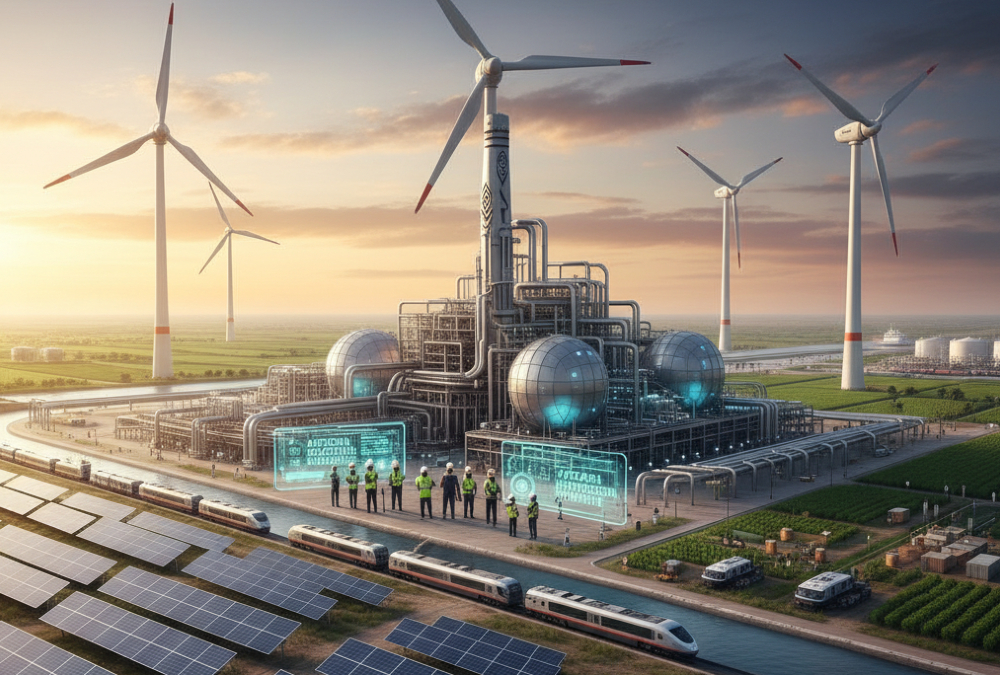
Now, a new resource is rising – not beneath the earth, but in the sun and wind: green hydrogen. And this time, Africa has a rare chance to write a different story.
Hydrogen is no longer a futuristic concept. It is the cornerstone of the global energy transition.
By 2030, global demand for clean hydrogen is projected to exceed 100 million tons annually, according to the International Energy Agency (IEA). Europe’s REPowerEU plan, Japan’s Strategic Hydrogen Plan, and Saudi Arabia’s NEOM initiative are racing to secure supply.
But the continent best positioned to meet this demand isn’t in the Middle East or Australia – it’s Africa.
Why Africa? The Perfect Storm of Advantage
Africa’s edge isn’t accidental. It’s geographic, climatic, and strategic.
First, renewable abundance. The Sahara Desert receives more solar energy in six hours than the entire world consumes in a year.
Southern Africa’s coastal winds rival those of North Sea offshore farms. Together, these resources enable the continent to produce green hydrogen – at scale and at cost levels lower than anywhere else on Earth.
Second, proximity to markets. North African nations sit just 1,500 kilometers (932 miles) from Southern Europe – the largest and most urgent hydrogen importer.
Meanwhile, growing trade corridors with India, China, and South Korea offer alternative routes for export. Unlike distant competitors, Africa doesn’t need transoceanic pipelines or multi-billion-dollar liquefaction terminals to reach its primary customers.
Third, industrial potential. This isn’t just about exporting hydrogen.
It’s about using it. Green hydrogen can power fertilizer plants to end Africa’s US$10 billion annual fertilizer import bill.
It can decarbonize steel and cement production. It can fuel shipping lanes and heavy transport networks across the continent.
Hydrogen isn’t just a commodity – it’s a catalyst for domestic industrialization.
The Global Race Is On. Africa Must Not Be Left Behind.
The world’s top economies are investing billions in hydrogen infrastructure. The EU alone has pledged over €300 billion (US$350 billion) to secure clean hydrogen supplies by 2030.
Yet, Africa’s share of global hydrogen investment remains negligible – less than 2 percent of total funding, despite possessing over 40 percent of the world’s optimal solar and wind conditions.
This isn’t a failure of potential. It’s a failure of coordination.
To unlock this opportunity, Africa needs three things: policy certainty, infrastructure investment, and local ownership. Governments must streamline permitting for renewable-hydrogen hubs.
Regional blocs like the African Continental Free Trade Area (AfCFTA) must harmonize standards for hydrogen trade. And crucially, African institutions must lead – not just license – projects.
The Ghosts of Oil: Avoiding the Resource Curse
History is littered with cautionary tales. Nigeria’s oil wealth fueled corruption, not development.
The DR Congo’s cobalt boom enriched foreign miners, not Congolese miners. Hydrogen, if mismanaged, could follow the same script: foreign corporations extract, export, and profit – while African nations remain dependent on volatile global prices and imported technology.
The danger isn’t hydrogen itself. It’s treating it like oil.
The solution? Industrial localization.
Hydrogen projects must be tied to local content requirements: training African engineers, building domestic electrolyzer assembly lines, developing hydrogen-ready transport and storage infrastructure, and mandating that a portion of output serves domestic energy needs before export.
This isn’t protectionism – it’s pragmatism. Countries like Morocco and South Africa are already pioneering this model, with national hydrogen strategies that prioritize job creation, grid modernization, and domestic industry.
They must be scaled, not duplicated.
The Choice: Extraction or Sovereignty
Africa stands at a crossroads. One path leads to another extractive boom: foreign capital, export pipelines, and hollowed-out economies.
The other leads to something transformative: a homegrown hydrogen economy that powers factories, fuels ships, feeds farms, and creates millions of skilled jobs.
The difference isn’t technology. It’s ambition.
Policymakers must demand equity stakes in projects. Investors must insist on local value chains. Entrepreneurs must build ecosystems – not just export terminals.
This is more than an energy transition. It’s an opportunity for economic sovereignty.
Africa doesn’t need to wait for permission to lead. It needs to act – with vision, with teeth, and with the conviction that its sun, wind, and people are not just inputs for someone else’s clean energy future.
They are the foundation of its own.
Dishant Shah is a partner at Legion Exim, a company specializing in facilitating the export of high-quality engineering products directly sourced from manufacturers in India to Africa. His areas of expertise include new business development and business management.
