
Opinion
Africa’s Missing Railways: The Trillion-Dollar Opportunity No One Can Ignore

By John Kourkoutas
Look at any global map of railway networks – and you will see a glaring void.
Europe, North America, and Asia are stitched together by tens of thousands of kilometers of rail. China alone boasts over 150,000 kilometers (93,206 miles).
The United States, nearly 250,000 kilometers (155,343 miles). Europe, more than 213,000 kilometers (132,352 miles).
Now look at Africa.
For all its vastness – three times the size of Europe – the continent has just 75,000 kilometers (46,603 miles) of track. That’s less than half the rail density of Europe, despite carrying nearly 1.4 billion people and possessing some of the world’s fastest-growing economies.
This isn’t just an infrastructure deficit. It’s a trillion-dollar opportunity waiting to be unlocked.
The Cost of Being Unconnected
Today, over 80 percent of African trade moves by road – expensive, slow, and unreliable. Trucking accounts for up to 60 percent of final product costs in many markets.
Air freight is viable only for high-value goods. The result? Stifled industrialization, fragmented supply chains, and foreign investors hesitating to scale.
But that’s changing.
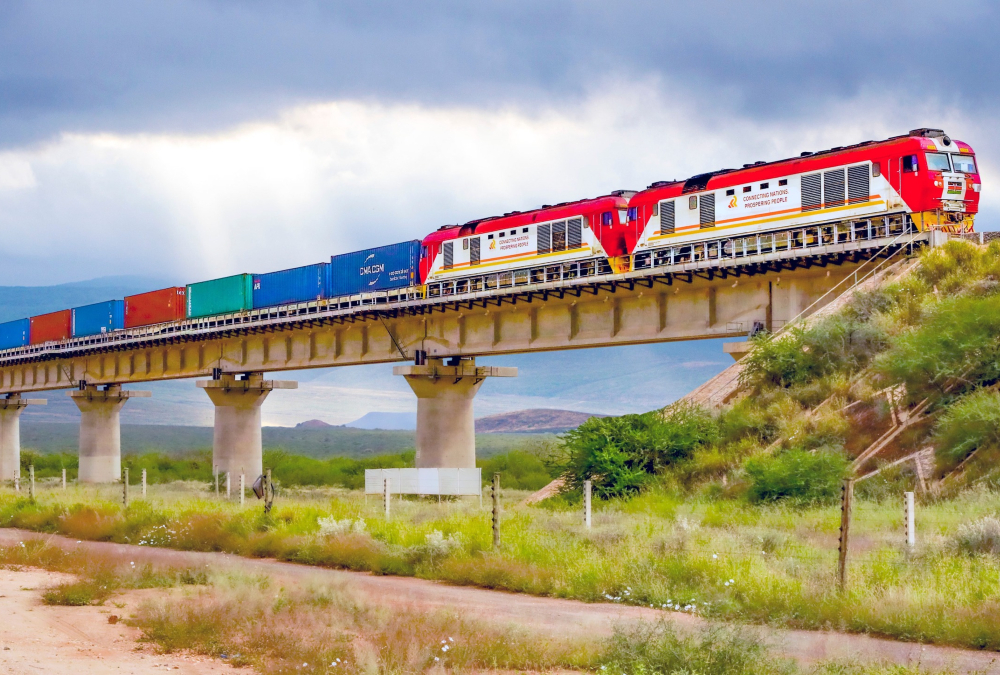
From Kenya’s Standard Gauge Railway (SGR) linking Mombasa to Nairobi and now Kigali, to Ethiopia’s Addis Ababa–Djibouti corridor, and the ambitious Trans-African Highways and Continental Free Trade Area (AfCFTA) initiatives, Africa is building its rail future – not incrementally, but at scale.
The numbers tell the story: when rail replaces trucking, logistics costs drop by 60–80 percent. That’s not efficiency – it’s economic transformation.
Imagine textile factories in Rwanda exporting competitively to Lagos. Mining equipment from South Africa reaching Kinshasa in days, not weeks.
Grain from Zambia flowing efficiently to ports in Tanzania. These aren’t hypotheticals. They are inevitable.

First-Movers Are Building Moats, Not Just Markets
The most successful businesses entering Africa won’t wait for perfect infrastructure. They will help build it.
Companies investing today in rail-aligned industries – logistics hubs, cold-chain distribution, industrial parks near new stations, and even digital platforms that optimize rail freight – are not taking risks. They are securing competitive moats.
Consider this: In East Africa, the SGR has already reduced freight transit time from Nairobi to Mombasa from 12 days to under 24 hours. Productivity gains are measurable.
Margins are expanding. Local manufacturers are re-entering regional markets they abandoned decades ago.
And these are just the opening shots.
Over 100 major rail and transport projects are underway across 24 African nations – many backed by public-private partnerships, multilateral development banks, and sovereign wealth funds. The capital is flowing.
The political will is real. And the market signals are unmistakable.
John Kourkoutas is business development expert that specializes in helping companies, export teams, and business leaders succeed in Africa’s dynamic and emerging markets.
