
Opinion
Africa’s Automotive Moment: Turning Policy into Industrial Power
A landmark African Union ruling on automotive rules of origin creates a historic opening for continental manufacturing. But preferential tariffs alone cannot substitute for functional trade corridors and modern customs infrastructure.

By Ziad Hamoui
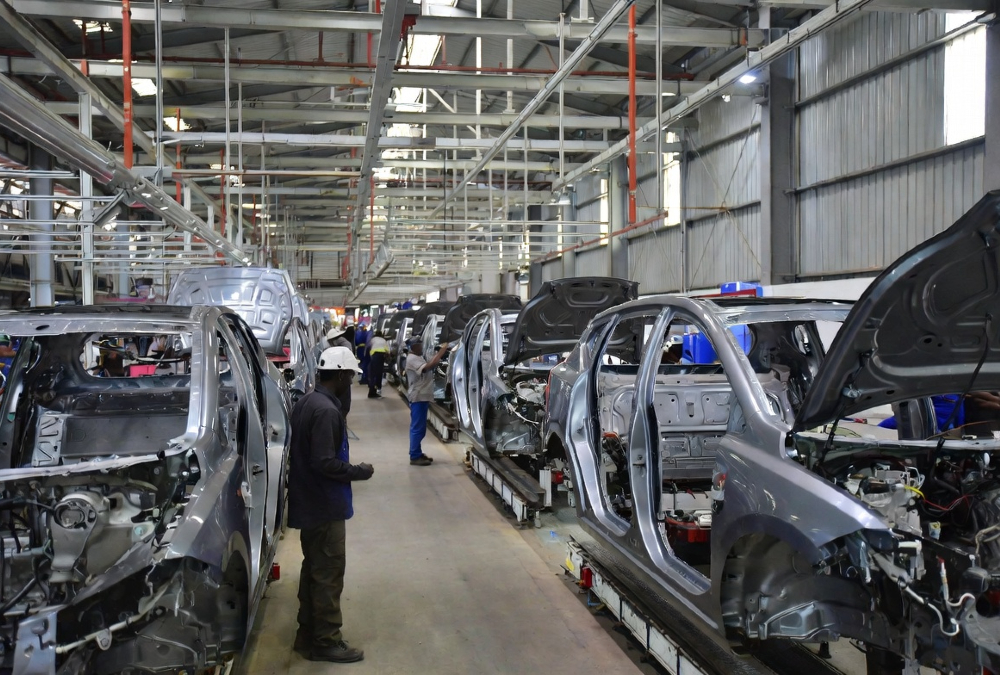
The African Union’s approval of rules of origin for the automotive sector under the African Continental Free Trade Area (AfCFTA) represents one of the most consequential decisions in African industrial policy in a generation. By requiring that 40 percent of a vehicle’s value be sourced from within Africa for it to qualify for preferential duty treatment, AU heads of state have done something rare in continental policymaking: they have given investors something to work with.
For years, Africa’s automotive ambitions have been frustrated by precisely this kind of regulatory ambiguity. Manufacturers could not commit capital to “Made in Africa” supply chains when the rules governing market access remained undefined.
That barrier has now been cleared. The path from importer of second-hand vehicles to continental manufacturing hub is, at least in principle, open.
A vehicle built in South Africa can only truly claim the ‘Made in Africa’ label if it reaches buyers in Ghana or Nigeria through reliable and affordable channels.
A Rule on Paper is Not a Road on The Ground
In practice, of course, principle and execution are rarely the same thing. The AfCFTA’s rules of origin are a necessary condition for African automotive industrialization – but they are far from sufficient.
The most elegantly designed trade policy will deliver nothing if the physical and logistical infrastructure required to move goods across borders remains as dysfunctional as it too often is today.
Consider the US$15.6 billion Abidjan-Lagos Corridor, a 1,028-kilometer (639-mile) artery running through five West African countries that is rightly described as pivotal to automotive supply chain development in the region. The corridor’s completion would be transformative.
Yet the uncomfortable truth is that even a world-class road counts for little when customs processing delays routinely exceed 72 hours. Modern automotive manufacturing runs on just-in-time logistics.
Clearance windows of 24 to 48 hours are not aspirational targets – they are operational prerequisites. Without them, the economics of regional supply chains simply do not close.
Landlocked No More: Connecting The Interior
The same logic applies, with even greater urgency, to landlocked economies. The 950-kilometer (590-mile) Ghana–Burkina Faso railway project challenges the prevailing “coast-only” mindset that has long shaped African infrastructure investment.
Landlocked countries need not be left behind by continental integration; with dependable rail access to ports such as Tema, they can become genuinely “land-linked” – active participants in automotive value chains rather than passive bystanders. Reframing their situation from geographic disadvantage to logistical opportunity is not mere rhetoric.
It is a design principle for infrastructure policy.
Three Reforms That Cannot Wait
The imperative now is to align policy ambition with operational reality across three interconnected dimensions.
First, customs modernization must accelerate. The AfCFTA Secretariat and member states should treat border processing efficiency as a core deliverable of the trade agreement, not an afterthought.
Second, key corridor infrastructure – roads, rail, and port capacity – must be funded and completed at a pace commensurate with the manufacturing investment the continent is trying to attract.
Third, digital infrastructure for cross-border trade must be scaled urgently. The Pan-African Payment and Settlement System (PAPSS) offers a compelling model: a continent-wide platform capable of streamlining financial settlement across borders and reducing the friction that currently inflates transaction costs throughout the value chain.
The collaboration between the African Association of Automotive Manufacturers (AAAM) and the AfCFTA Secretariat in reaching the rules-of-origin milestone is an encouraging sign that industry and policymakers can find common ground. That partnership must now be extended and deepened, with manufacturers helping to define the corridor investments and customs reforms that will determine whether the AfCFTA’s automotive provisions translate into factory floors and jobs or remain a paper commitment.
Africa’s automotive sector is not starting from zero. South Africa has a mature manufacturing base. Morocco has attracted major European original equipment manufacturers.
Ethiopia and Nigeria are investing in assembly capacity. The AfCFTA rules of origin create, for the first time, a credible framework to connect these national efforts into something genuinely continental.
The opportunity is real. But the window is not unlimited. Investors weighing Africa against Southeast Asia or Eastern Europe will be watching whether the rhetoric of “Made in Africa” is matched by the infrastructure and institutions required to make it commercially viable.
Customs reform and corridor development, unglamorous as they may sound, are now as consequential as any trade agreement ever signed.
Ziad Hamoui is the Co-Founder and Past President of the Borderless Alliance, a leading private-sector advocacy group promoting economic integration and removing trade and transport barriers in West Africa. With extensive experience in Ghana’s road transport, logistics, and shipping sectors, he currently serves as Executive Director of Tarzan Enterprise Ltd., a long-established family business. He is a former Co-Chair of the Africa Food Trade Coalition, Co-Founder of the Trade Facilitation Coalition for Ghana, and serves on multiple high-level advisory committees on trade, transport, agriculture, and security. A Chartered Fellow of the Chartered Institute of Logistics and Transport (CILT) Ghana, he is also a former member of its Governing Council.
