
Opinion
Africa Trades – But Who Really Captures the Value?

By Kelly Mua Kingsly
Africa’s trade volume is surging – its exports to global markets reached record highs in 2024. Yet beneath the headline numbers lies a persistent and troubling reality: the continent still exports primarily what it extracts – raw commodities like oil, copper, cocoa, and coffee – while importing back the very goods transformed from its own resources, often at a steep premium.
Over 70 percent of Africa’s exports in 2024 consisted of unprocessed natural resources. Nigeria ships crude oil abroad, only to import refined fuel.
Côte d’Ivoire (Ivory Coast), the world’s largest cocoa producer, exports beans and imports chocolate. Ethiopia, a top coffee grower, sells green coffee while Swiss and Italian brands reap the rewards of roasting, branding, and global distribution.
This export structure echoes colonial-era trade patterns – designed for extraction, not empowerment. And in today’s knowledge- and innovation-driven global economy, it comes at a steep cost.
The Value Gap: From Raw Materials to Finished Goods
Consider the stark economics of value addition:
- A metric ton of raw cocoa sells for approximately US$2,400. Once processed into premium chocolate in Europe, that same ton can generate over US$12,000 in revenue.
- Crude oil may be in declining demand due to the energy transition, but refined petrochemicals, plastics, and emerging green hydrogen markets offer margins three to five times higher.
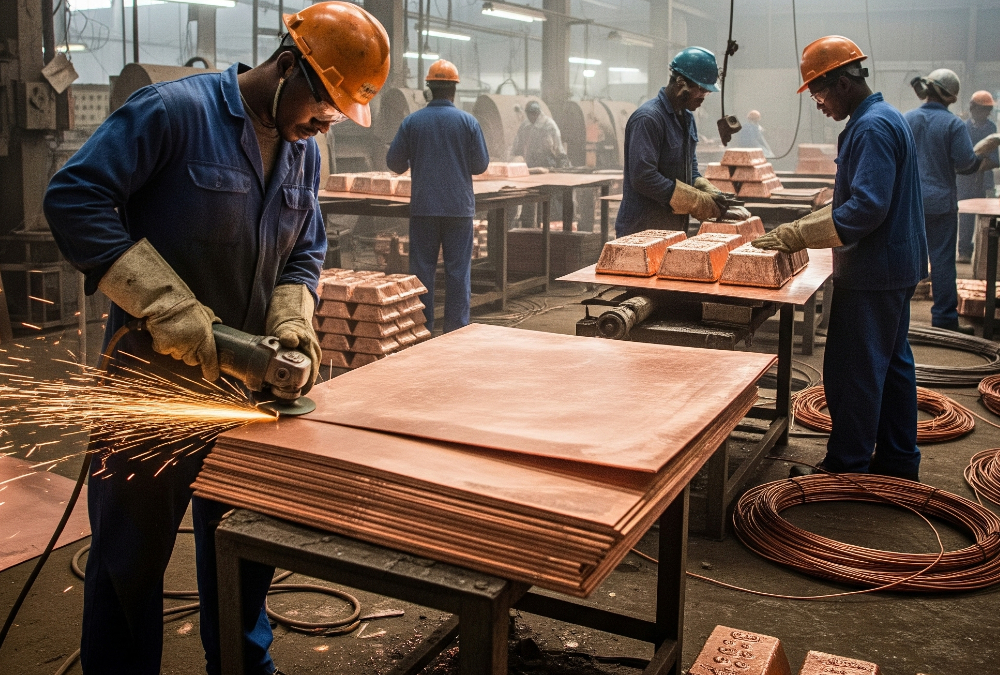
- Zambia’s copper exports generate billions annually – but the global electric vehicle (EV) boom could increase that value four- to sixfold if the copper were processed locally into battery components.
Africa earns foreign exchange, yes – but it misses out on the real drivers of long-term prosperity: industrialization, high-quality jobs, technological capability, and economic resilience. The result is a cycle of trade that brings cash inflows without building lasting wealth.
The Path to Transformation: Climbing the Value Chain
The solution isn’t to stop exporting – it’s to change what Africa exports. The future lies in moving up the value chain:
- From Ethiopian coffee farms to globally recognized Ethiopian coffee brands.
- From Nigerian crude oil to petrochemicals, plastics, and green hydrogen hubs.
- From Zambian copper mines to African-built EV battery gigafactories, powering the continent’s green transition.
This vision is no longer theoretical. It’s becoming possible through the African Continental Free Trade Area (AfCFTA) – the most ambitious regional integration initiative since the founding of the World Trade Organization.
With the potential to create a US$3.4 trillion internal market, AfCFTA offers a historic opportunity to build regional supply chains, scale local manufacturing, and foster innovation across borders.
By reducing tariffs, harmonizing regulations, and improving infrastructure, AfCFTA can enable African economies to move beyond primary exports and compete in higher-value industries. It’s not just about trade – it’s about industrial sovereignty.
The Strategic Choice: Supplier or Innovator?
The critical question is no longer if Africa will trade – but what kind of trade story it wants to tell. Will the continent remain the world’s raw material backyard, or will it emerge as a center of African design, African innovation, and African value creation?
By 2100, Africa is projected to be home to 40 percent of the world’s population. This isn’t just a demographic shift – it’s a generational imperative.
The next 80 years will be defined by how today’s leaders, entrepreneurs, and investors choose to harness this potential.
The tools are within reach: a youthful workforce, growing urban centers, digital innovation, and now, a continental trade framework. What’s needed is vision, coordination, and investment in processing, branding, and industrial policy.
The Next Trillion-Dollar Question
So, what’s Africa’s next trillion-dollar opportunity?
Is it in cocoa beans – or in chocolate? Is it in copper ore – or in EV batteries?
The answer will shape not just Africa’s economy, but its sovereignty, dignity, and role in the global economy.
The time to build that future is now.
Kelly Mua Kingsly brings extensive expertise in public finance and strategic leadership. He currently serves as the Head of Finance Operations at the Ministry of Finance of Cameroon, while also holding a dual role as Project Finance Manager at the Ministry of Economy, Planning, and Regional Development, and Censor at the Central Bank of Central African States (BEAC). He has previously served as Chairperson of the Board of the African Trade & Investment Development Insurance (ATIDI) and as a Director on the Board of Quantum Blockchain Capital. Driven by a strong passion for Africa’s economic transformation, he is deeply committed to advancing the continent’s path toward industrialization.
