
Opinion
AfCFTA Preachers and the Reality Behind Africa’s Free Trade Gospel

By Danilo Desiderio
The African Continental Free Trade Area (AfCFTA) has become the most celebrated economic initiative on the continent. Leaders, policymakers, economists, and business associations hail it as the master key to unlocking intra-African trade, fueling industrialization, and attracting billions in investment.
With 55 member states and a market of 1.4 billion people, the promise is undeniable.
The enthusiasm is so fervent that one might call it religious. Titles like AfCFTA evangelist, AfCFTA advocate, and AfCFTA enthusiast now appear on résumés and business cards, as though spreading the gospel of tariff reduction were a calling.
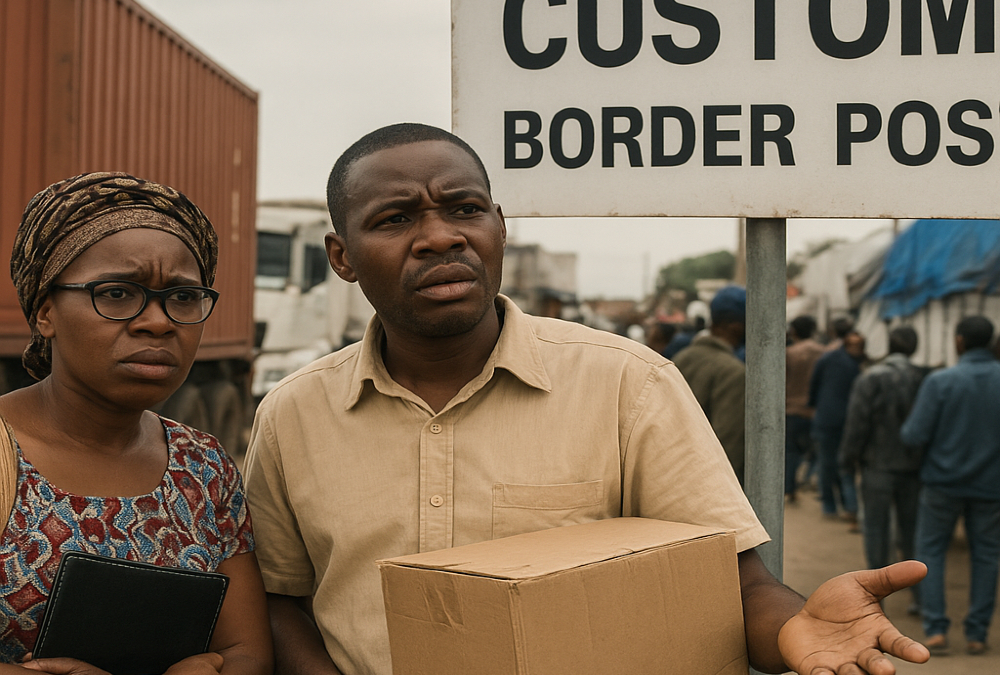
One can almost imagine them preaching at dusty border posts: “Harmonize rules! Dismantle non-tariff barriers! Open the gates of prosperity!”
Yet beneath this passion lies a sobering truth: the AfCFTA is still just a framework on paper. No amount of evangelism will dissolve the structural barriers that have constrained Africa’s economic integration for decades.
Why the Framework Alone Cannot Deliver
Africa has seen this pattern before. From the Lagos Plan of Action to the Abuja Treaty, ambitious blueprints generated excitement but collapsed under the weight of weak implementation.
Signing ceremonies may inspire, but without structural reforms, they rarely transform.
Several stubborn barriers continue to undermine the AfCFTA’s lofty ambitions:
- Crippling Infrastructure Gaps
Africa’s annual infrastructure financing shortfall stands at US$130–170 billion. Poor roads, inefficient ports, and fragmented rail networks inflate logistics costs by 30–40 percent – erasing any tariff advantage before goods even cross borders. - Unreliable Energy
Frequent power outages raise production costs and deter manufacturing. How can African firms compete in a “free trade” zone when they pay three times more for electricity than their Asian counterparts? - High Transaction Costs
Customs delays, redundant paperwork, and weak digital systems turn cross-border trade into a bureaucratic marathon. For informal traders – who account for up to 70 percent of intra-African commerce – these barriers are often insurmountable. - Skills Mismatch
Education systems remain misaligned with market needs. Without a pipeline of technical, managerial, and digital talent, African industries cannot scale or innovate within the AfCFTA ecosystem. - Regulatory Fragmentation & Governance Risks
Inconsistent standards, sudden policy shifts, corruption, and insecurity create uncertainty that deters long-term investment – even when tariffs are zero. - Governance Risks
Corruption, instability, and security threats deter long-term investment. - Concentrated FDI
Despite a record US$97 billion in foreign direct investment in 2024, flows remain highly concentrated in a handful of countries and sectors. Market size alone does not guarantee broad-based investment.
These issues mean that tariff reductions alone cannot transform Africa’s economies into globally competitive hubs.
The Missing Piece: Financial Inclusion
Perhaps the most overlooked obstacle is Africa’s underdeveloped financial sector. Despite the growth of mobile money, the continent remains overwhelmingly cash-dependent.
In sub-Saharan Africa, less than 49 percent of adults hold a bank account, compared to over 90 percent in high-income economies.
This financial exclusion cripples small and medium enterprises (SMEs), which make up 90 percent of businesses and 38 percent of GDP in sub-Saharan Africa. The SME financing gap exceeds US$330 billion annually, leaving many entrepreneurs unable to access credit, expand operations, or compete regionally.
Without reforms to expand affordable credit, deepen capital markets, and strengthen digital financial services, the AfCFTA risks becoming a framework that benefits only a narrow elite – often large foreign firms – while sidelining the very SMEs it claims to empower.
Lessons from ASEAN and Mercosur: Integration Takes Decades, Not Declarations
Africa is not the first region to dream of integration. The experiences of other blocs offer sobering lessons:
- ASEAN (Southeast Asia): Launched in the 1990s, ASEAN faced similar hurdles of weak infrastructure and fragmented markets. Decades of sustained investment in ports, power, finance, and production networks turned it into today’s global manufacturing hub. As Philippine Foreign Minister Narciso R. Ramos warned in 1967, fragmented economies “carry the seeds of weakness” and risk permanent dependence. Africa should take note.
- Mercosur (South America): Since 1991, Mercosur has struggled with poor infrastructure, divergent policies, and shallow financial systems. Its underwhelming record underscores that free trade agreements cannot substitute for foundational reforms.
The message is clear: without coordinated investments and reforms, Africa risks repeating these struggles.
From Paper to Practice: A Realistic Roadmap
AfCFTA’s potential is real – but unlocking it demands more than rhetoric. African governments must prioritize:
- Strategic infrastructure investment in transport, energy, and digital connectivity – especially at border crossings.
- Customs modernization through single-window systems, digital documentation, and mutual recognition of standards.
- Financial sector reform, including credit guarantee schemes, regional capital market integration, and support for fintech that serves SMEs and women-led businesses.
- Governance upgrades: anti-corruption measures, regulatory harmonization, and legal certainty to attract patient capital.
- Skills development aligned with industrial policy and AfCFTA value chains – from agro-processing to light manufacturing.
The Bottom Line
AfCFTA is not a miracle cure. It is a framework – one that can amplify progress, but cannot substitute for it.
Africa’s future won’t be written in trade protocols, but in power plants, paved highways, classrooms, and bank accounts.
The preachers can keep their titles. But the continent needs builders – not just believers.
Danilo Desiderio serves as the CEO of Desiderio Consultants Ltd in Nairobi, Kenya, specializing in African customs, trade, and transport policies. He is a customs and trade expert at the World Bank and a senior associate to the Horn Economic and Social Policy Institute (HESPI).
