
Editorial
A Timely US Africa Trade Policy?
Author’s Note | November 23, 2012:
An 800 word editorial for The Habari Network morphed into longer commentary following comments from economic policy and trade doyens. To Tony Carroll and Stephen Lande of Manchester Trade; to Steve McDonald of the Woodrow Wilson Center; to Paul Ryberg of the African Coalition for Trade; to Nathaniel Adams of The Whitaker Group; to Dr. Mwangi Kimenyi of The Brookings Institution; to Witney Schneidman of Covington & Burling, LLP; and to Harvard University’s Prof. Calestus Juma: Gratias tibi ago!
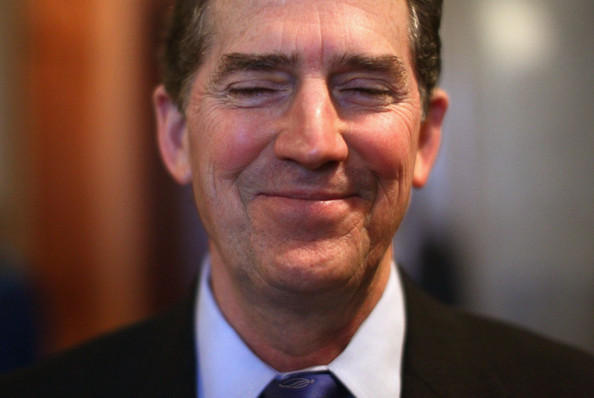
Most people do not know who Jim DeMint is.
And yet, through a tiny window of opportunity – cosmic karma, even – he may be pivotal to the most ambitious and most mutually beneficial phase in US Africa’s trade history.
With his ruggedly handsome face, pensive demeanor and non-combative tone of voice, the few familiar with the junior Senator from South Carolina don’t play up his charm or approachability. Instead, to the media, fellow Republicans, Democrats and to some in and outside the beltway, he’s the lightening rod of strident opposition to Barack Obama’s efforts at buttressing a battered US economy. No surprise, then, that the moniker Senator Tea Party was a recently bequeathed upon him!
But Nov. 6, 2012 brought disappointment to GOP and such utter dismay to the Tea Party! With unemployment high, the economy in doldrums, markets jittery, and Obamacare still unpopular, this President ought to have handily lost.
Still, Obama beat the odds to become only the second Democrat since Harry Truman to win reelection. Somewhat dented, Republicans held on to the Speakership and House, and their Senate Minority shrunk even further as they, for a second time in a row lost the Ultimate Prize.
Bipartisanship, anybody?
Whether they believe voters rejected conservatism or not, mainstream Republicans urge that to improve White House prospects in 2016, the party of NO can’t just fight everything, and that behavior in the Congress has to be moderated in the interest of getting anything done. But DeMint has been a thorn to Republican and Democratic Party bosoms. As fate may have it, in January 2013, the lawmaker who has urged Americans to rise up against Obama’s ‘big government’ expenditure and mounting debt will serve in the 113th Congress as Ranking Member – basically a co-chair – of the Senate Committee in whose purview interstate commerce and regulation of commerce falls. Should this more potent DeMint be as antagonistic as before, then Obama’s latent Africa agenda is royally screwed!
Also dashed will be all the high hopes that AGOA, the US’ most portentous Africa trade policy, is revitalized into one that, according to Special Presidential Assistant Michael Froman, comprehensively combines trade & investment plus economic development & regional integration into a single plan come 2015.
Those intimate with the Senate understand this despair as the arcane procedures of a most complex body prevail in the most powerful of legislative institutions. Only 5 short of a 60 vote super majority, the Democrats serve at the mercy of the few. All it takes is one DeMint to kill legislation – even when 55 other senators fully support it.
Nonetheless, post AGOA proponents find solace in Republican support for free trade agreements [FTAs], trade and investment framework agreements [TIFAs] and other aspects of international trade. Also, premised on Congress’ recent, timely unanimous consent to renew AGOA’s 3rd Country Fabric provision, many stakeholders optimistically conclude that a policy a la the Froman-delivered Presidential Directive could sail through the bicameral Congress by Close of Business 2013.
But a year in a deeply divided Congress can fast slip away: Practice shows bipartisanship periods are ephemeral; of late, few and far between.
Rosa Whitaker isn’t pessimistic. A pioneer of the African Affairs bureau in the US Trade Representative’s office and now president of The Whitaker Group, she, in a recent column, allays some of these fears by affirming that both Democrats and Republicans always, even momentarily, pause their rancor just to do what’s right for Africa.
Paul Ryberg, a Washington-based international trade lawyer and president of the African Coalition for Trade, is more cautious. On a noncontroversial 3rd country fabric, congressional partisan gridlock prevented its enactment for more than a year – until literally weeks before the provision would have expired. In the meantime, US apparel imports from Africa dropped sharply and tens of thousands of African jobs were lost. Ryberg points out that complications arose even though no one in Congress opposed this bill. DeMint et al also played a part in this by proposing un-germane amendments to the bill.
The Brookings Institution, points out a nugget that may translate into additional pro Africa sentiment in Congress: In 2011, all 50 states in the union increased their exports to Africa. Worth more than $ 32 bn then, figures for FY 2012 look set to either surpass or stay the course. South Carolina is now one of South Africa’s largest trade partners – garnering some US$279 million from exporting things like lawn mowers and tractor-trailers, and West Virginia exported much more to Africa than to Taiwan and Spain.
Apropos Milieu
Contextually, this USD $32 bn is as unbelievably measly as it is improperly imbalanced. Since 2000, when AGOA passed, the trade deficit with Africa has been between US$11 billion [Adv. Africa, ‘02] and US$85 billion [Adv. Africa, again, ‘08].
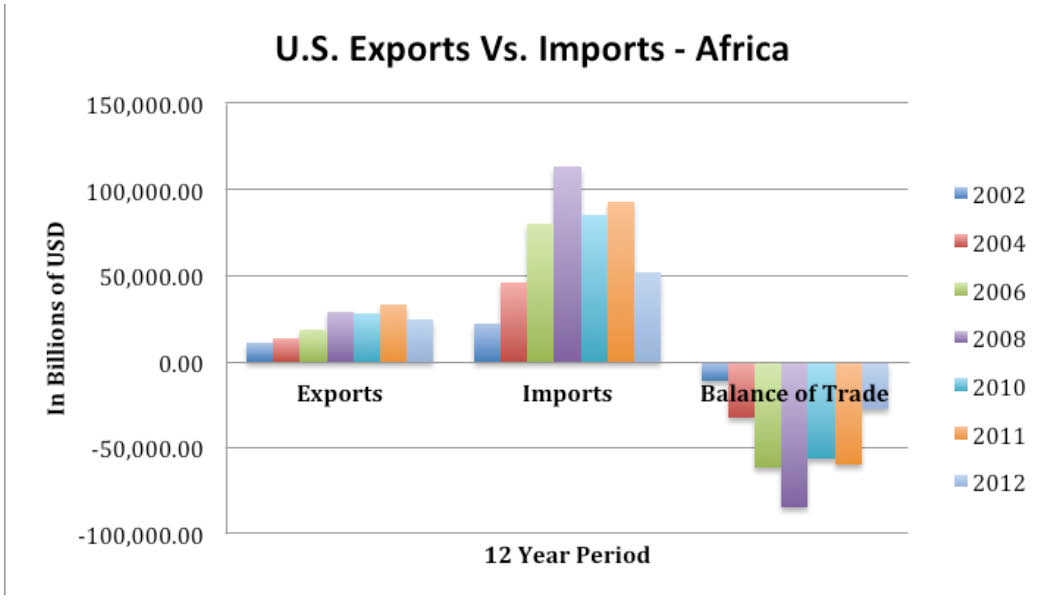
The Heritage Foundation’s Center for International Trade and Economics says this deficit exists partly because the US undermines African traders through non-tariff barriers including subsidizing its producers. But still, this does not satisfactorily address why most of S&P 500 firms, some with balance sheets greater than entire African economies, do not lift more than a cursory finger to invest in Africa. That the annual Diaspora remittance to Africa trumps all US export revenue tenfold should be an ignominy to this cream of the American capitalist crop!
The Perfect Storm
But this could all change in a heartbeat: Stephen Lande*, a former chief bilateral trade negotiator at the USTR and now President of Manchester Trade strongly believes that this Obama 2nd term, the 113th Congress and a resurgent US economy are precisely the perfect storm for a vigorous US Africa trade policy initiative – one that emulates the European Union and China, has a fully coordinated government and private stakeholder approach and especially plays to US strengths of unleashing US private sector resources and those of the Diaspora.
To Brookings’ Mwangi Kimenyi and also to COMESA’s Amini Kajunju, ‘vigor’ must involve deepening current AGOA and other policy preferences while marshaling logistical long term support for American investors. Hoover Institution contributor James Robinson agrees and adds that policy must especially focus on economic development in Africa.
In various papers, suggestions and policy review papers, Dr. Kimenyi, Prof. Lande plus other US based Africanists like Ms. Whitaker, John Mutenyo, Witney Schneidman, Scott Eisner at the US Chamber of Commerce, and Stephen Hayes of the Corporate Council on Africa seem to agree on the outlines of the Obama administration’s trade and investment plan floated in the June 2012 U.S. Strategy toward Sub-Saharan Africa.
Effectively executed, some suggest that a new legislative policy would go way beyond AGOA and actually result in the supply chains and distribution networks that will effectively insert Africa into today’s global trade system and ultimately grow US jobs.
In the same vein, a new policy would rebalance the ‘trade war’ with Chinese and European state-backed entrepreneurs, better positioning the US for a war that the country is, under current circumstances, losing.
Steve McDonald* of the Woodrow Wilson Center’s Africa Program adds the important aspect of regional integration which would eliminate the oft cited small markets, few economies of scale as a barrier to investment in Africa. Miller and Kim at Heritage add that a post AGOA induced path to regionalism must be longer term as preference programs are insufficient to promote the dynamic engagement in the region.
*McDonald and Lande are currently soliciting ideas and consulting various stakeholders on a multifaceted plan.
[Continues on the Next Page]
