
Editorial
A Timely US Africa Trade Policy?

Alive with possibilities
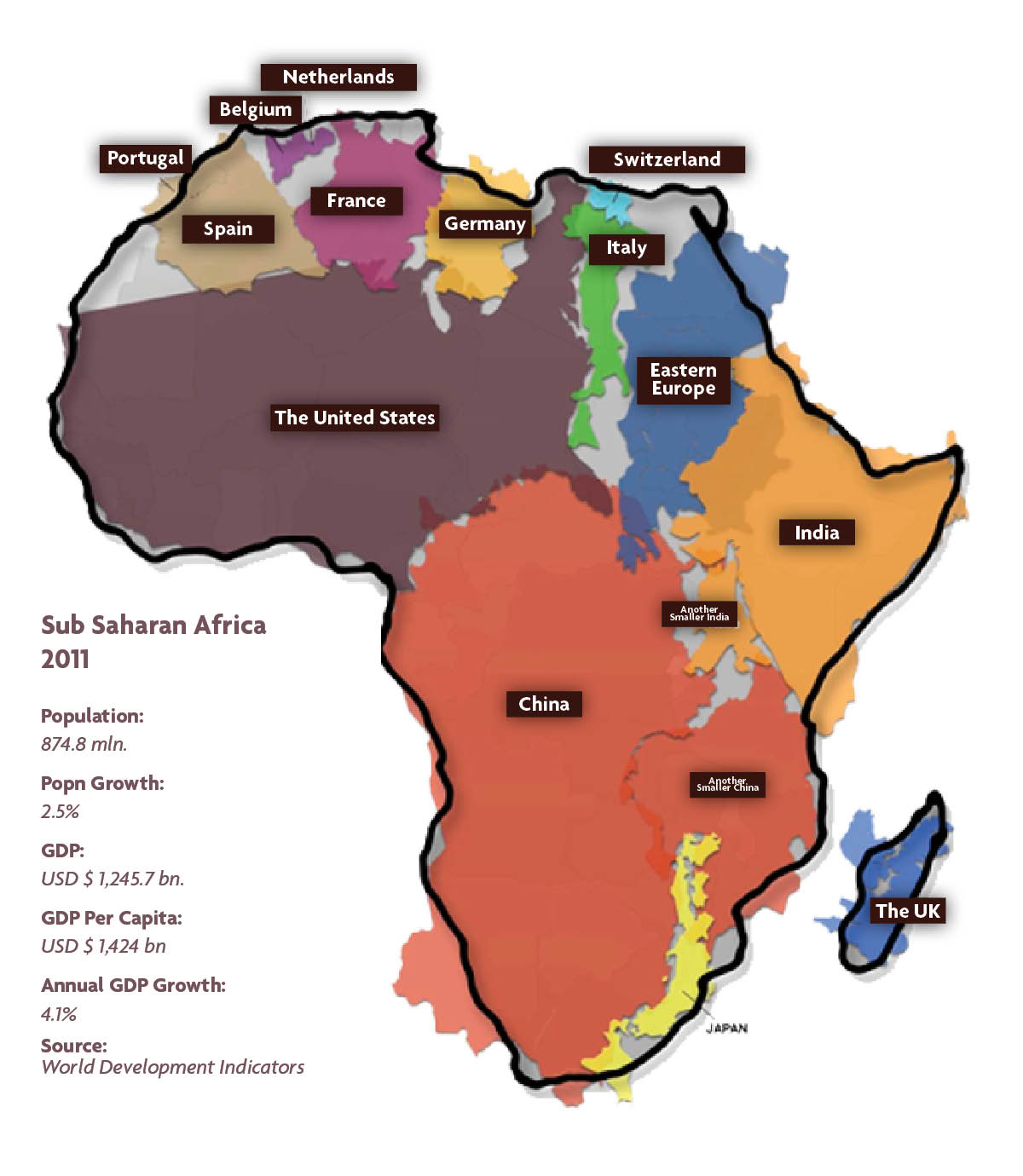
There’s a huge case for a more aggressive American investment regime in Africa. First, the continent sits on a land mass which could comfortably fit the US, China, India, most of Europe plus the United Kingdom and Japan – with room to spare! A Foreign Policy Association post additionally suggests that USD 24 trillion worth of sheer wealth could be buried in the Congo alone.
Secondly, the continent’s close to 1 bn people are neither monolithic nor do the 54 independent polities live under a central authority. At disparate levels of development, much of sub Saharan Africa consists of semi-to-fully liberal democracies that bear much friendlier business climates than many of their Asian or even European rivals. What they lack in infrastructure, they make up for in enthusiastic adaptability like Somalia and Southern Sudan heartily embraced ICT.
Thirdly, like McDonald and the experts from Heritage cite, regionalism is alive: Nigeria is harmonizing tariffs to benefit the ECOWAS member states, and in East Africa, PriceWaterhouseCoopers safely projects that the East African Common Markets will see both increased inter-country trade and factors of production mobility across borders. Kenya will continue to have Uganda as her biggest trade partner and the trade volumes between Uganda, Rwanda and Burundi will continue to swell.
And yet there’s still no cattle call to get into Africa’s potential and it seems as though US based champions of investment in and trade with Africa are the few brave ones keen to show off scars from Africa excursions and regale with tales of exotic adventure. But an increasingly active African Diaspora, the rapid deployment of information technology and budding list of those engaged in Africa are seeing to it that this is no more. Nowadays, small American traders and larger corporations alike point to the green shoots of progress and huge profit margins from African investments.
Citing African countries with higher per capita GDP than China, California’s Scott Harvey Wines recently introduced 6 wine varieties to Kenya and Tanzania. On an impressive website dedicated to sub Saharan Africa stock markets, Ryan Hoover, an equity analyst and fund manager says US corporations like Medtronic, a medical device maker estimates that 2 million Africans will use their devices over the next few years and recent revenue grew 16%. Another, Portugal Telecom, now gets most revenue from Africa, and Syngenta, largest agricultural chemical manufacturer in the world derives USD 0.5 bn now but analysts see Africa’s herbicide demand jump to USD $ 4 bn in 10 years.
The pudding to Africa, as The Atlantic reports, is in how the continent’s overall growth rates have ‘quietly’ caught up with Asia’s. Africa will, in International Monetary Fund estimates, be the fastest growing continent over the next five years and as they made a killing in Asian Tiger investments, perhaps the time for the African Lions is nigh. But like many an American media entity – even with South Carolina’s performance in Africa – the Charleston Regional Business Journal admonishes sunny projections and underscores the low disposable income prevalent in Africa.
But The Economist makes the case that this less-than-optimal income belies incredible change in African consumption and is, in fact the key incentive to invest. In a recent study, Kenyans were found to be skipping luxuries like meat or choosing to walk over paying bus fare just so they can have credit to make calls or send texts that will bring tomorrow’s food for their family.
This cost benefit scenario represents a microcosm of a remarkable shift in consumption trends. Africans with mobile phones are not only laying the foundation for a communication infrastructure but also doing more business with the world. They have between $ 1,460 to $ 7,300 to spend each year and they now demand goods and services in volumes and varieties unheard of less than 10 years ago.
As paltry as a $ 7,300 a year may seem to America’s middle class, this is a new and huge amount of money – even momentous for Africa! A CATO Institute column toasts to the fact that much of this growth is via better economic policy and governance. Botswana and Ghana have astutely used their respective diamond and oil resources in tandem with infrastructure spending to, somehow, put more money in their people’s pockets.
Meanwhile, H.J. Heinz, a ketchup-maker foresees Africa’s [and the Middle East consumer] spending grow from $ 900 billion to $ 1.4 trillion over the next eight years. VeriFone Systems is doing ‘phenomenally well’ by influencing African electronic payments’ with 100,000 point of sale terminals installed in Nigeria; and aiming for Ghana + Kenya.
Is Africa much worse off than China?
Albeit progress galore, internal strife infests Africa’s largest economies – South Africa and Nigeria – just as much as it is in the Maghreb and Zimbabwe. Rwanda or Angola’s rosy trends cannot disguise the unschooled, unskilled and unproductive; and corruption, poverty + disease continue to rob opportunity from the continents people. And yet at the same time, these very things have not deterred US investors from China.
Just how impressive is China? Very!
With an impressive $ 11.3 trillion supercharged economy, China closely snaps at the heels of the US for the coveted ‘Biggest Economy’ status. It is the world’s largest exporter, has the biggest labor force of between 760 million and slightly over 1 billion and has a tiny budgetary deficit when compared to America’s unsustainable one. And yet there are many unsustainable things about China. Its exchange rate is not determined by market forces but by Beijing. This sleight of hand may keep China’s exports cheap but does not disguise the 2011 purchasing power parity of just $8,400 – lower than Equatorial Guinea’s, Gabon’s, Botswana’s, South Africa’s and other large economies.
What is China’s problem?
Away from the paved roads and glitzy lights, many Chinese could, actually, face more or less the same biting poverty felt by Africans. Yes – China’s government and private sector expenditure have led to profitable state enterprises, a very important infrastructure backbone and the ‘rampant’ brisk business at the heart of coastal area commercial.
Nonetheless, the consumption and average rural incomes under the recently ended Hu Jintao reign are lower than those of both his predecessors’ respective 10 year reigns. Combined with environmental degradation, an apparent heavy handedness to quell civil protest, bitter poverty, disease and hunger, many Chinese may even look at Africans with envy. But here, it is important to underscore that precious little slips from under the blanket of Chinese censorship and much remains unsaid, unreported and also unreachable as not all of China is even under Beijing.
Yet according The New York Times, The Washington Post and The Economist, we now know more about the ‘red nobility’- an ostensibly ominous aristocracy of the 80 million or so members of the Communist Party of China. These and their families play the role of influence peddlers; trumping over law with impunity only heard of in lawless parts of the Congo! So corrupt are just 6% of the country that it is literally felt at the grassroots: Of late, many Chinese in the rural areas are rendered destitute when the land on which they toil and dwell is surreptitiously sold to private developers by the members of the infamous aristocracy.
Flatulence a la mode was key to the Qing Dynasty’s 19th century collapse and is exactly the same pall of potential doom hanging over the Middle Kingdom.
Capitalism Trumps Corruption
Negative consequences of vice aside, there’s that proof that private sector activity can alter societal vice – even as ingrained as China’s current one or the early 20th century crime syndicates in Las Vegas and Chicago.
Also, in 1947, Japan’s GDP was Y205 bn. However, the depth and breadth of the country’s Y300 bn black market showed how decrepit the country really was. Short years later, Toyota, Sony, Mitsubishi and other products emerged from this ‘ruin,’ partly due to US private sector money.
Perhaps, then, the ‘red nobility’ won’t actually bring China to the ground; and that those not investing yet in Africa will put on their profit seeking hats and venture into the known unknown.
Besides, using indices like Transparency International’s Corruption Index may be misleading: First, TI itself admits results are based on perceptions of under hand activity. In naming countries like China, Columbia and Nigeria high on their list, one may miss the fact that each is its region’s most dynamic economy.
Who should benefit from US Africa Trade Policy?
US Secretary of State Hillary Clinton may want to show that America is ready to invest in Africa by taking Boeing, Walmart, Fedex and General Electric with her on visits to Africa. But this may not necessarily be an effectively strategy. After all, these large companies are already on the continent in one form or another – already taking advantage of the infrastructure investments by African governments, even when these receive help from the Chinese.
Besides, if only large corporations are paraded to the Africans as good American capitalism, what one may see is that, perhaps, only the really large companies can do business in Africa since their sheer size can absorb loss. But most American companies are not Walmart or GE.
The heart of America’s potential investors in Africa lies in the 10 to 20 people outfits – small enough, lithe enough and hungry enough to move into new territory.Unlike the multinational corporations, there may only have between USD $ 50,000 and $ 5,000,000 to invest in a country. Ask any economist or private sector business person from Africa and they will much prefer small investments to the big ones that could saturate markets with unhealthy cash infusions. The smaller firms are exactly the kind that could use an aggressive federal policy and strategy.
Foreign Affairs magazine acknowledges that the US lacks even the semblance of strategy for competing in emerging markets against China, the European Union or Brazil. Todd Moss of the Center for Global Development says the US is stuck in a time warp where it is trying to discard an ancient engagement plan but cannot seem to quickly latch onto the next thing.
Too many agencies are doing Africa trade policy, Africa trade and tourism promotion, Africa trade advocacy and some are even primed to stop the government from curtailing the freedoms of some capitalists. But US businesses are also implicit from their inchoate hold onto the meme that Africa is hungry kids on TV.
How America Lost Africa
In a video message to the 2009 AGOA Forum in Nairobi, the still fresh President Obama declared that the US Africa partnership was yet to realize its full potential. Four years later, on the eve of a second term, the formerly profound ‘full potential’ rings hollow to many Africans who are disappointed that the first African American did not make more overtures to the continent.
But Obama was always going to disappoint those that had high hopes in his presidency anyway. Besides, according to Richard Joseph of Northwestern University, an ‘ordinary’ president would have received praise. Obama has not even been given credit for support to peaceful transfers of power in Ivory Coast, Nigeria, Senegal and Malawi; for working to counter the Lord’s Resistance Army in East Africa plus the Islamic extremists in Somalia and Mali.
Except, Obama was no ordinary president to the Africans. And as for his earlier mentioned AGOA related ‘full potential’ comments, Harvard University’s Calestous Juma noted that the Africans patiently waited for him to make things happen – standing aside to let him deal with the ‘illegitimacy’ and other domestic pressures of his novel presidency.
But in not feeling ‘specially’ treated by the White House, they ebbed away like a dejected distant relative, realizing that even when ‘one of their own’ led the free world, they must chart their own path to progress. And so they looked to China. Uganda even sought a more or less spectral nonalignment with Iran.
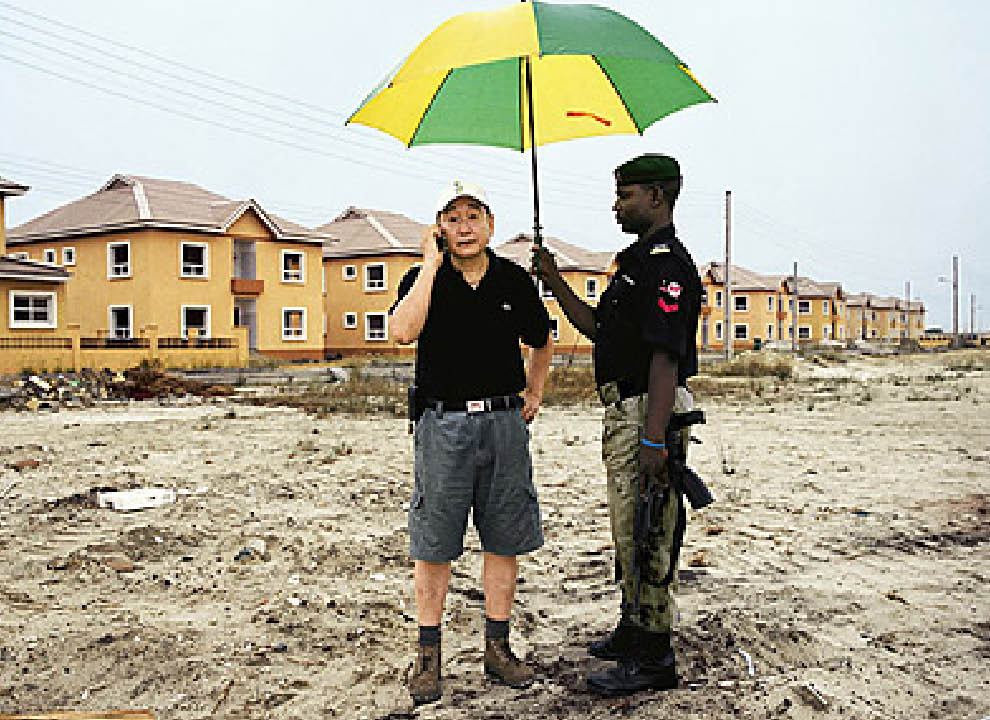
For its part, China, which had been building its presence on the continent jumped at the African opportunity by pouring superior amounts of their foreign direct investment on infrastructure. Compared to the US which spent 70% of its foreign assistance on health, the Chinese literally built roads, hospitals, office buildings and stadiums while continuing to cut all manner of deals for commodities like oil and steel and timber to feed their insatiable demand for commodities.
Eventually, the Middle Kingdom ended the US’ reign as Africa’s biggest single trading partner less than 4 years ago. In 2012, China is, pun unintended, king of the jungle, and may even do upwards of USD $220 bn worth trade with Africa.
Chinks in the armor
Even as successful as China has been in asserting itself, there are, pun intended, cracks in this partnership. The Economist says Chinese construction in Africa is ‘sloppy’ and ‘slapdash.’ An Angolan hospital built and opened with great Chinese fanfare closed within a few months as cracks appeared in the walls.
The Christian Science Monitor says photographs of a leaking ceiling in the new African Union headquarters in Addis Ababa lately made social media round deriding Chinese construction.
This notwithstanding, a May 2012 Los Angeles Times article reported a GlobeScan poll that showed China as more popular than the US. The same report noted that the way China treated its own people, its economic plus foreign policy also harmed the world.
While specific obloquy is usually reserved for America around the world – recently fueled by 8 years of an Us vs. Them Bush foreign policy – US favorability under Obama is on the up and up. Paradoxically, Bush’s investments in Africa’s health seem to have purchased lots of African goodwill. As for China’s relationship with Africa, on top of being ‘unsustainable’ as per South Africa’s Jacob Zuma, African nations silently root for Team USA because, like Juma insinuates, Obama is such a deal sweetener. A visit to the continent this second term may just seal the deal!
[Continues on the Next Page]
