
A Diaspora View of Africa
Will Resource Nationalism Overcome Human Rights?

By Gregory Simpkins
During the most recent edition of the podcast Real Talk Habari, we had significant discussion concerning resource nationalism and the value it brought to countries and their people on the continent.
This term, as defined by Wikipedia, describes the tendency of people and governments to assert control over natural resources located within their territory. As a result, resource nationalism conflicts with the interests of multinational corporations.
It is mainly enforced, the site states, as an economic policy in an authoritarian or populist style by governments that rely on state ownership or control of natural resources located within their territories to advance political, social or industrial objectives. This emphasizes that resources belonging to the people of the country is primarily the focus, and for some resource nationalists, state employment is the best manager of resources against privatization.
Resource nationalism is implemented through higher royalties, state ownership stakes, export bans on raw ore, requirements to process locally or renegotiating contracts with foreign mining/oil companies.
Economic Gains: Revenue, Jobs, and Local Value
It has had mixed results across Africa, but where it has worked, the benefits have been tangible through increased government revenue, which is the most direct benefit:
- Diamonds in Botswana is the classic success case. Since 1969, the government negotiated a 50/50 joint venture with De Beers – Debswana. Diamond revenues fund 30-40 percent of the national budget. Botswana used that to rise from one of the world’s poorest countries at independence in 1966 to an upper-middle income nation, with free education and healthcare funded by diamond profits.
- In Zambia, the privatization of copper in the 1990s gave very low royalties (0.6 percent), so the government raised royalties to 5-10 percent and introduced windfall taxes after 2008 and again in 2022. Mining tax revenue tripled between 2021-2023, funding free secondary education.
- A local content law (NOGICD Act 2010) increased the Nigerian share of oil contracts from 5 percent to more than 30 percent, creating more tax revenue and domestic firms.
This process also has led to more local jobs and businesses, as local content requirements force companies to hire and buy locally:
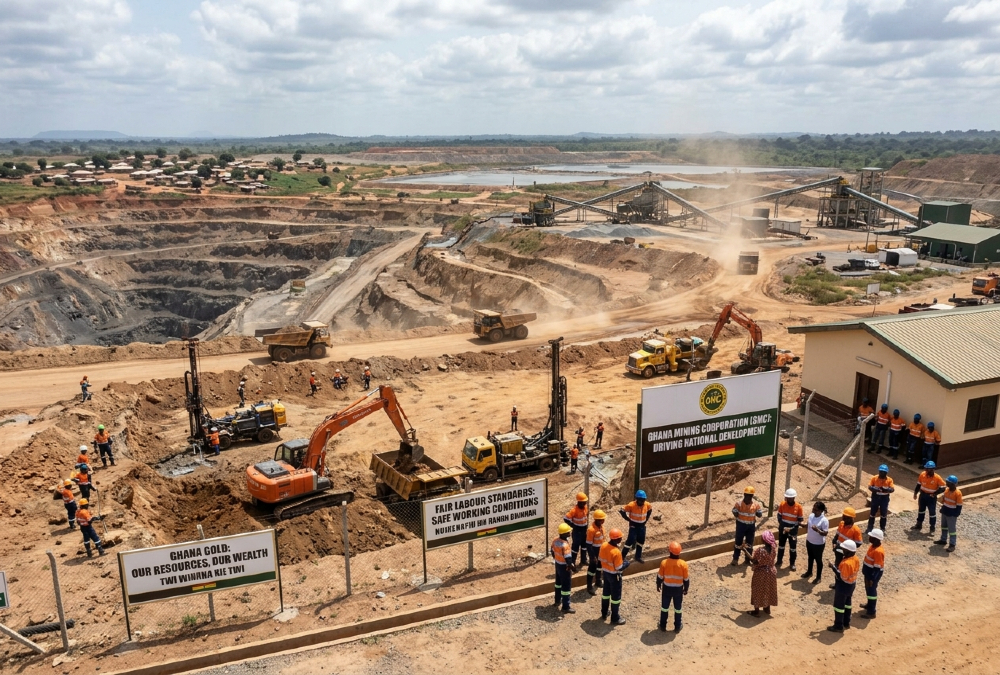
- In Ghana, mining regulations require preference for Ghanaians and Ghanaian suppliers. The Petroleum Commission reports Ghanaian participation in oil services grew from about 10 percent in 2013 to around 80 percent by 2023.
- After 2017 Tanzanian reforms under President John Magufuli that banned raw mineral exports and required government to hold at least a 16 percent free-carry stake, the government collected more in mining royalties in 2020-2022 than in the previous 10 years combined. Revenue was earmarked for rural electrification and university loans.
This process also can push for value addition, not just extraction, as export bans on unprocessed ore are meant to keep processing jobs in Africa:
- The Democratic Republic of the Congo produces approximately 70 percent of world’s cobalt. In 2022, it declared cobalt a strategic mineral, raising royalties from 2 percent to 10 percent and trying to formalize processing. A battery precursor plant is now being developed in Lubumbashi.
- As the result of a 2022 ban on raw lithium ore exports in Zimbabwe, Chinese firms like Zhejiang Huayou built lithium processing plants inside the country instead of shipping raw ore out. More than US$1 billion in processing investments was announced in 2023-24.
- Copying the Indonesia model, several African states explicitly cite as their model the Asian country’s nickel export ban, which forced smelters to be built locally.
Sovereignty and Social Impact
Resource nationalism provides greater bargaining power and sovereignty by creating state-owned enterprises and renegotiating colonial-era contracts, whereby governments gain leverage:
- In Niger, for 50 years Orano (formerly Areva) of France mined uranium under terms critics said gave Niger only about 5 percent of revenues. In 2023-2024 the new government renegotiated, demanding higher royalties and more oversight. The intent is to capture more value, though the outcome is still playing out.
- Namibia negotiated 50/50 ventures similar to Botswana and now gets substantial dividends from Namdeb on diamonds and lithium.
Finally, resource nationalism can provide funding for social programs, when revenues are well-managed and transparent:
- Botswana used resource rents to build roads, schools and hospitals in a country that had only 12 kilometers (7.5 miles) of paved road in 1966. Botswana’s Pula Fund, a sovereign wealth fund, saves diamond revenue for future generations.
The Reality vs. the Promise
Research shows benefits are largest when countries have strong negotiating capacity (lawyers, geologists), a stable policy (investors need predictability, not constant changes) and transparent revenue management.
When those are missing, resource nationalism has sometimes led to production drops, court battles and mine closures as investors pull out. The battery minerals boom (cobalt, lithium, graphite, copper) is giving African states more leverage now than in the last 20 years, but are governments truly using this advantage for the benefit of citizens?
Juntas Claim Wins for Their Citizens
In the three junta-led West African governments of Burkina Faso, Mali and Niger, which have spearheaded the trend toward resource nationalism, have claimed benefits for their people.
All three juntas say extra mining revenue directly funds army operations against insurgents, which is the primary citizen concern. Analysts note the move satisfies public opinion that resources are no longer sold out to foreigners, especially France.
The “gold is our patrimony” narrative helps juntas stay in power, addressing legal instability driving investors to other countries, the risk of production drops and mines shutting due to insecurity – five mines in Burkina already were shut before nationalization. That results in the loss of expertise and capital for complex mines. Further, correcting such problems would prevent international arbitration cases at the International Centre for Settlement of Investment Disputes that could cost states hundreds of millions in litigation.
Additionally, formalizing artisanal miners, bringing two million artisanal miners into the state buying system, could reduce exploitation by middlemen and improve safety, if implemented.
A Darkening Picture on Rights and Security
Unfortunately, the Civicus Monitor, which tracks the latest developments to freedoms of expression, association and peaceful assembly across 198 countries and territories, downgraded Burkina Faso to the status of “repressed” – the same status held by Mali and Niger, their two neighbors and partners in the Alliance of Sahel States.
Civil society groups and experts have documented a host of rights violations in all three countries, where military rulers who once promised an orderly transition period back to civilian government instead have banned and dissolved all political parties, as well as postponed or questioned the electoral process.
The heads of state of Burkina Faso, Mali and Niger all used the issues of soaring insecurity and expansion of Sahel-based terrorist groups as justification for seizing power through coups. But Daniel Eizenga, a researcher with the Africa Center for Strategic Studies, said the junta leaders have deprioritized national security and eschewed broader regional collaboration to focus on managing domestic dissent.
“The consolidation of political power has taken precedence over the reassessment and adaptation demanded by a rapidly evolving security environment,” he wrote in a July 14 article. “The effect is to compromise national security. Closing spaces for these voices narrows the discussion precisely when a broader assessment of the region’s deteriorating security trajectory is most needed.”
From ivory to diamonds to oil to critical minerals, African nations for centuries have seen their abundant resources benefit foreign interests rather than their own citizens. Thus, resource nationalism is much-needed and long overdue.
Nevertheless, it must not overcome commitment to the rights of citizens. These rights are not just the fulfillment of international democratic ideals. Without functional watchdog organizations and citizens enabled to keep check on their governments through voting, how will accountability be established and maintained?
As the great American abolitionist and ambassador Frederick Douglass once stated: “Power concedes nothing without a demand. It never did and it never will.”
As we lionize African leaders who are changing the resource landscape, they must be held to account by their citizens first and foremost. That will not be possible if freedoms of speech and assembly and the right to change governments that don’t provide for the needs of their citizens are taken away.
Gregory Simpkins, a longtime specialist in African policy development, is the Principal of 21st Century Solutions. He consults with organizations on African policy issues generally, especially in relating to the U.S. Government. He further acts as a consultant to the African Merchants Association, where he advises the Association in its efforts to stimulate an increase in trade between several hundred African Diaspora small and medium enterprises and their African partners.
