
Opinion
Who Really Controls Africa’s Critical Minerals?

By Dishant Shah
On paper, Africa is a geological powerhouse. The continent harbors nearly 30 percent of the world’s known reserves of cobalt, lithium, manganese, rare earth elements, and other critical minerals – essential inputs for electric vehicles, grid-scale batteries, and the expanding infrastructure of artificial intelligence.
But possession of raw resources is not the same as control over their value – or their destiny.
As the old adage goes: it’s not who digs the hole that matters – it’s who owns the shovel, who refines the ore, and who sets the price.
The Illusion of Ownership
Consider the Democratic Republic of the Congo (DR Congo), which supplies more than 70 percent of the world’s cobalt. Yet the majority of its large-scale mining operations are financed, operated, or co-owned by Chinese firms – often through joint ventures with state-backed Congolese entities.
Zimbabwe and Mozambique sit atop vast lithium deposits, but the refining, battery-grade processing, and high-value manufacturing occur thousands of miles away, primarily in China and Europe.
Morocco commands the lion’s share of global phosphate reserves; South Africa leads in platinum-group metals and manganese. Yet despite this abundance, Africa captures a mere 10 percent of the total revenue generated across the full mineral value chain.
The lion’s share – refining, component manufacturing, branding, and final sales – flows offshore.
So, who truly “holds” Africa’s critical minerals?
- Geologically? Africa does.
- Financially and industrially? Multinational corporations – led by Chinese state-linked enterprises – do.
- Morally and socially? Local communities and artisanal miners bear the environmental and human costs, yet reap the smallest rewards.
From Extraction to Empowerment
This imbalance is not inevitable. It is the product of decades of extractive economic models, weak regulatory frameworks, and underinvestment in industrial capacity.
But a shift is underway.
The DR Congo and Zambia are forging a regional alliance to develop a local battery supply chain. Namibia has introduced stricter export controls on raw lithium to incentivize domestic processing.
Ghana, Rwanda, and others are exploring sovereign mineral funds and local content requirements to ensure greater value retention.
The lesson is clear: the so-called “resource curse” is not a geological fate – it is a policy choice. And African nations are beginning to choose differently.
Building Ecosystems, Not Just Mines
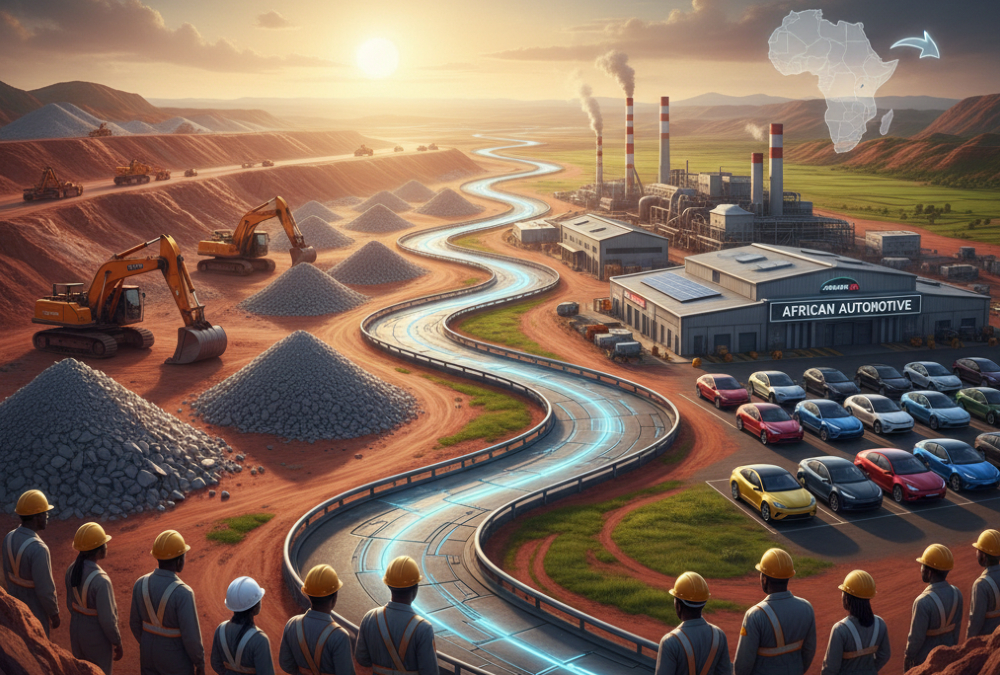
The path forward demands more than just better contracts. It requires building ecosystems – not just mines.
It means investing in refining infrastructure, technical education, and regional integration. It calls for partnerships that prioritize shared value over short-term extraction.
If Africa can pivot from raw material exporter to strategic player in the clean-tech supply chain, it won’t just hold the world’s critical minerals – it will help shape the future of global energy, mobility, and digital infrastructure.
The question now is strategic, not rhetorical: Should African nations prioritize local refining and industrialization – even at the cost of slower short-term revenues – or double down on extraction to fuel immediate fiscal needs?
The answer may determine whether the continent remains a supplier of raw inputs – or becomes an architect of the next industrial era.
Dishant Shah is a partner at Legion Exim, a company specializing in facilitating the export of high-quality engineering products directly sourced from manufacturers in India to Africa. His areas of expertise include new business development and business management.
