
Opinion
We need more African American men in medicine. How do we get them there?
There are many reasons for this crisis. Among them are tremendously leaking pipelines throughout the education continuum for African Americans in general and African American males in particular. Too many African American males drop out before graduating from high school. Of those who stay, too many lose interest in science, technology, engineering and math (STEM) disciplines before or during high school. Of those who succeed in entering college with STEM majors, many will change their majors. Then, of those who succeed in taking the Medical College Admission Test or the (MCAT) exam, most will not apply to medical school for reasons we do not yet understand. And finally, of those who take the MCAT exam and apply to medical school, 61 percent are not accepted.
This leads us to another reason for this crisis: the enormous value placed on MCAT scores in our admissions criteria to U.S. medical schools. Often, students with scores 2 or 3 points below the national average – like Davon Thomas – do not get interviews. Consequently, hundreds of aspiring physicians each year are effectively denied access to medical school, which disproportionately impacts African Americans and other underrepresented minorities.
The MCAT exam is but one piece of quantitative data that should be considered in assessing a student’s ability to be successful in medicine. Undergraduate grade-point average is another. However, qualitative markers that help measure perseverance, persistence, and a commitment to serve others are also critically important in assessing an applicant’s ability to bring value to a team of health care providers. And those characteristics, coupled with quantitative measures, should be assessed through a very systematic and holistic interview process.
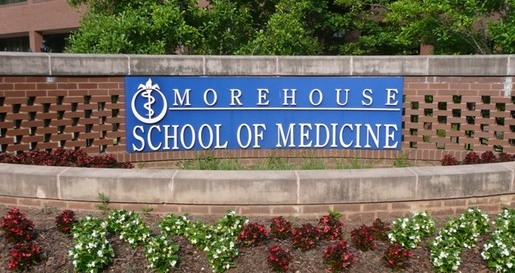
That is why the nation’s 4 historically black medical schools – Morehouse School of Medicine, Meharry Medical College, Howard University College of Medicine, and Charles R. Drew University of Medicine and Science – continue to enroll and graduate a disproportionate number of underrepresented minorities in medical school.
According to AAMC data, of the top 17 U.S. medical schools who graduated African American physicians over the last 32 years, Morehouse School of Medicine, Meharry and Howard alone graduated nearly half of them.
At Morehouse School of Medicine, we purposefully accept students with a range of MCAT scores because we value cognitive diversity and see each day the limitations of the MCAT score in predicting success. And despite accepting some students with MCAT scores below the national average, our students’ United States Medical Licensing Examination (USMLE) Step 1 first-time taker board pass rates and scores consistently meet or exceed the national average.
To be sure, the historically black medical schools are doing their part to diversify the health care workforce. But they must not be the only medical institutions charged with this profoundly critical mission. This is a national – indeed an American – issue, and the health of our country weighs delicately in the balance.
The AAMC report calls on “leaders across the education continuum, from kindergarten through professional school, to rise to the challenge of increasing the number of African American males in medicine.” I join that call. As education, business and policy leaders, we must address both ends of the pipeline.
On the front end, we must increase funding and strategic collaborations in K-12 pipeline programs to attract and sustain more young African American males to STEM disciplines as we fiercely address stunning drop out, jobless and incarceration rates. On the back-end, we in academic medicine must think differently about the admissions and enrollment process, using both quantitative and qualitative measures to gauge one’s ability to succeed and add critical value to health care teams.
The research is clear that physicians who are members of underrepresented minority groups disproportionately chose primary care fields that have the greatest impact on vulnerable populations and creating health equity.
