
Alorh’s eye on the Motherland
Understanding ECOWAS and the Confederation of Sahel States

By Mary Alorh
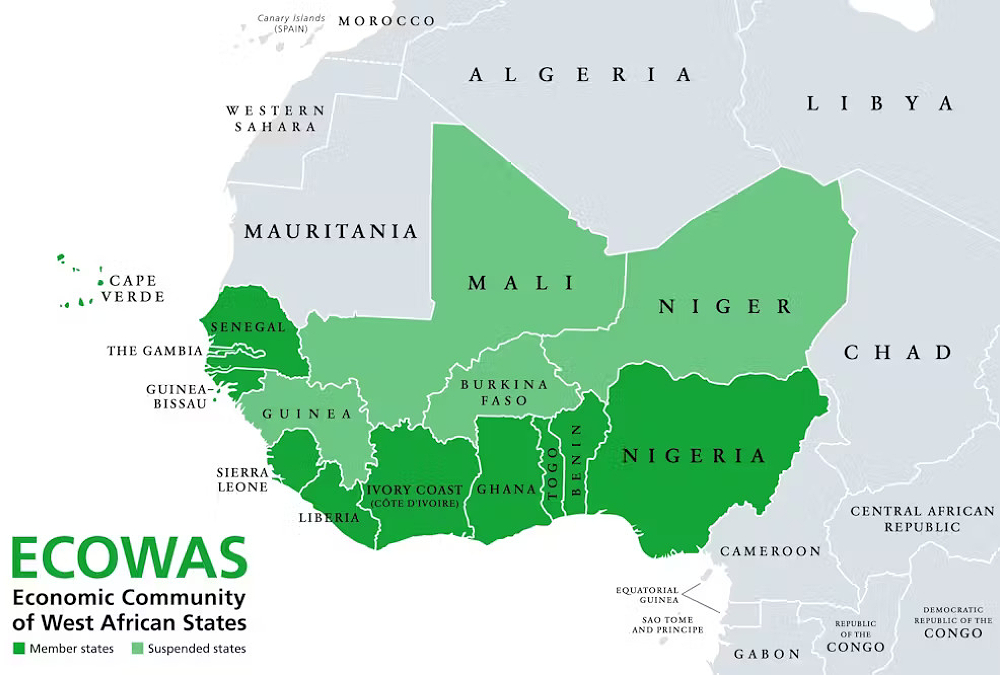
The Economic Community of West African States (ECOWAS), a regional organization in West Africa, has recently faced challenges due to the formation of the Confederation of Sahel States (AES).
Historically, ECOWAS has played a crucial role in protecting the citizens within its member states. During the conflicts in Liberia and Sierra Leone, the ECOWAS military contingent, ECOMOG, was instrumental in safeguarding lives and properties and supporting the restoration of peace and stability post-war.
A key figure in ECOWAS’s history, former Nigerian President Olusegun Obasanjo, is remembered for his strong and decisive leadership during his tenure as the ECOWAS chair.
Economically, ECOWAS has been one of the leading regional blocs, with substantial intra-bloc trade even before the Africa Continental Free Trade Agreement came into effect.
In recent years, ECOWAS’s leadership has been marred by questions of legitimacy within their own countries.
The region has experienced significant terrorist insurgencies since the aftermath of the Libya war, affecting countries like Nigeria, Niger, Burkina Faso, Mali, and Côte d’Ivoire. These insurgencies have brought unprecedented insecurity to the bloc.
The growing insecurity within ECOWAS has become a major global concern due to the economic significance of its member nations. The #BringBackOurGirls campaign still resonates, highlighting the abduction of the Chibok girls in Nigeria.
The situation worsened with ongoing attacks in Mali, Nigeria, and Burkina Faso, leading to a decline in the citizens’ quality of life. The governments of these countries and ECOWAS struggled to address the escalating security issues. In response, three countries – Burkina Faso, Mali, and Niger – opted for coups and established new governments to tackle the insecurity from a different perspective.
ECOWAS’s immediate reaction was to impose sanctions on these nations, which further exacerbated their struggles. For example, landlocked Mali’s construction industry suffered significantly due to the import restrictions on building materials within the ECOWAS zone.
In Niger, ECOWAS not only imposed sanctions but also threatened military intervention. However, these nations did not succumb to the ECOWAS sanctions and instead formed the Confederation of Sahel States.
ECOWAS now faces the need to reinvent and reorganize itself, as it is increasingly perceived as serving foreign interests rather than the interests of its people.
In conclusion, when a nation’s security and livelihood are at stake, sanctions should not be the initial response, especially when ECOWAS has not been particularly effective in aiding these countries.
Mary Alorh is Director of Administration at DefSEC Analytics Africa Ltd., and is an expert in Gender, Youth, and Peace & Security initiatives in West Africa.
