
Alorh’s eye on the Motherland
Biden administration’s US Foreign Policy toward Africa

By Mary Alorh
As Joe Biden concludes his tenure as the 46th President of the United States, it’s an opportune moment to reflect on his administration’s relationship with Africa.
Expectations were high for a shift in US-Africa relations from the policies of the Trump administration. The Biden administration encountered significant competition from global powers such as China, Russia, and Turkey in their dealings with Africa.
The administration developed a policy framework for Africa focused on the following key areas: promoting open societies and governance, enhancing democracy, ensuring security, and more.
Although Biden himself was unable to visit the continent as he had promised, several top officials, including Vice President Kamala Harris and FBI Director Christopher Wray, visited Africa to advance US cooperation and partnership.
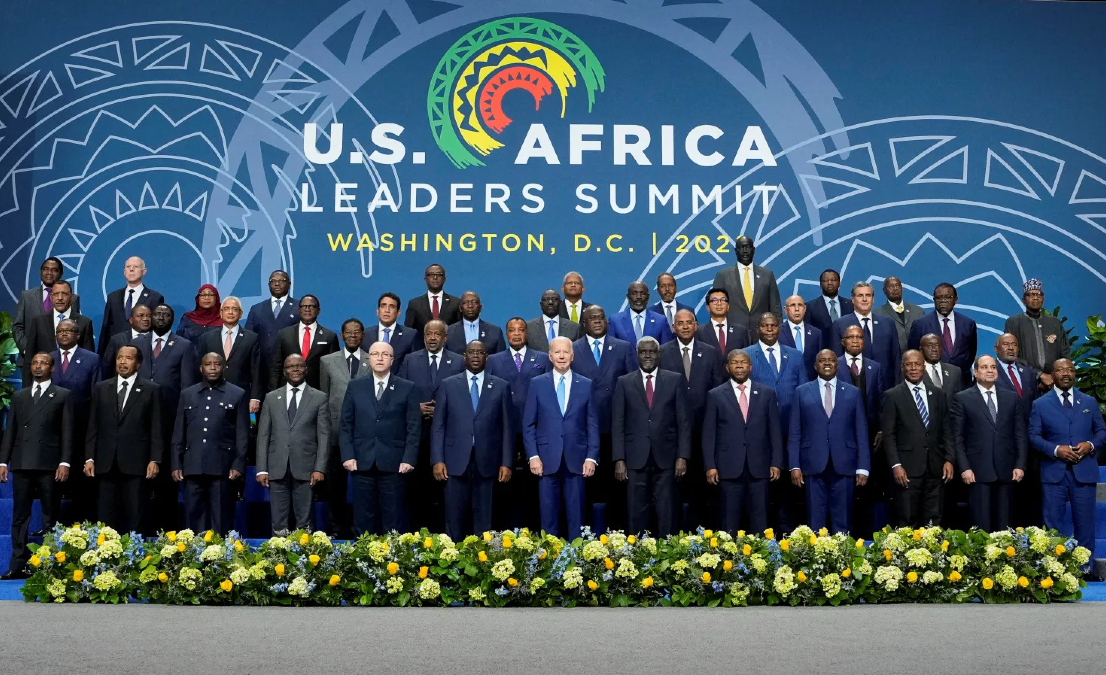
In 2022, the administration hosted the second US-Africa Leadership Summit (ALS) under the theme “Strengthening Partnerships to Meet Shared Priorities.” The summit resulted in several commitments and planned initiatives addressing democracy, food security, health, and more.
At the United Nations, Biden advocated for a permanent seat for the African Union on the Group of 20 (G20), a move that received widespread approval.
The administration pledged approximately US$350 million to enhance digital access, literacy, and digital infrastructure on the continent.
In its continued cooperation with Africa, the administration launched the next phase of the Young African Leadership Initiative (YALI) with over US$100 million to build the capacity of young African leaders for the continent’s development.
Recognizing the crucial role of the African Growth and Opportunity Act (AGOA) in US-Africa economic relations for over two decades, the administration spearheaded the next phase of AGOA through the Washington AGOA Forum, led by the United States Trade Representative, Katherine Tai.
A memorandum of understanding was signed to deepen cooperation between the two regions. The goal is to foster equitable, sustainable, and inclusive trade, enhance competitiveness, and attract investment under the African Continental Free Trade Area (AfCFTA).
On security, the administration faced challenges from terrorism and instability in the sub-Saharan region. This situation has contributed to a decline in democracy and a rise in coups, impacting AFRICOM operations on the continent.
The administration was also expected to advocate for the removal of sanctions on countries like Zimbabwe and South Sudan, which have severely damaged their economies and hindered their ability to secure international financial support.
In conclusion, while the Biden administration has made strides in building collaboration and partnership with Africa, there remains room for stronger US-Africa relations to further mutual development.
Mary Alorh is Director of Administration at DefSEC Analytics Africa Ltd., and is an expert in Gender, Youth, and Peace & Security initiatives in West Africa.
