
Alorh’s eye on the Motherland
China continues to harness its interest in the continent of Africa amidst the heat of geopolitical competition

By Mary Alorh
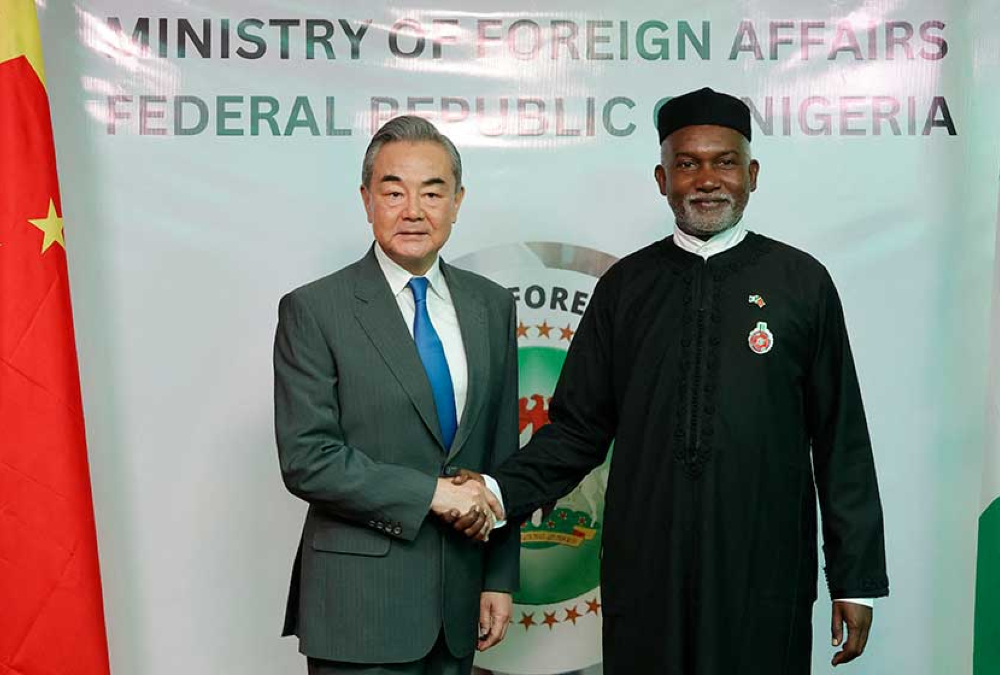
The recent visit of China’s foreign minister to Nigeria, the continent’s most populous country and a key trade partner, has reinforced the strong economic relationship between the two nations. A major outcome of this visit was the renewal of a US$2 billion currency-swap agreement aimed at bolstering trade and investment over the next three years.
The currency swap is designed to deepen financial cooperation between the two countries, facilitating the use of their local currencies – the renminbi (RMB) and the naira – in bilateral trade. According to the People’s Bank of China, the agreement aims to reduce dependence on the U.S. dollar, which has often created economic challenges for countries like Nigeria that face volatile exchange rates and inflationary pressures.
Trade Dynamics Between Nigeria and China
China has solidified its position as Nigeria’s largest trading partner, surpassing the United States. In 2022, China exported US$21.4 billion worth of goods to Nigeria, while Nigeria’s exports to China amounted to US$1.52 billion.
However, the trade imbalance persists, with Nigeria’s exports primarily consisting of raw materials such as:
- Mineral fuels, oils, and distillation products: US$1.18 billion
- Oil seeds, oleaginous fruits, and grains: US$141.20 million
- Ores, slag, and ash: US$102.68 million
- Copper: US$76.40 million
In contrast, China’s exports to Nigeria are heavily focused on industrial and technological goods, including:
- Machinery, nuclear reactors, and boilers: US$3.01 billion
- Electrical and electronic equipment: US$1.80 billion
- Vehicles: US$674.86 million
- Miscellaneous commodities: US$686.60 million
China now accounts for 22.7 percent of Nigeria’s total imports, cementing its role as Nigeria’s leading import partner.
Challenges and Opportunities
While these agreements present opportunities on paper, they often fall short of delivering equitable benefits. Larger economies like China tend to gain more, while smaller economies like Nigeria struggle to leverage the full potential of such partnerships.
One critical challenge lies in Nigeria’s export structure, which is heavily reliant on unprocessed raw materials. Despite the country’s potential to add value through industrialization, limited infrastructure and unreliable power supply hinder progress.
For instance, initiatives like the Nigeria Public Industrial Park in Ondo State – a 225-hectare facility aimed at fostering industrial growth – face significant obstacles due to inconsistent electricity supply, which affects both households and industrial operations.
Additionally, Africa as a whole faces the issue of becoming a dumping ground for products ranging from high-quality goods to substandard ones. Addressing this requires a strategic shift in policy and practice.
Path Forward
To maximize trade opportunities and foster sustainable growth, African governments, including Nigeria, must prioritize value addition, industrialization, and infrastructure development. Collaborating with the private sector and leveraging technology will be critical in diversifying economies and reducing dependence on imports.
Revisiting and revitalizing industrial projects, improving power supply, and promoting the development of local industries are essential steps toward achieving self-reliance and equitable trade. These measures will not only strengthen Nigeria’s economic position but also contribute to the broader economic development of the African continent.
Mary Alorh is Director of Administration at DefSEC Analytics Africa Ltd., and is an expert in Gender, Youth, and Peace & Security initiatives in West Africa.
