
Alorh’s eye on the Motherland
The Hidden Cost of Visa Denials: How Discriminatory Policies Push Africans Toward Dangerous Migration Routes

By Mary Alorh
When stories of visa denials echo across Africa, it becomes painfully clear why so many young Africans – men and women alike – are driven to risk their lives crossing the Mediterranean in search of opportunities in Europe and beyond.
One cannot help but question whether visa applications are truly evaluated with fairness and due diligence. A recent post by CNN Africa correspondent Larry Madowo highlights just how arbitrary these decisions can be.
He shared the story of a binational couple – one South African, the other a French-born Cameroonian – who submitted identical documents for a Schengen visa to France. The woman was approved; the man was denied.
After a successful appeal, he not only received a rare reversal but also €1,200 (US$1,366) in compensation – a small acknowledgment of an all-too-familiar injustice.
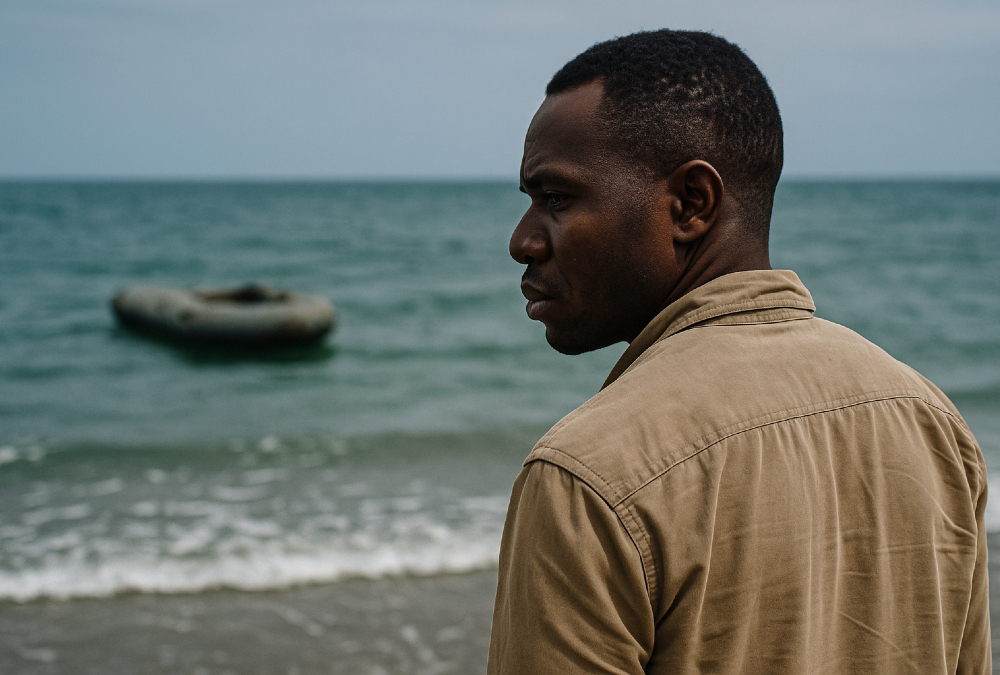
These systemic barriers push desperate individuals toward dangerous alternatives. Many turn to unregulated, perilous sea routes across the Mediterranean, where journeys often end in tragedy.
Such experiences are not unique to this couple. Across Africa, highly qualified individuals – including students, professionals, and entrepreneurs – are frequently turned away without clear justification.
Take Ghana, for instance. In 2024, the U.S. Embassy in Accra processed 61,000 visa applications across multiple categories – including F1 (student), B1/B2 (tourist), and H-1B (work visas) – approving just over 25,000.
That’s a mere 40 percent approval rate. Even those with scholarships and confirmed university admissions were among the rejected.
Each visa application comes at a cost – nonrefundable fees that add up quickly. For Ghanaians alone, the total value of these applications amounted to approximately US$10 million. Of that, about US$6.6 million – linked to nearly 36,000 rejections – was lost entirely.
A System That Excludes the Most Qualified
And Ghana is not alone. Nigeria tells a similar story.
In 2024, more than 50,000 Nigerian applicants were denied short-stay Schengen visas, each having paid around US$100 per application. This represents nearly US$5 million in unrecoverable fees, despite many applicants being businesspeople with pending deals or students who had secured admission abroad.
Across the continent, African nations collectively lost over US$65 million on visa applications to the European Union’s Schengen area last year. Despite often meeting the same criteria as applicants from other regions, African citizens continue to face some of the highest rejection rates globally – ranging between 40 percent and 59 percent in countries like Ghana, Senegal, and Nigeria.
These systemic barriers push desperate individuals toward dangerous alternatives. Many turn to unregulated, perilous sea routes across the Mediterranean, where journeys often end in tragedy.
Ironically, these deaths compound the very crisis the EU seeks to mitigate: irregular migration.
Billions are spent annually by the EU to secure its borders and manage migrant flows along key routes such as the Central, Eastern, and Western Mediterranean corridors. Yet, until there is meaningful reform in visa policies and a more equitable assessment process, people will continue to seek unsafe paths in pursuit of opportunity.
It is time for regional bodies like the African Union and the European Union to leverage their diplomatic ties and address the root causes of visa inequity. Fair, transparent, and consistent visa policies are not just a matter of administrative efficiency – they are matters of life and death.
Mary Alorh is Director of Administration at DefSEC Analytics Africa Ltd., and is an expert in Gender, Youth, and Peace & Security initiatives in West Africa.
