
Alorh’s eye on the Motherland
Colonial heritage of tension and supremacy

By Mary Alorh
Algeria and Morocco have long held significant roles in North African geopolitics. Both countries are part of the Maghreb and former French colonies, but their differences became more pronounced after gaining independence. Morocco was the first to achieve independence and supported Algeria’s National Liberation Front (FLN) in its fight for freedom.
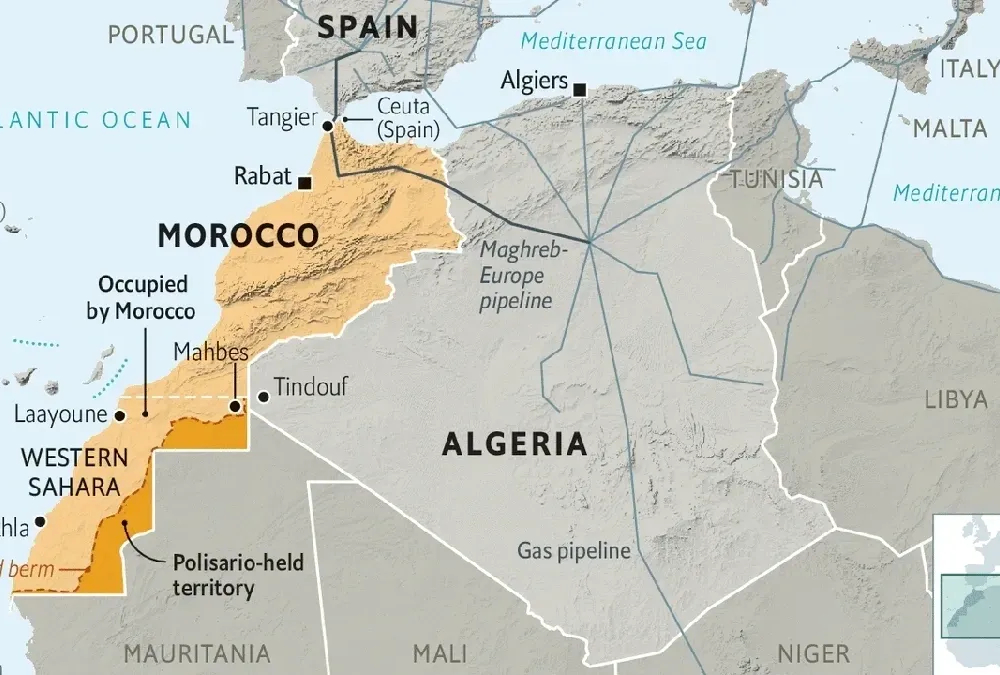
However, following Algeria’s independence, border disputes between the two nations emerged, sparking the Sand War in 1963. The conflict over the control of Western Sahara further strained relations.
During this period, the Cold War was unfolding on the global stage, with Morocco aligning with the U.S. due to its historical ties, while Algeria, driven by its struggle for independence and desire for self-rule, leaned towards the Soviet Union.
Since gaining independence, Morocco has strengthened its relationship with the U.S. and its allies. In 2004, Morocco became a major non-NATO ally and later signed a bilateral trade agreement with the U.S. The U.S. is Morocco’s primary arms supplier, and Morocco aims to modernize its military with plans to invest over US$17 billion by 2030.
In 2020, Morocco further solidified its diplomatic ties with the U.S. by signing an agreement with Israel, a key U.S. ally in the Middle East and North Africa (MENA) region, to promote economic trade and friendly relations. In return, the U.S. recognized Morocco’s sovereignty over Western Sahara.
Algeria, shaped by its colonial history, has historically opposed Western military interventions and maintained a stronger alignment with Soviet ideals. In 2003, Algeria was a vocal critic of the Iraq war, and in 2011, it strongly opposed NATO’s intervention in Libya.
Recently, Algeria has shifted its focus towards China and the BRICS nations. It maintains the second-largest military budget in Africa and has sought Russian support to modernize its military. Algeria also plays a strategic role in China’s Belt and Road Initiative in the Mediterranean.
Global geopolitics have influenced Algeria’s foreign policy as well. In 2017, Algeria amended its constitution to allow the deployment of its troops in peacekeeping missions, particularly under the African Union, and to intervene in Libya. In 2022, Algeria stepped in to supply Europe with much-needed gas after Russia’s invasion of Ukraine, leading to its first budget surplus of US$53.5 billion in almost a decade.
Algeria has continued its diplomatic efforts by applying to join the BRICS nations in 2022 and strengthening ties with the Arab League, hosting the Arab Summit that same year. Its seat on the UN Security Council has amplified calls for Africa to gain a permanent seat at the council.
The rivalry between Algeria and Morocco is likely to intensify, leading to further adjustments in their political strategies. Military spending in both countries will likely increase, especially in response to any potential provocations.
Mary Alorh is Director of Administration at DefSEC Analytics Africa Ltd., and is an expert in Gender, Youth, and Peace & Security initiatives in West Africa.
