
Alorh’s eye on the Motherland
West African Communities

By Mary Alorh
The rising concerns over terrorism in Ghana have led me to reflect on my journey through West Africa, a region where I witnessed resilience and the power of community amidst numerous challenges. Growing up in Africa, I was always fascinated by the continent’s rich tapestry of cultures and the deep, often unseen connections among its people.
Despite our apparent differences, we share profound bonds.
In Accra, I would frequently meet individuals identifying as Ewe, only to learn they were originally from Togo or Benin. Similarly, encountering a Mossi woman from Burkina Faso and mistaking her for someone from Northern Ghana highlighted the fluidity of cultural identities across national borders.
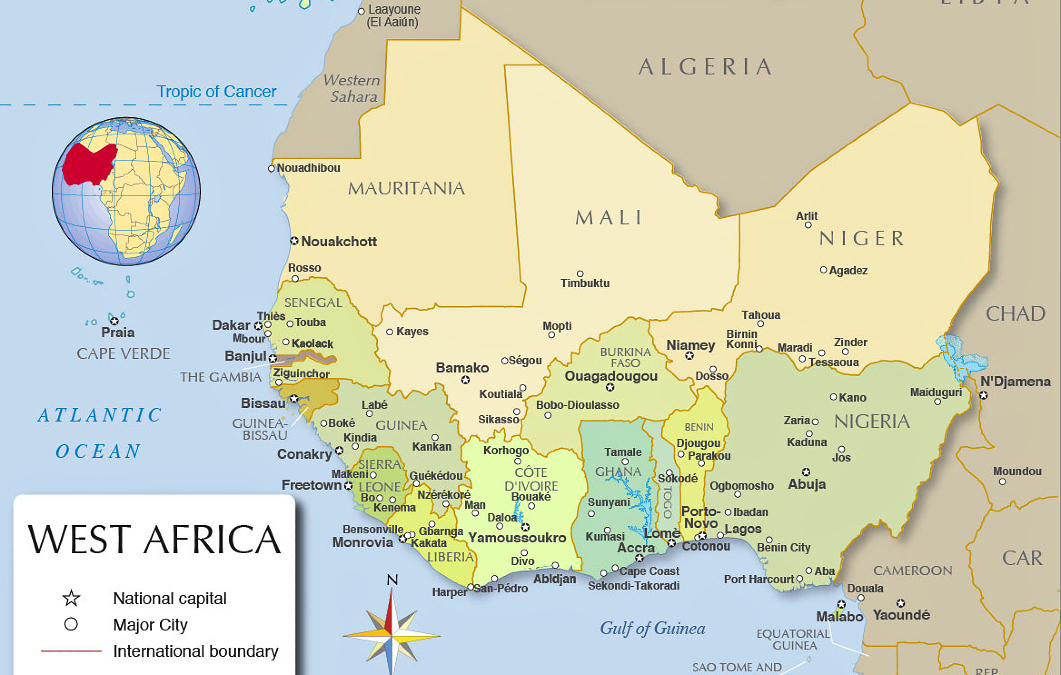
Thirteen years ago, driven by curiosity, I embarked on a journey through West Africa. From Accra, I made my way to Kumasi, a city steeped in the history of the Ashanti people, where I discovered the Mossi Zongo community, whose roots trace back to Burkina Faso.
My next destination was Bamako, Mali, setting out from Kumasi’s Gao station – named after the Malian city on the Niger River, not far from the storied city of Timbuktu. I marveled at the contrast and commonalities of the places I passed. From Hamile at the Ghana-Burkina Faso border, past the old colonial demarcations, to the vibrant city of Segou in Mali, each stop revealed unique traits yet familiar rhythms.
The journey unfolded against the backdrop of stunning landscapes and lush vegetation, enriched by the diverse cultures of every village I visited. Through the Kaye region, I noticed similarities in street food, particularly the methods of meat preparation and kebab vendors.
Small businesses owned by women flourished, with hawking serving as the main method of trade. What stood out was the tradition of mentoring the next generation through on-the-job training.
Ghanaian women were leaders in this field, successfully running businesses even in rural parts of Burkina Faso and Mali.
West Africa is one of the most interconnected places I have encountered. The surprise of hearing Ghanaian music as a ringtone on a Burkinabe or Malian phone never ceased to amaze me. Even more striking was hearing Twi, a dialect of Akan, spoken in a community in Bobo-Dioulasso, Burkina Faso – an unexpected but joyful experience.
Why does this matter now?
As a gender advocate, I have been thinking about the female entrepreneurs I met in Ghana, Burkina Faso, and Mali. These women once ran their businesses in relatively stable environments. But with today’s growing insecurity, marked by Sahel region reprisals, counter-terrorism efforts, and insurgencies, I worry about their safety and livelihoods.
How have these women adapted to these changes? Are their businesses still surviving, or have they had to close up shop? The uncertainty surrounding their current circumstances is troubling. How are women-led small and medium-sized enterprises (SMEs) faring in the Sahel today? Experts often say that SMEs are the backbone of African economies.
Can I still sit by the benches at the Kwame Nkrumah Circle and sip my Malian tea while watching the sky over Bamako?
Mary Alorh is Director of Administration at DefSEC Analytics Africa Ltd., and is an expert in Gender, Youth, and Peace & Security initiatives in West Africa.
