
Alorh’s eye on the Motherland
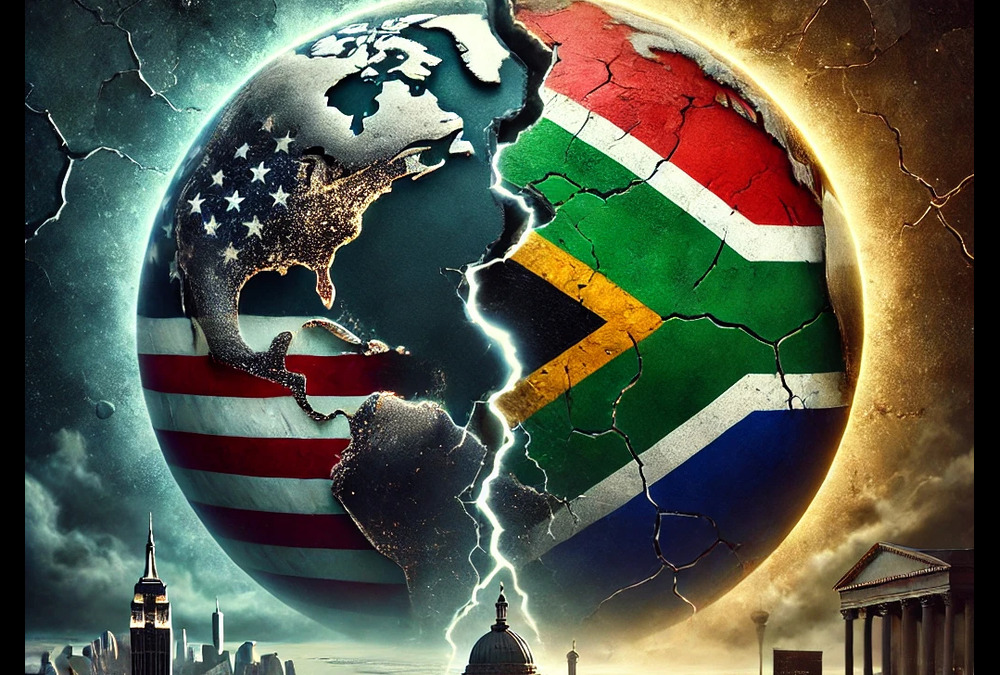
Shifting Alliances: The U.S.-South Africa Diplomatic Rift and Its Global Implications

By Mary Alorh
During my college years as a sociology student, I learned that every policy or action has two sides: the manifest effect, which is immediately visible, and the latent effect, which unfolds over time.
Diplomatic Fallout and Economic Ramifications
The White House’s decision to declare the South African ambassador persona non grata is a striking example of these dual effects in action.
The United States has taken a firm stance on South Africa’s ongoing land reforms, and this has influenced its foreign aid policies. As a result, South Africa’s AIDS patients have been significantly affected.
USAID’s aid cuts have worsened conditions for many individuals who rely on sponsored medications and vaccines.
Now, with the expulsion of the South African ambassador, the situation has reached a new level of diplomatic tension. The manifest effects are clear, but the latent consequences of this move could reshape international alliances in unexpected ways.
South Africa remains a vital trading partner for the United States. In 2024, total U.S.-South Africa trade amounted to US$20.5 billion.
However, U.S. goods exports to South Africa fell by 18.3 percent to US$5.8 billion, while imports from South Africa rose by 4.9 percent to US$14.7 billion.
In an increasingly competitive global landscape, actions like this create openings for other international players to step in and strengthen their influence. South Africa, a key member of BRICS, is also the only African nation included in the European Union’s ten bilateral strategic partnerships worldwide.
The EU Steps In: A New Era of Cooperation
Recognizing this shift, the European Union (EU) is already positioning itself to fill the void left by the U.S. decision. The EU recently announced nearly €5 billion (US$5.46 billion) in investment in the South African economy under the Global Gateway Investment Package. This initiative aims to boost economic growth, create jobs, and address pressing global challenges such as climate change and sustainable development.
The United States must recognize the reality of a multipolar world, where global influence is increasingly shared among diverse nations with competing interests. The ongoing EU-South Africa summit in Cape Town underscores this shift.
After extensive planning, this high-profile meeting marks a crucial moment in the evolving geopolitical landscape.
A key component of this partnership is a bilateral agreement leveraging South Africa’s rich mineral resources alongside the EU’s technical expertise. As the current G20 chair, South Africa is actively working to attract more business – particularly from the EU – by championing multilateralism, green energy, and human rights advocacy.
The EU’s latest moves send a subtle but clear message to the U.S. government, which has been retreating from key global policies, including climate change, human rights, and diversity, equity, and inclusion (DEI). As alliances shift and new partnerships emerge, the United States must adapt to this changing global order to maintain its influence on the continent and beyond.
Mary Alorh is Director of Administration at DefSEC Analytics Africa Ltd., and is an expert in Gender, Youth, and Peace & Security initiatives in West Africa.
