
Alorh’s eye on the Motherland
EU – Africa relations: The journey
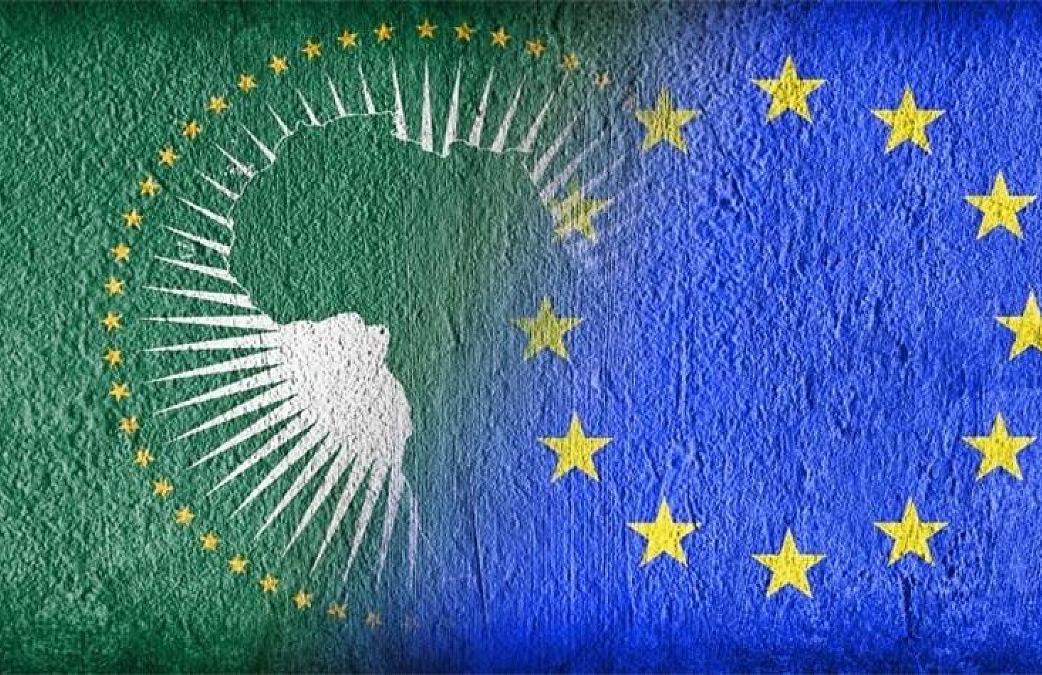

By Mary Alorh
Africa and Europe share a complex history that is currently undergoing significant evolution. African nations are increasingly uniting to assert a collective agenda in global politics, as evidenced by initiatives like the African Continental Free Trade Area (AfCFTA) and the Common African Position (CAP). This unified approach is positioning Africa for rapid growth, with projections indicating it will be the world’s fastest-growing continent by 2027.
In 2022, Europe accounted for 14.5 percent of the world’s gross domestic product (GDP), underscoring its importance in global multilateralism. Despite being a major development partner, Europe’s influence in Africa is waning.
Africa, with its vast reserves of critical raw materials such as copper and lithium, is key to Europe’s green energy ambitions, particularly in smart grid technology. For years, Niger has supplied 20 percent of France’s uranium needs. In 2020 alone, the European Union (EU) received one-third of Africa’s exports and provided one-third of its imports, making it a significant trading partner with a high-growth market potential.
However, political instability in Africa, fueled by public demands for government accountability and exacerbated by the post-pandemic economic downturn and rising debt levels, has led to increased migration and displacement. This growing insecurity, marked by terrorism, banditry, and political instability, has worsened the migrant crisis in Europe.
Africa’s strategic importance to the EU is becoming more apparent, especially concerning the migrant crisis. It is crucial for the EU to partner with Africa in fostering development and creating job opportunities for African youth to address the challenges Europe faces.
Trade tariffs imposed by the EU have harmed African farmers, raising concerns about neo-colonialism and pushing some African nations closer to Russia or China
The African Union’s inclusion in the G20, now making it the G21, signals Africa’s readiness to fully participate and influence the global stage. However, EU policies toward Africa have often been burdened with excessive conditions. Trade tariffs imposed by the EU have harmed African farmers, raising concerns about neo-colonialism and pushing some African nations closer to Russia or China.
African countries are now establishing their own strategies and priorities in the international system, seeking to change the narrative of being reactive and lacking control over their destinies, especially amid competition from China, Russia, Turkey, and others.
The emergence of new powers like China has boosted trade and investment between the EU and Africa. To counter China’s Belt and Road Initiative (BRI) on the continent, the EU has launched its €300 billion (US$329 billion) Global Gateway program, which aims to build significant infrastructure globally.
Half of this funding is expected to be directed toward Africa, focusing on research, energy, transport, technology, and more. An example of this is the construction of 7,100 kilometers (4,412 miles) of high-speed fiber optic networks connecting Africa and the EU through the Medusa-East Africa project.
Despite calls for a paradigm shift in EU-Africa relations, such changes are unlikely to happen soon as the EU is currently in a transitional phase. As a new geopolitical struggle unfolds, Africa is likely to become a key battleground, with the EU playing a crucial role in countering anti-Western narratives. Nevertheless, the EU remains a trusted security and development partner for Africa.
Mary Alorh is Director of Administration at DefSEC Analytics Africa Ltd., and is an expert in Gender, Youth, and Peace & Security initiatives in West Africa.
