
Opinion
Turning Africa’s Plastic Waste Crisis into an Energy Revolution

By Ajay Wasserman
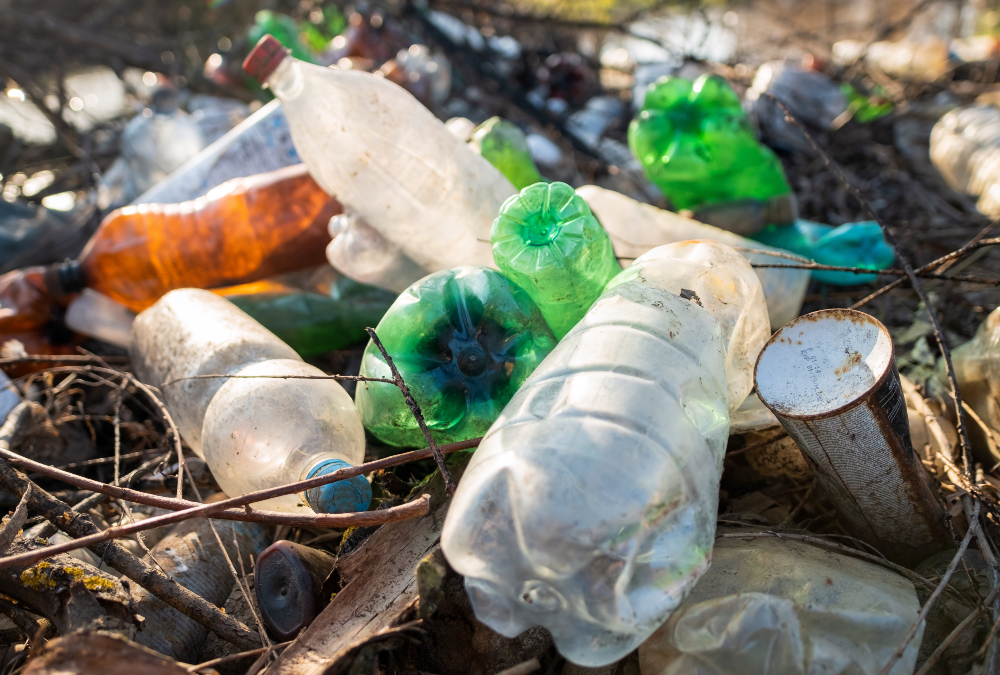
Every year, Africa generates more than 18 million tonnes of plastic waste – enough to fill 180,000 Olympic swimming pools. Much of it ends up clogging rivers, smothering farmland, and poisoning urban ecosystems.
The human and environmental toll is devastating. But beneath this crisis lies a transformative opportunity: turning waste into energy.
Plastic pollution is often framed as a problem to be solved. But in Africa, it can – and must – be reimagined as a resource.
The Hidden Fuel Beneath Our Feet
Consider the numbers. Through advanced thermal conversion technologies, one tonne of non-recyclable plastic waste can yield approximately 700 liters of high-quality liquid fuel – diesel, petrol, or kerosene. Applied across Africa’s annual plastic waste stream, that translates to 12.6 billion liters of recoverable fuel per year.
To put that in perspective:
That’s enough to power over 1 million passenger vehicles for an entire year. It’s equivalent to replacing nearly 10 percent of Sub-Saharan Africa’s imported diesel.
And it could bring clean, reliable energy to more than 20 million off-grid households.
This isn’t science fiction. It’s scalable, commercially viable technology already deployed in Europe, Asia, and North America.
What Africa lacks isn’t the tech – it’s the policy framework, investment capital, and coordinated public-private ecosystems to scale it.
The continent imports over US$50 billion in fossil fuels annually. Meanwhile, its plastic waste stream grows at 12 percent per year – faster than any other region.
This is a classic case of misaligned incentives: we pay billions to import energy while letting a domestic fuel source rot in landfills.
From Pilots to Policy: Building a Continental Movement
Waste-to-energy (WtE) and plastic-to-fuel (PtF) technologies offer a dual win: they reduce environmental degradation while unlocking domestic energy security. Unlike incineration, modern pyrolysis and gasification systems operate with low emissions, capture carbon, and produce clean-burning fuels compatible with existing infrastructure.
Countries like Kenya, Nigeria, Ghana, and Rwanda are already piloting small-scale plants. But these are isolated sparks.
What’s needed is a continent-wide strategy: tax incentives for WtE startups, mandatory plastic waste diversion targets, public-private waste collection partnerships, and dedicated green infrastructure funds.
At Fio Capital, we have invested in three African waste-to-energy ventures in the past 18 months – not because it’s trendy, but because it’s economically rational. Plastic isn’t just pollution.
It’s stranded energy. And Africa, with its youthful population, growing cities, and urgent energy needs, is uniquely positioned to lead the global transition from waste to wealth.
The Real Barrier Isn’t Technology – It’s Willpower
This isn’t about exporting solutions. It’s about homegrown innovation.
Entrepreneurs are already building collection networks using mobile tech. Engineers are designing modular, low-cost pyrolysis units for rural communities.
Investors are waking up to the fact that climate resilience and energy independence are two sides of the same coin.
Yet progress remains fragmented. Why? Because the real bottleneck isn’t access to technology or even capital – it’s political will, regulatory inertia, and the lingering perception that waste management is a “social service,” not a strategic economic lever.
We need national plastic waste audits. We need landfill bans on non-recyclables.
We need energy ministries to formally recognize waste-derived fuels as part of the renewable energy mix. Until then, innovation will remain underground – brilliant, but confined.
The question isn’t whether Africa can turn plastic into power. It’s whether we will act before the tide of waste overwhelms us.
Policymakers must act: Enact extended producer responsibility (EPR) laws. Offer feed-in tariffs for waste-derived fuels. Integrate WtE into national energy plans.
Investors must act: Deploy patient capital. Support local startups. Demand transparency and environmental safeguards.
Citizens must act: Demand better waste management. Support circular brands. Refuse single-use plastics.
The next decade will define Africa’s energy future. We can choose to be the continent that drowns in its waste – or the one that transforms it into fuel, power, and prosperity.
The choice is ours. The time is now.
Ajay Wasserman is the Group CEO and Chief Investment Officer of Fio Capital Group, a private family office and investment holding company based in Pretoria. Focused on empowering entrepreneurs and fostering sustainable growth, he believes the future success of global economies depends on the innovation and leadership of private entrepreneurs and businesses.
