
Opinion
The United States should not sit on the sidelines as economic rivals like China, E.U., invest in Africa
By Jean-Claude Masangu Mulongo
U.S. President Obama has left the continent. During his historic and inspiring visit to Kenya and Ethiopia, he announced several new initiatives and U.S. investments to improve the security and economic situation in Africa. The question is whether this focused American attention will last for years to come.
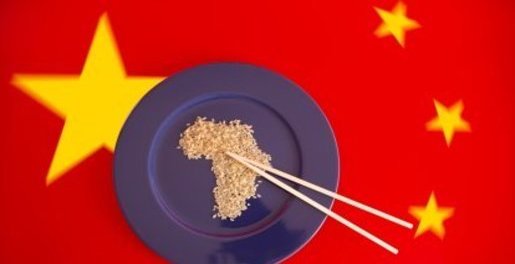
One thing is for sure: while American interest in Africa has waxed and waned while Chinese interest in Africa has only grown. American policymakers must face the fact that China supplanted the U.S. as Africa’s leading trading partner in 2009 and continues to strengthen its economic, political and military ties to the continent.
Quadrupling over 10 years, China-Africa trade grew to US$210 billion in 2013, far exceeding the US$85 billion in U.S.-Africa trade. More than 2,000 Chinese enterprises are investing in Africa, for a total estimated investment of US$20 billion in 2012. For its part, the European Union (EU) is negotiating free-trade agreements with countries in sub-Saharan Africa, while Japan and India are making inroads as well.
With so many countries enhancing their investment and influence in Africa, the U.S. should not sit on the sidelines. From my perspective as a former monetary policymaker in the Democratic Republic of Congo (DRC), I believe I speak for many Africans when I say that the United States is our preferred economic partner. And the nations of Africa have much to offer the United States.
As the home of 8 of the world’s fastest-growing economies, Africa is a major emerging market. While much of the world has been mired in recession, the continent’s economies have grown by more than 5 percent per year.
According to recent estimates, consumer spending in sub-Saharan Africa will rise from US$600 billion in 2010 to an anticipated US$1 trillion in 2020. With China leading the way, foreign direct investment (FDI) tripled from US$15 billion in 2002 to US$46 billion in 2012.
While China engages emerging African markets, the U.S. presence seems to be receding even in longstanding investment destinations such as DRC. The DRC once hosted major U.S. corporations such as General Motors, Goodyear, Gulf Oil-Chevron and Citibank, where I headed DRC operations almost 2 decades ago.
But Citibank has downsized its operations in DRC, while Chevron sold 82 percent of its shares to a French corporation. Together, the United States and Canada account for only 5 percent of DRC’s international trade, trailing the European Union’s 23 percent and China’s 21 percent.
In an important bright spot, Phoenix-based Freeport-McMoRan, one of the world’s largest producers of copper and gold, has become the largest foreign direct investor in DRC, with facilities valued at US$3 billion.
The United States should encourage more companies to establish a presence in DRC and other sub-Saharan African countries by working with the Corporate Council for Africa, the Export-Import Bank (if the U.S. Congress renews its charter), the Overseas Private Insurance Corporation and other institutions. The recent renewal of the African Growth and Opportunity Act (AGOA), providing preferred access to U.S. markets for some African products, is an important step forward.
