
Opinion
The UN’s Cholera Epidemic in Haiti
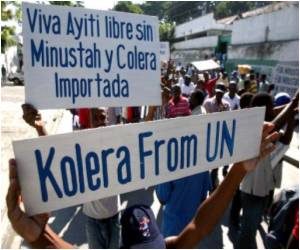
But the UN has so far refused to even admit responsibility; although Bill Clinton, who is the UN’s special envoy for Haiti acknowledged in March that the UN brought cholera to Haiti.
“As cholera was brought to Haiti due to the actions of the UN, we believe that it is imperative for the UN to now act decisively to control the cholera epidemic, ” said Congressional Democrats in an appeal to Susan Rice, the U.S. Ambassador to the United Nations, a few weeks ago. Despite the fact that the letter was signed by the majority of Democrats in the U.S. House of Representatives, it was ignored by the media in the United States. And Rice has yet to respond.
But controlling and putting an end to the epidemic is the least that the UN can do for Haiti, having caused this disaster. We know that it can be done, too, as it has in many other countries, by building the necessary infrastructure so that the people of Haiti can have access to clean drinking water.
The cost has been estimated at about US$800 million, or the amount that the UN spends on keeping its soldiers there for a year.
Haiti has no civil conflict or peacekeeping agreement. The UN military mission in Haiti (MINUSTAH) therefore has no legal or legitimate basis – on the contrary, it was sent there in 2004 to occupy the country after Washington and its allies organized the overthrow of the country’s democratically elected president.
Besides bringing the cholera epidemic to Haiti and wasting billions of dollars, MINUSTAH troops have committed serious abuses, from killings of civilians to sexual abuse. Last September Uruguayan troops were caught on video sexually assaulting an 18-year-old Haitian man.
In the latest MINUSTAH sexual abuse scandal, Pakistani troops were found guilty of raping a 14-year-old boy; they received a year in prison from a Pakistani military tribunal. Perhaps more damning for the UN in this case is that higher UN officials have been implicated by Haitian authorities as having attempted to cover-up the crime.
(More: Analysis: The United Nations legacy in Haiti)
No wonder more than 70 percent of the people of Haiti responding to a recent poll said they wanted MINUSTAH to leave within a year.
