
Opinion
The Renaissance of East Africa: How Ethiopia’s Grand Dam Signals a Shift in Power

By Apollo Buregyeya
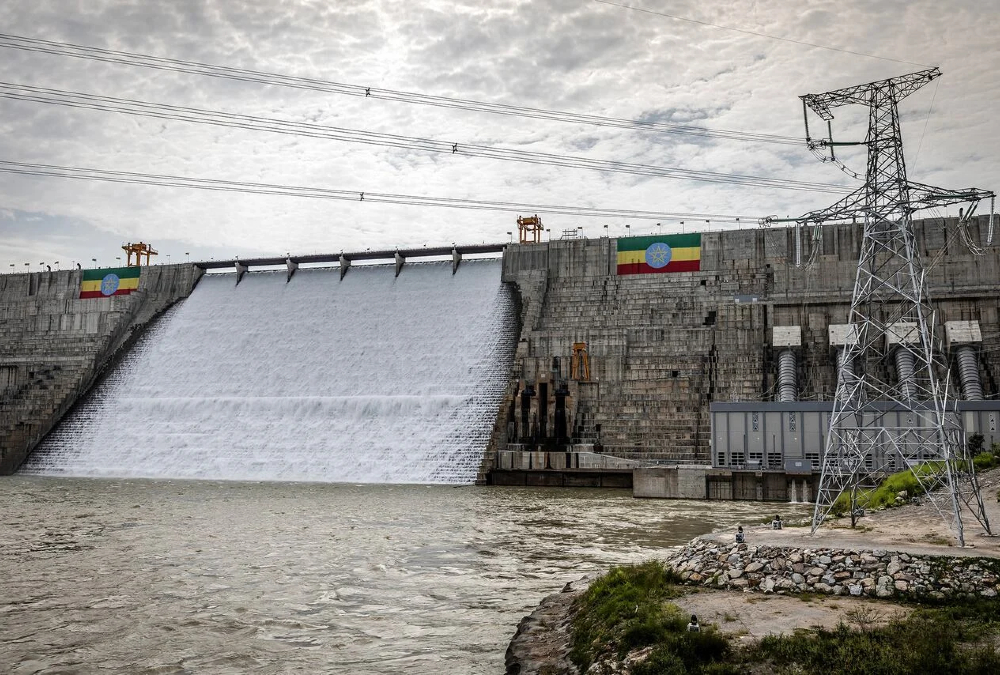
When the Grand Ethiopian Renaissance Dam (GERD) began generating electricity in 2023, it marked more than an engineering triumph – it signaled a seismic shift in the economic and political landscape of East Africa. Standing at 170 meters (558 feet) tall and capable of storing 74 billion cubic meters of water, the dam is not just Ethiopia’s largest infrastructure project; it is the cornerstone of a broader regional transformation.
With over 5,000 megawatts of installed capacity – effectively doubling Ethiopia’s electricity output – the GERD is a catalyst for industrialization. It powers homes, fuels factories, and ignites ambition across a region long constrained by energy poverty.
But beyond kilowatts and concrete, this dam has become a symbol: of sovereignty, self-reliance, and the long-overdue renaissance of East African economies.
Yet, downstream, the reaction has been less about celebration and more about anxiety. Egypt and Sudan have voiced deep concerns, framing the filling of the GERD as an existential threat to their water security.
Egyptian officials have warned of “strategic losses,” while media outlets have painted apocalyptic visions of a Nile running dry. But here lies a critical misunderstanding – or perhaps, a deliberate misrepresentation – of hydrology and history.
The Grand Ethiopian Renaissance Dam is more than concrete and steel. It is a declaration: that Africa’s future will be powered by Africans, for Africans.
The laws of nature remain unchanged: water flows downhill. The Blue Nile, which contributes up to 85 percent of the Nile’s flow during the rainy season, originates in the Ethiopian highlands.
Rainfall driven by Indian Ocean monsoon systems feeds these rivers. Ethiopia does not create the Nile – but it controls its headwaters.
And crucially, the water stored behind the GERD is not lost. It is used first to generate clean, renewable energy before continuing its journey northward to Sudan and Egypt.
In essence, the same drop of water now does double duty: powering turbines in Ethiopia before irrigating cotton fields in the Nile Delta. This efficiency isn’t theft – it’s progress.
The Real Conflict Isn’t About Water – It’s About Power
The real tension, then, is not over water scarcity. It is over power – both electrical and geopolitical.
For decades, Egypt has dominated regional trade, exporting cereals, steel, pharmaceuticals, cosmetics, and ceramics to East African nations. Why?
Because until recently, countries like Uganda, Kenya, and Tanzania lacked reliable electricity to build competitive industries. Without consistent power, manufacturing stalls, value addition falters, and markets remain dependent on imports.
Now, that equation is changing.
Abundant hydropower from projects like the GERD – and future interconnections through the Eastern Africa Power Pool – is enabling local industrialization. Imagine Ugandan steel smelters, Kenyan fertilizer plants, or Tanzanian ceramic factories – all powered by regional hydropower.
These are no longer pipe dreams but emerging realities.
And that prospect unsettles Cairo.
Egypt fears not a drier Nile, but a more dynamic East Africa – one that no longer relies on Egyptian goods, one that competes in regional markets, and one that asserts its own economic agency. With Lake Nasser acting as a massive natural reservoir, Egypt retains significant buffer capacity.
Even under accelerated filling scenarios, experts agree that the impact on Egypt’s annual water share remains manageable with proper coordination.
What is at stake, then, is not survival – but supremacy.
From Dependency to Regional Self-Reliance
The GERD is not merely a national project for Ethiopia. It is a collective milestone for East Africa.
It represents a break from colonial-era dependencies and a move toward regional integration built on shared resources and mutual benefit. Every megawatt generated is a step toward energy independence, industrial diversification, and economic sovereignty.
Yes, dialogue must continue. Transboundary water management demands cooperation, transparency, and trust.
But negotiations cannot be held hostage to nostalgia for unipolar influence. The era of upstream deference is ending.
East Africa is rising – not at Egypt’s expense, but alongside it. The Nile can sustain both turbines and farms, industry and agriculture, if managed collaboratively.
The true spirit of the Nile Basin Initiative should not be rivalry, but synergy.
A Shared Future on the Nile: Toward Cooperation, Not Conflict
The true renaissance sparked by the GERD is not just infrastructural – it is psychological. It reflects a growing confidence among East African nations that they can shape their own destinies.
This is not a zero-sum game. It is the dawn of a new chapter – one where water flows not just downstream, but upward in opportunity, innovation, and inclusive growth.
Cooperation, not confrontation, must define the next phase. Joint monitoring mechanisms, data sharing, and coordinated drought response plans can ensure equitable use without compromising trust.
Regional energy trading could even allow Egypt to purchase surplus hydropower during wet seasons, reducing pressure on its own resources.
The Nile has always been a river of unity in mythology and history. Now, it must become one in practice.
The Grand Ethiopian Renaissance Dam is more than concrete and steel. It is a declaration: that Africa’s future will be powered by Africans, for Africans.
Welcome to the African renaissance. It is being lit, one megawatt at a time.
Apollo Buregyeya, Ph.D., is a civil engineer and entrepreneur focused on developing sustainable African industries that leverage local mineral resources to improve living standards. He is the founder and CEO of Eco Concrete Ltd, a construction company specializing in innovative solutions tailored to the African environment. Committed to resource ownership and appropriate technology for value creation, he also teaches at Makerere University in Kampala, Uganda.
