
Opinion
Steel Rails and Red Tape: What West Africa Can Learn from East Africa’s Railway Revival
A landmark East African railway deal shows that dismantling invisible trade barriers is just as critical as laying tracks – a lesson West Africa urgently needs to learn.

By Ziad Hamoui
East Africa has quietly raised the bar for what regional economic integration can look like. The recently signed Tanzania-Uganda railway agreement is more than a bilateral infrastructure deal; it is a demonstration of what becomes possible when political will and physical ambition move in lockstep – and when the removal of non-tariff barriers is baked into the design from the outset, rather than bolted on as an afterthought.
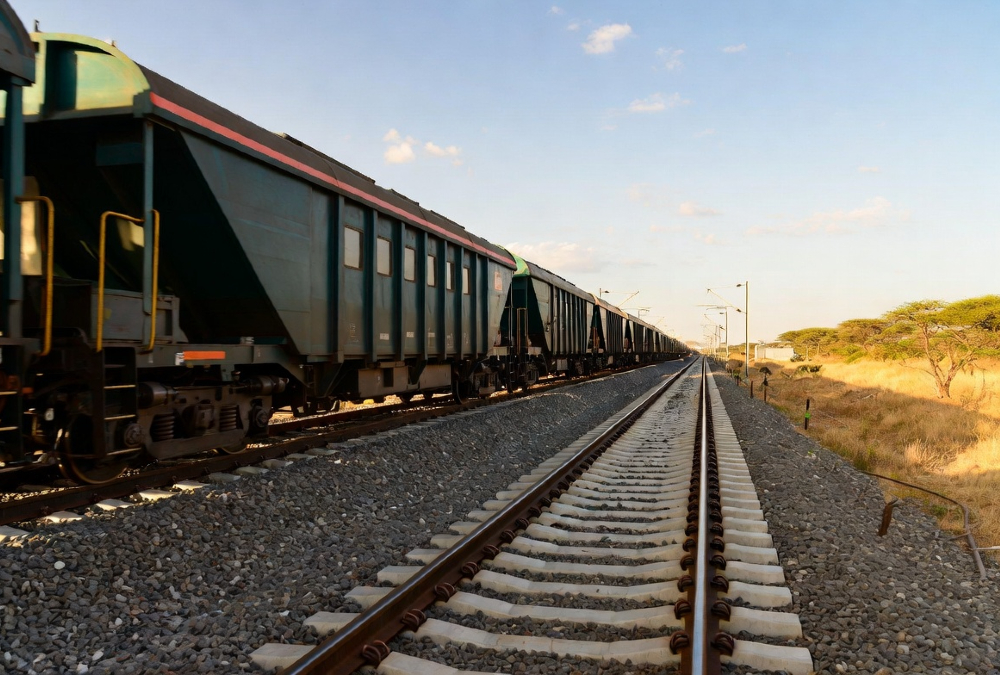
The agreement extends Tanzania’s standard gauge railway network to grant Uganda direct, reliable access to the Indian Ocean via Tanga Port. Yet its ambitions stretch well beyond the laying of tracks.
By explicitly incorporating customs harmonization, streamlined border procedures, and critical upgrades to Lake Victoria’s maritime links, the pact effectively creates a true multi-modal trade corridor – one in which goods, not just trains, move with genuine efficiency. The deal embodies a principle that development economists have long argued but that policymakers too often ignore: investment in hard infrastructure only delivers its full economic return when paired with the soft systems that make commerce work.
When Steel Meets Strategy: East Africa’s Blueprint for Integrated Trade
The market is already responding. Growing commercial demand for safety infrastructure – crash barriers, composite railway sleepers, and the logistical architecture of transnational freight – signals that these corridors are professionalizing.
Private capital does not follow political speeches; it follows credible, integrated systems. East Africa is beginning to build them.
The lesson for West Africa is both clear and urgent. The region has no shortage of transformative infrastructure ambitions.
The US$15.6 billion Abidjan-Lagos Corridor, one of the most consequential proposed trade arteries on the continent, and the 950-kilometer (590-mile) Ghana-Burkina Faso railway represent exactly the kind of bold, generational thinking that landlocked economies require to become genuinely land-linked growth engines. The potential is enormous.
But potential, without the institutional architecture to unlock it, has a troubling history of remaining precisely that.
West Africa’s Unfinished Business: Ambition Without Alignment
Physical assets become stranded when the invisible systems around them are left unreformed. A railway that terminates at a dysfunctional border crossing, or a port expansion undermined by inconsistent customs regimes, does not halve trade costs – it merely relocates the bottleneck.
West Africa’s landlocked nations – Burkina Faso, Mali, Niger – cannot afford that kind of expensive half-measure.
The onus falls squarely on ECOWAS. The bloc’s leaders must demonstrate the political resolve to dismantle the non-tariff barriers, bureaucratic redundancies, and regulatory misalignments that tracks and tarmac alone cannot break down.
Harmonizing trade facilitation frameworks across member states is not a technocratic nicety; it is the difference between infrastructure that transforms economies and infrastructure that rusts.
East Africa has shown that this integration is achievable when governments treat it as a first-order priority. West Africa’s answer to that challenge will define whether its ambitious corridors become engines of shared prosperity – or cautionary monuments to unrealized intent.
The Africa we all want – peaceful, prosperous, and integrated – will not be built by concrete alone. It will be built by the political courage to reform what cannot be seen.
Ziad Hamoui is the Co-Founder and Past President of the Borderless Alliance, a leading private-sector advocacy group promoting economic integration and removing trade and transport barriers in West Africa. With extensive experience in Ghana’s road transport, logistics, and shipping sectors, he currently serves as Executive Director of Tarzan Enterprise Ltd., a long-established family business. He is a former Co-Chair of the Africa Food Trade Coalition, Co-Founder of the Trade Facilitation Coalition for Ghana, and serves on multiple high-level advisory committees on trade, transport, agriculture, and security. A Chartered Fellow of the Chartered Institute of Logistics and Transport (CILT) Ghana, he is also a former member of its Governing Council.
