
Opinion
Smarter Trade Rules Could Transform Small-Scale Commerce in East Africa

By Danilo Desiderio
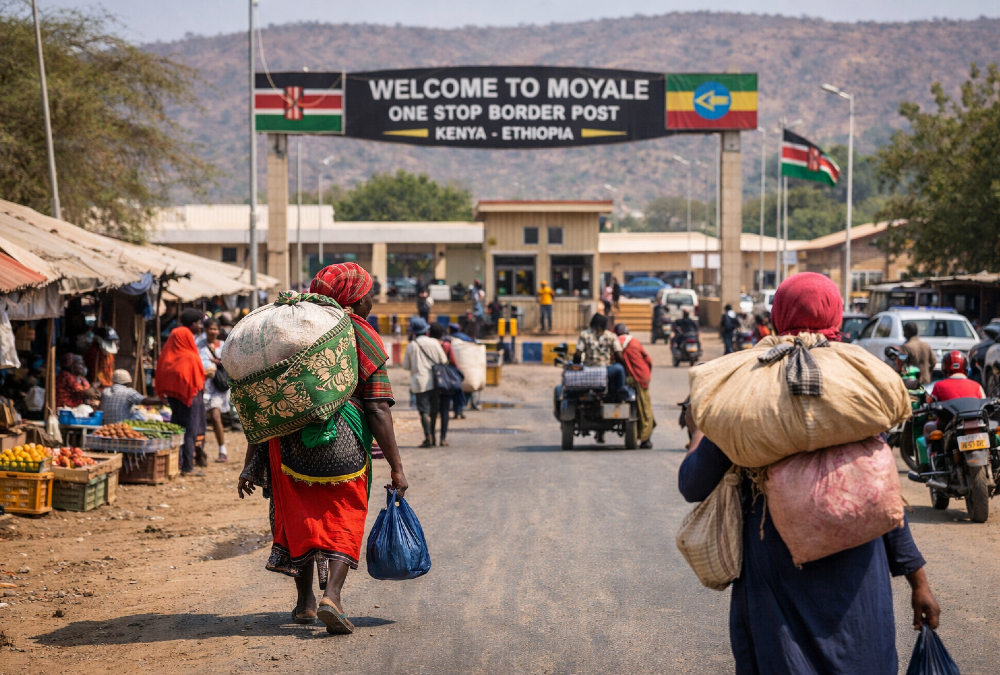
Trade is often framed in abstract terms – GDP growth, tariff schedules, and balance-of-payments statistics – but for millions of small-scale entrepreneurs in East Africa, it is a daily struggle. In a compelling new analysis co-authored with Ankur Huria for the World Bank, the focus shifts from theory to practice, exploring how policy design can reshape commerce along one of the region’s busiest borders: Moyale, straddling Kenya and Ethiopia.
The article makes a simple yet powerful point: trade facilitation is not just an economic exercise – it is a lifeline for families and communities. Traders navigating Moyale contend with cumbersome bureaucracy, restrictive regulations, and limited operational flexibility.
For them, crossing the border is not a transaction on a spreadsheet; it is a labor-intensive, high-stakes endeavor with immediate consequences for income and livelihood.
The Promise and Limits of the Simplified Trade Regime
At the center of the discussion is the Simplified Trade Regime (STR), a bilateral initiative launched by Kenya and Ethiopia to reduce administrative friction for small traders.
While the STR reflects a well-intentioned effort, its current design still imposes significant hurdles. Low value thresholds, limits on crossing frequency, and narrowly defined operating zones inadvertently constrain the very traders the program aims to empower.
The lesson is clear: even thoughtful regulations can create unintended barriers if they rely on theoretical assumptions rather than the lived experience of entrepreneurs. Policies that accommodate traders’ realities – higher value limits, flexible crossing schedules, and broader operating zones – could make formal trade not only more accessible but also more competitive than informal alternatives.
Centering the Human Dimension
A particularly compelling aspect of the analysis is its focus on the human dimension of cross-border trade. In Moyale, most small traders are women balancing business responsibilities with household duties, often relying on informal networks for transport, credit, and market intelligence.
Rigid procedures push traders back into informal channels, highlighting the need for predictable, user-friendly systems that empower rather than frustrate.
The article also discusses a six-month pilot initiative led by the trade ministries of both countries, testing higher value limits and streamlined procedures with real traders. The results provide practical insights that could refine the STR and shape broader regional approaches, demonstrating the potential of adaptive, evidence-based policy design.
Lessons Beyond Moyale
Beyond Moyale, the broader takeaway is clear: cross-border trade thrives when rules reflect how businesses actually operate, not just how policymakers imagine they should. For East African governments and development practitioners, this underscores the importance of inclusive, flexible policy frameworks capable of supporting both formalization and growth.
Smarter trade rules are more than bureaucratic conveniences – they are a path to better livelihoods. By centering the experiences of small-scale traders, policymakers can transform regional commerce into a more equitable and economically vibrant system.
Danilo Desiderio serves as the CEO of Desiderio Consultants Ltd in Nairobi, Kenya, specializing in African customs, trade, and transport policies. He is a customs and trade expert at the World Bank and a senior associate to the Horn Economic and Social Policy Institute (HESPI).
