
Opinion
Rethinking Remittances: Can the African Diaspora Drive Sustainable Development?

By Almaz Negash
In challenging times, particularly for those in Africa whose livelihoods depend on financial support, I often ask myself: What role can I, as a member of the diaspora, play? Is there anything I can do to alleviate the hardship?
These questions arise when the path forward seems uncertain. Yet, even amidst uncertainty, I see hope within the diaspora.
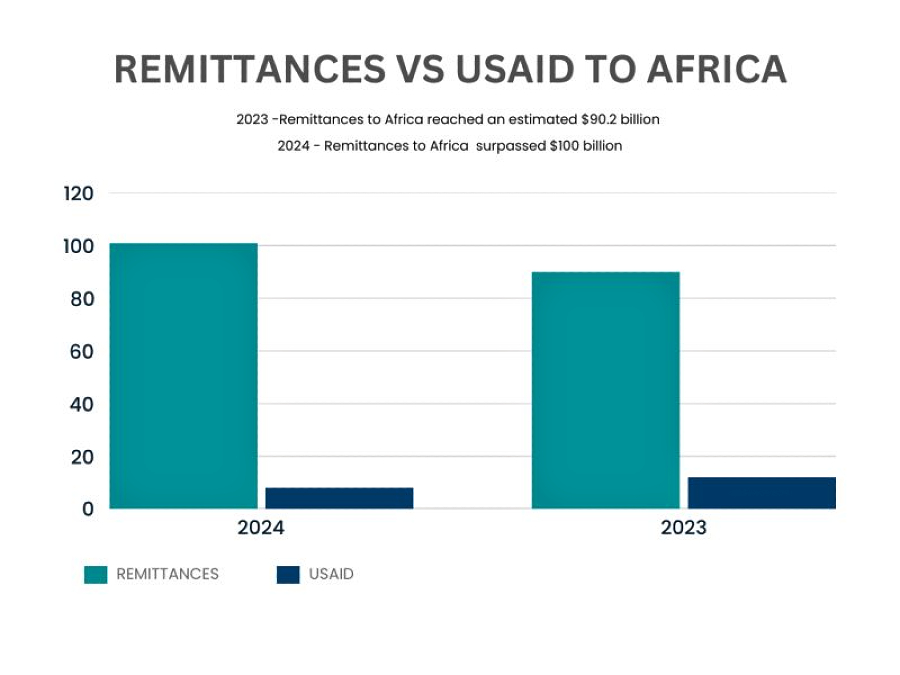
In 2024, Africans in the diaspora sent over US$100 billion back home – nearly ten times the US$12.1 billion in aid provided by USAID. These figures tell a compelling story: the diaspora is already Africa’s largest investor.
But how much of this capital is driving long-term development?
For decades, foreign aid has shaped Africa’s economic narrative. However, as remittances continue to outpace aid, we have both an opportunity and a responsibility to rethink how we remit.
How can we move beyond short-term financial support toward strategic investments that foster lasting prosperity?
While remittances play a vital role in supporting our families and communities, we must also explore ways to make our contributions more sustainable and transformative for Africa’s long-term growth.
The question is no longer: How do we secure more aid? Instead, we must ask: How do we free Africa from dependency on aid?
- How can we shift from consumption-driven remittances to wealth-building investments?
- What innovative models can turn diaspora contributions into engines of economic growth?
- How do we harness our collective power to fund infrastructure, entrepreneurship, and innovation?
- What lessons can we learn from global diaspora communities that have successfully transformed their home countries?
It is time to reimagine the role of the African diaspora—not just as senders of money, but as architects of Africa’s economic future.
Almaz Negash, CEO and Founder of the African Diaspora Network, is a speaker and entrepreneur with over 25 years of experience in international trade, business management, and social innovation. She has served on the UN Economic Commission for Africa and President Biden’s Advisory Council on African Diaspora Engagement. Recognized as one of Silicon Valley’s 100 Outstanding Women of Influence, she has made significant contributions to social innovation.
