
Opinion
Owusu on Africa: The demographics behind the euphoria in West Africa – youths at the crossroads

By Fidel Amakye Owusu
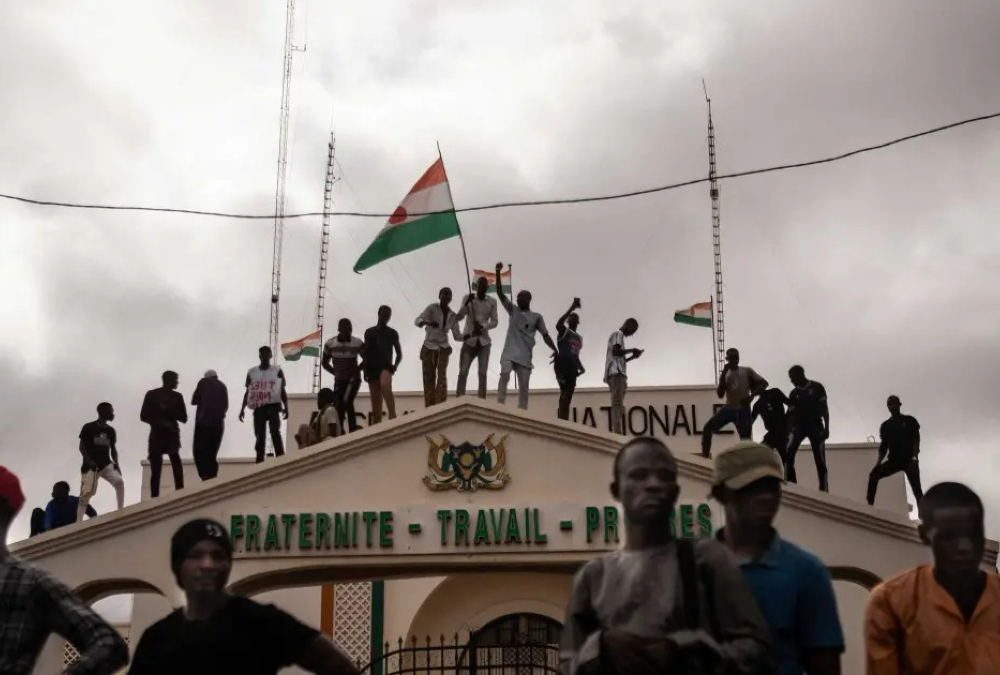
After the military coup in Niger on July 26, 2023, I was sought by various media platforms where I granted several interviews. One of the regularly asked questions were about the level of jubilation in the streets of Niamey and other cities in the country.
The coups in both Burkina Faso and Mali were greeted by similar jubilation and euphoria, as evidenced by the multitude of youths that poured onto the streets of their cities and towns.
Despite the threat issued by the regional Economic Community of West African States (ECOWAS) to use force to reverse the coup in Niger, the junta has an enormous amount of support – particularly from that country’s youth.
And so what?
While it is easy to point out the harmful and destructive policies by France in its’ former colonies as the reasons for this euphoria, there is another reason that has to do with the massive amount of support, the coup makers in these countries enjoy.
Majority of the population in the Sahel is below 30 years old. The region, just like many in Africa, is demographically one of the youngest in the world. Niger has been projected to have the largest population in the entire Sahelian region of Africa by 2100.
While such a young population in the Sahel has meant serious unemployment rates, it is its oblivion of past events that has made it more receptive to coup makers.
Yes, the majority of youths in the Sahel supporting these coups d’etat were not born when West Africa was dominated by coups in the 1970s and 80s. They have no idea what they are subscribing to. At the time they were born, the Cold War had ended and almost every West African state was undergoing some form of transition to democratic governments – at least. Consequently, most have not experienced military rule until now.
Read: Africa’s coups keep on coming
People are often excited by what they do not know.
Many of these youths have only heard or read about the days of the soldiers and are excited about a return to the “good old days”. Except for a couple of military leaders, most of these uniformed men failed the forebears of today’s youth.
For many of them waving and hoisting Russian flags, the Cold War and how it devastated Africa is “unknown” to them.
Interestingly, considering that today’s youth in the Sahel are relatively more informed than their forebears will ever dream of, the role of disinformation in influencing the things they get excited about is all worth examining.
If the youth knew and had experienced the 1970s and 80s, they would probably fight for a system that allows them to participate in shaping their future and that of the next generations. While they oppose the continuation of post-colonial exploitation, they need to know that neither the soldiers nor Russia is the solution to the problem. They – the youths – are!
Fidel Amakye Owusu is an International Relations and Security Analyst. He is an Associate at the Conflict Research Consortium for Africa and has previously hosted an International Affairs program with the Ghana Broadcasting Corporation (GBC). He is passionate about Diplomacy and realizing Africa’s global potential and how the continent should be viewed as part of the global collective.
