
Opinion
Non-Alignment Is Not Neutrality: Africa’s Strategic Autonomy in a Fracturing World

By Daki Nkanyane
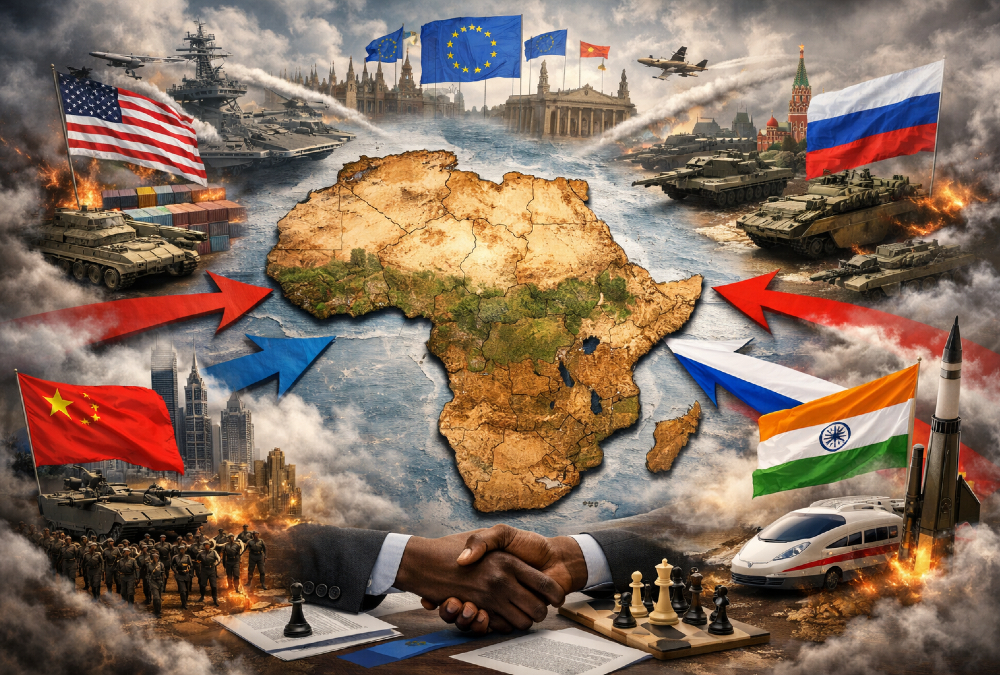
The world is sorting itself into camps again. Africa is being asked – sometimes diplomatically, sometimes with barely disguised coercion – to pick one.
Choose a bloc. Choose a patron. Choose an enemy. The instruments have changed – trade frameworks, security arrangements, technology ecosystems, energy compacts, voting alignments in multilateral forums – but the underlying logic is unchanged: align with us, and your future will be secured.
It is a seductive pitch. And it is one Africa should resist.
History has taught the continent one lesson with unusual consistency: when Africa chooses sides prematurely, it risks losing itself. The posture that outside observers routinely misread as diplomatic indecision is, in fact, something more considered.
It is a disciplined exercise of power.
Non-alignment, properly understood, is not neutrality. It is strategic autonomy – the capacity to engage multiple powers without being owned by any of them.
It is the ability to negotiate without submission, to cooperate without capture, and to defend sovereignty in an era when sovereignty is under relentless pressure. This is not idealism dressed in geopolitical language. It is survival strategy for a competitive century.
The World Is Not Offering Friendship – It Is Offering Interests
Africa must stop interpreting global attention as affection. The major powers approaching the continent today do not do so because they have discovered some belated fondness for it.
They do so because Africa occupies the intersection of future leverage: critical minerals, demographic scale, expanding consumer markets, trade corridors, votes in multilateral institutions, and geographic position.
This is not a moral judgment. It is a strategic fact – and one that should sharpen, not embarrass, Africa’s negotiators.
In such a world, alignment is never merely symbolic. It arrives with expectations attached. It carries dependency risks. It generates long-term consequences that outlast current leaders, current headlines, and current headlines’ authors.
The danger is not partnership. The danger is exclusive dependency. Non-alignment is the mechanism by which Africa prevents partnership from quietly becoming captivity.
Neutrality vs. Autonomy: A Distinction That Matters
The confusion between neutrality and non-alignment is not semantic. It has practical consequences.
Neutrality suggests passivity – standing aside, withholding engagement, avoiding the discomfort of decisions. Non-alignment is its opposite. It is active, deliberate positioning: engaging the world while preserving the institutional capacity to say no.
It means building options, diversifying relationships, and structuring agreements in ways that strengthen rather than erode Africa’s bargaining position.
Neutrality avoids conflict. Autonomy manages it.
Africa cannot sidestep the world’s rivalries – geography and resources make that impossible. But it can refuse to become the stage upon which those rivalries are performed at Africa’s expense. That refusal is not passivity. It is strategy.
The African Lesson: Dependence Always Has a Price
Africa has lived the costs of structural dependence in almost every register imaginable – extractive economies that exported raw materials and imported finished goods; imported governance systems that fit poorly and performed worse; external capital that generated enclave growth without domestic industrialization; debt structures calibrated to transfer rather than transform; security partnerships that outlasted both their necessity and their welcome.
The pattern is consistent enough to deserve a principle: dependence begins with relief and ends with constraint. Non-alignment is, at its core, a refusal to enter new versions of old dependence – even when they arrive dressed as opportunity, partnership, or historical solidarity.
Non-Alignment as Negotiating Leverage
A continent that aligns too quickly surrenders its leverage. If Africa becomes predictably attached to one bloc, its bargaining power declines in direct proportion: alternatives shrink, terms worsen, and strategic freedom narrows.
External powers, knowing the outcome, have less incentive to compete.
But a continent that maintains genuine non-alignment generates competition among potential partners. And competition, in international affairs as in markets, improves terms, increases respect, and expands options.
Non-alignment reframes Africa’s position from recipient of offers to designer of conditions – shifting the fundamental question from “Who will help us?” to “What will you build with us, and on what terms?”
This is how autonomy becomes material advantage rather than principled posturing.
The Multipolar Moment Is a Rare Opening
A multipolar world is genuinely risky. But it is also, for the strategically positioned, a genuine opportunity.
When a single dominant power sets the terms of global engagement, smaller actors have limited room to maneuver. When multiple powers compete for influence, regions that negotiate with discipline can extract substantially better arrangements.
This is Africa’s moment – and it will not last indefinitely.
But seizing it requires a particular kind of maturity: the ability to resist emotional alignment and ideological attachment in favor of structural analysis. Partners should be evaluated not by their rhetoric but by the architecture of what they offer.
What capabilities are being transferred? What value is being created locally? What ownership remains African? What dependencies are being embedded in the fine print? What sovereignty risks are encoded in clauses that seem routine?
Africa’s non-alignment must be technical, not sentimental.
The Hidden Pressure: Ideological Capture
Alignment is not exclusively economic or military. It operates, often more insidiously, at the level of ideas.
Major powers increasingly seek to shape how Africa thinks, votes, governs, educates, and narrates its own identity. Influence is now built through media ecosystems, narrative networks, scholarship programs, think tanks, and the architecture of technology platforms that determine whose framing of reality reaches African audiences first.
This is why non-alignment must encompass intellectual sovereignty. A continent that borrows its worldview wholesale will eventually find itself borrowing its decisions as well.
Africa must be capable of engaging global ideas, frameworks, and institutions without surrendering the analytical independence to assess them critically – and, when necessary, to reject them entirely.
Non-alignment means Africa thinking with its own mind. That capacity cannot be outsourced.
The Problem of Fragmentation
The most significant structural obstacle to effective non-alignment is internal: Africa’s fragmentation. When African nations negotiate separately with external powers, the continent becomes straightforward to divide.
Terms grow inconsistent across borders. Standards erode. External actors exploit inter-state competition. African nations undercut one another, and the collective leverage that might otherwise exist dissipates before it can be deployed.
Strategic autonomy cannot be achieved by isolated states working alone. It requires continental coordination on the principles that matter most: debt transparency and fiscal discipline; industrial-content requirements in major deals; resource-governance standards; boundaries on the terms of security arrangements; technology and data sovereignty; and investment rules designed to protect local value creation rather than simply attract capital on any available terms.
Africa does not need perfect unity – that is an unrealistic and unnecessary standard. It needs strategic coordination where it matters most, and the institutional discipline to hold that coordination together under external pressure.
What Mature Non-Alignment Actually Looks Like
A mature African non-alignment would have several defining features.
First, multiple partnerships with no single dependency: engagement with all major blocs, structured to ensure that no relationship acquires sufficient weight to become coercive.
Second, a set of non-negotiables embedded in every significant agreement – minimum thresholds of local value creation, capability transfer, and long-term sovereignty protection that no deal can fall below.
Third, continental bargaining on strategic sectors: minerals, major trade corridors, digital infrastructure, and the terms of energy transition financing are subjects where Africa should approach negotiations as a bloc rather than as a collection of competing supplicants.
Fourth, a principled refusal to be militarized as a proxy: security cooperation can be legitimate; becoming a theater for great-power rivalry is something categorically different.
Fifth, and perhaps most fundamentally: sustained investment in internal capacity. Non-alignment without the institutional, industrial, and intellectual infrastructure to back it is merely postponement – a delay before the inevitable concession. Non-alignment built on genuine capacity is power.
The Leadership Test
Non-alignment makes unusual demands on political leadership. It requires resisting pressure from powerful allies who regard hedging as insult.
It requires patience under sustained criticism from partners who prefer predictable clients to principled counterparts. It requires the discipline to walk away from agreements that look attractive in the short term but create structural weakness over time.
It requires leaders willing to think in decades rather than election cycles – a rarer quality than it should be.
Africa will not lose its sovereignty primarily through invasion. It will lose it through poorly negotiated agreements signed in moments of urgency, when the pressure to conclude a deal overwhelms the patience to improve its terms.
The leadership test is whether African heads of state and their negotiating teams can remain strategic when external powers become impatient.
A Final Reflection
Africa stands at a historical juncture where the world is actively trying to recruit it into competing rivalries. Its highest strategic response is not recruitment. It is autonomy.
Non-alignment is not refusal. It is selective, conditions-based engagement. It is Africa saying, with clarity and without apology: we will trade, but we will industrialize. We will partner, but we will retain sovereignty. We will cooperate, but we will not become a proxy. We will engage the world – and we will choose ourselves first.
This is Africa’s chance to master power without choosing sides in someone else’s contest.
And if Africa succeeds – if it builds the institutions, the coalitions, and the analytical discipline that genuine strategic autonomy requires – it will do more than protect its own future. It may offer a world increasingly defined by impatience and polarization something it has largely forgotten: a working model of strategic maturity.
Daki Nkanyane is a South African – born Pan-African thought leader, entrepreneur, keynote speaker, and strategist with over 25 years of experience driving innovation, identity, and development across Africa. He is the Founder & CEO of Interflex Capital, AfrisoftLive, QonnectedAfrica, and iThinkAfrica, where he focuses on youth empowerment, entrepreneurial ecosystems, and Africa’s economic and ideological renewal. His work spans technology, digital transformation, major international events, and strategic advisory for future-ready African institutions. As a contributing writer for The Habari Network, Daki covers African innovation, leadership, human capital, economics, entrepreneurship, and Africa–Caribbean relations through cultural, philosophical, and developmental perspectives. His mission is to help shape a new African consciousness rooted in pride, possibility, and self-determination for Africans on the continent and in the diaspora. He can also be reached on Facebook and X.
