
Alorh’s eye on the Motherland
Colonial routes and geopolitics of the Confederation of Sahel State

By Mary Alorh
The history of the newly formed Confederation of Sahel States cannot be discussed without acknowledging the impact of colonial rule on these nations.
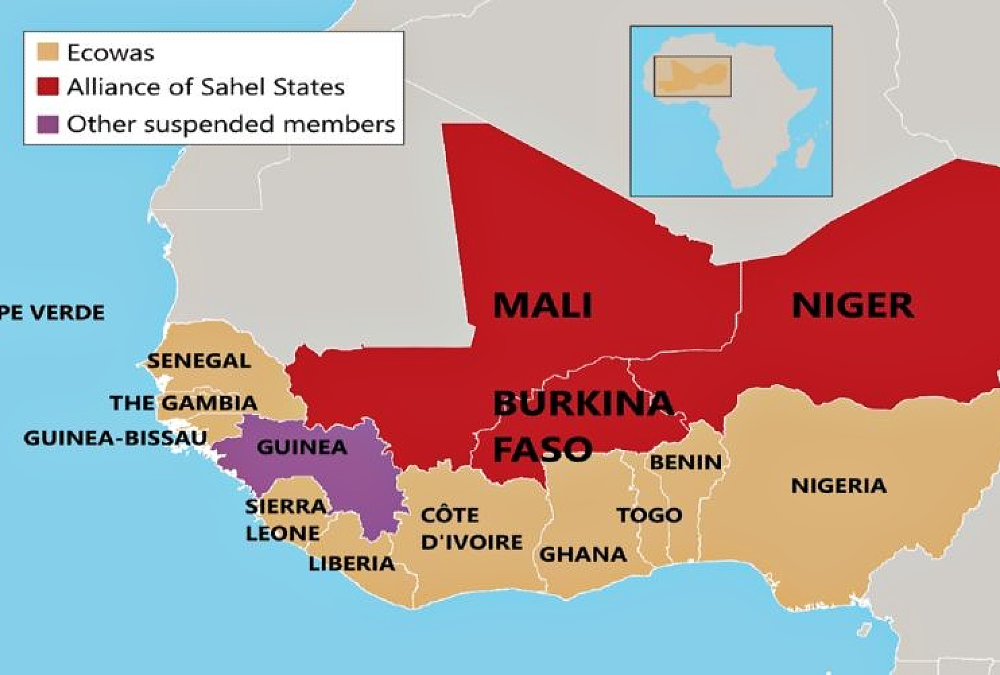
All the founding members of the Confederation of Sahel States were former French colonies. Due to their geographical locations, these countries are landlocked, meaning they do not have direct access to the sea.
During the colonial era, sea routes were a primary means of trade for Europeans, facilitating the transportation of goods from the colonies to Europe. Countries without access to the sea were less valuable to colonizers because they lacked this essential trade route. In contrast, coastal countries like Ghana and Senegal had strategic importance. They were fortified with castles and forts by the British, Portuguese, Danes, and French to protect their trading posts.
These trading hubs saw significant infrastructure development, including the construction of railway lines, schools, hospitals, and harbors. In Ghana, for instance, the colonial administration built the Korle Bu Teaching Hospital, Ridge Hospital, Achimota School, and the University of Ghana, benefiting both colonial interests and local populations.
In contrast, landlocked colonies were often neglected in terms of infrastructure development and were primarily used to provide labor for the more economically significant coastal colonies. As a result, these regions saw limited development.
In French colonies, coastal nations like Senegal and Côte d’Ivoire received more infrastructure and development to create environments that would make European officials feel comfortable. In Senegal, for example, the town of St. Louis was developed with this purpose in mind.
Even after gaining independence, former French colonies continued to experience economic constraints imposed by France, such as the use of the CFA franc and the requirement to hold their foreign reserves in the French central bank. Furthermore, the preferential treatment given to French companies in key sectors like mining has exacerbated the challenges faced by these already vulnerable landlocked countries. These conditions have prevented these countries from engaging in competitive bidding, leading to underdevelopment and poverty despite their rich resources.
The search for alternatives to these restrictive conditions has been a driving factor behind recent political changes, including coups. As a result, it is not surprising that these countries are moving away from old colonial influences and exploring new paths that they find more favorable.
In conclusion, the legacy of colonialism plays a significant role in the current situation of the Confederation of Sahel States. It is crucial for organizations like ECOWAS and the African Union to consider this history when developing policies to foster cooperation and unity. By working together, Africans can build a stronger, more unified future.
Mary Alorh is Director of Administration at DefSEC Analytics Africa Ltd., and is an expert in Gender, Youth, and Peace & Security initiatives in West Africa.
