
Opinion
Beyond the Quarry: How Southern Africa Is Rewriting the Critical Minerals Playbook
The region’s economic identity is undergoing a transformation – and the window for early movers is narrowing fast.

By Lance Chisue
For decades, Southern Africa’s relationship with the global economy followed a dispiriting script: dig up the earth, ship it raw, and watch the value-added profits accrue elsewhere. That model is now being dismantled – deliberately, aggressively, and with the backing of state policy across the Southern African Development Community (SADC).
The region’s minerals are no longer merely for export. They are the foundation of an industrial future being built in real time.
This is not aspirational rhetoric. It is policy with teeth.
Beneficiation: From Buzzword to Legal Mandate
Across South Africa, Zambia, Namibia, and Zimbabwe, governments have moved decisively to enforce value-addition requirements on critical minerals – among them lithium, cobalt, manganese, vanadium, and copper.
Export taxes on raw ores are rising. Licensing conditions increasingly demand local processing as a prerequisite for extraction rights.
The message to mining operators is unambiguous: process it here, or pay dearly for the privilege of not doing so.
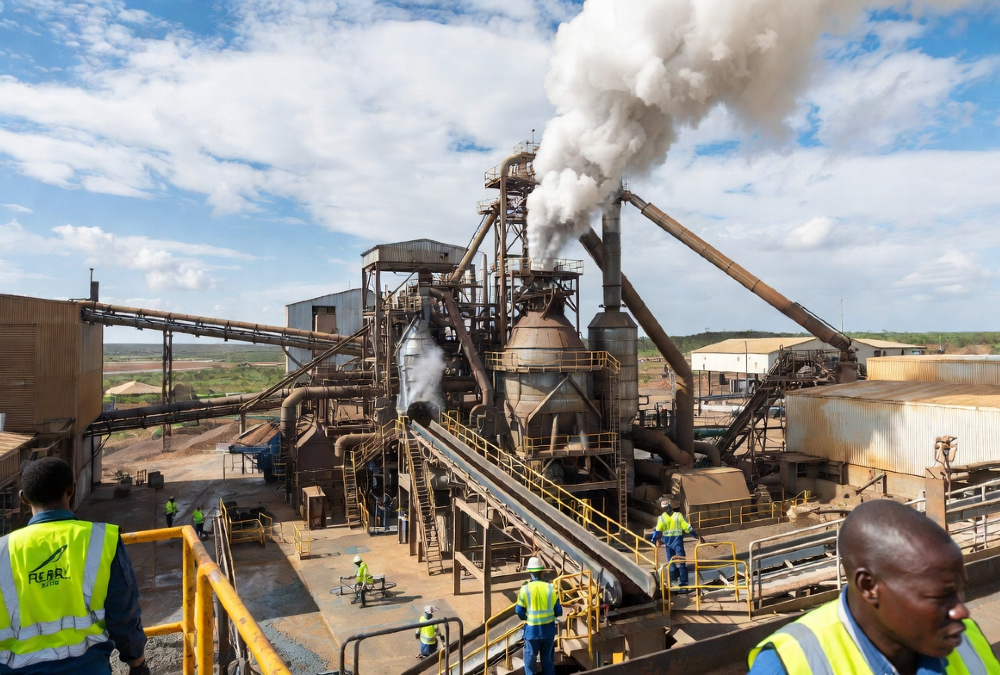
The Zambia-DR Congo Copperbelt offers perhaps the clearest illustration of this shift. Once synonymous with raw copper exports, the corridor is now attracting investment in local refining infrastructure designed to capture the full value chain of electric vehicle battery production.
Smelting facilities, chemical precursor plants, and refining operations – long considered too capital-intensive to justify onshore – are suddenly the most commercially rational option available.
The economics have changed because the rules have changed.
Energy as the Enabling Constraint
Local refining is energy-intensive by nature, which means the beneficiation mandate cannot be separated from Southern Africa’s energy transition. Here, the Southern African Power Pool (SAPP) – operating an increasingly functional wholesale electricity market – is proving to be a critical enabler.
Mines and refineries that once depended on aging, coal-heavy grid infrastructure are now driving demand for utility-scale battery storage and solar-to-hydrogen projects, in part to comply with tightening carbon budget regulations taking effect in 2026. Grid modernization, particularly the infrastructure required for cross-border power wheeling, has gone from a long-term ambition to an operational necessity.
In this sense, the mining sector is not merely a beneficiary of the renewable energy transition – it is one of its primary financiers and accelerants.
Agriculture’s Quiet Industrial Revolution
Beyond mining, Southern Africa’s agricultural sector is undergoing its own transformation, driven by the convergence of water scarcity, energy access, and food security imperatives. The water-energy nexus – long a theoretical concern in development economics – is now a practical engineering challenge demanding practical solutions.
Demand is rising sharply for solar-powered desalination systems, precision irrigation technologies, and cold-chain logistics capable of reducing post-harvest losses.
Industrial technology, once the exclusive province of manufacturing economies, is arriving in SADC’s agricultural hubs with increasing urgency. The region’s capacity to feed itself and to export high-value agricultural products depends on closing this infrastructure gap.
Corridors of Commerce, Modernized
Even the most sophisticated processing and agricultural capacity is worthless without the logistics infrastructure to move finished goods efficiently to global markets. On this front, too, Southern Africa is investing at a pace that would have seemed implausible a decade ago.
The Lobito, Walvis Bay, and Maputo transport corridors – long underutilized arteries connecting landlocked mineral regions to coastal ports – are being upgraded with automated rail systems, IoT-enabled cargo tracking, and AI-assisted border clearance protocols. The objective is not merely to move more goods, but to move higher-value goods faster, with the traceability that international buyers and regulators increasingly demand.
The Strategic Inflection Point
The cumulative effect of these shifts is a fundamental reorientation of Southern Africa’s position in global supply chains. The region is transitioning – unevenly, imperfectly, but unmistakably – from raw materials supplier to industrial gateway.
For investors, operators, and policymakers engaged in mining, energy, construction, and agriculture across SADC, the implications are significant. Competitive advantage in this environment belongs to those with deep fluency in local content requirements, beneficiation law, and SADC rules of origin – not merely those with access to capital or extraction expertise.
The world’s appetite for the critical minerals that power the clean energy transition is not in question. What is changing, irreversibly, is where the value from those minerals will be captured.
Southern Africa has served notice: it intends to keep more of it at home.
Lance Chisue is the Founder and CMO of Sales Connect Africa, a Pretoria-based firm specializing in helping manufacturers enter and grow in Southern African markets. He leverages sales expertise and strategic visibility to connect products with buyers, supporting manufacturers in navigating complex regional market dynamics and distribution channels. Lance is dedicated to empowering manufacturers to succeed by bridging gaps between products and customers in emerging African markets
