
Opinion
Beyond Borders: Africa’s Real Challenge Is the Myth of Division

By Dishant Shah
Africa’s greatest obstacle was never its colonial-era borders. It was the enduring belief in their permanence – the idea that African economies must look outward for validation, opportunity, and growth, rather than turning inward to one another.
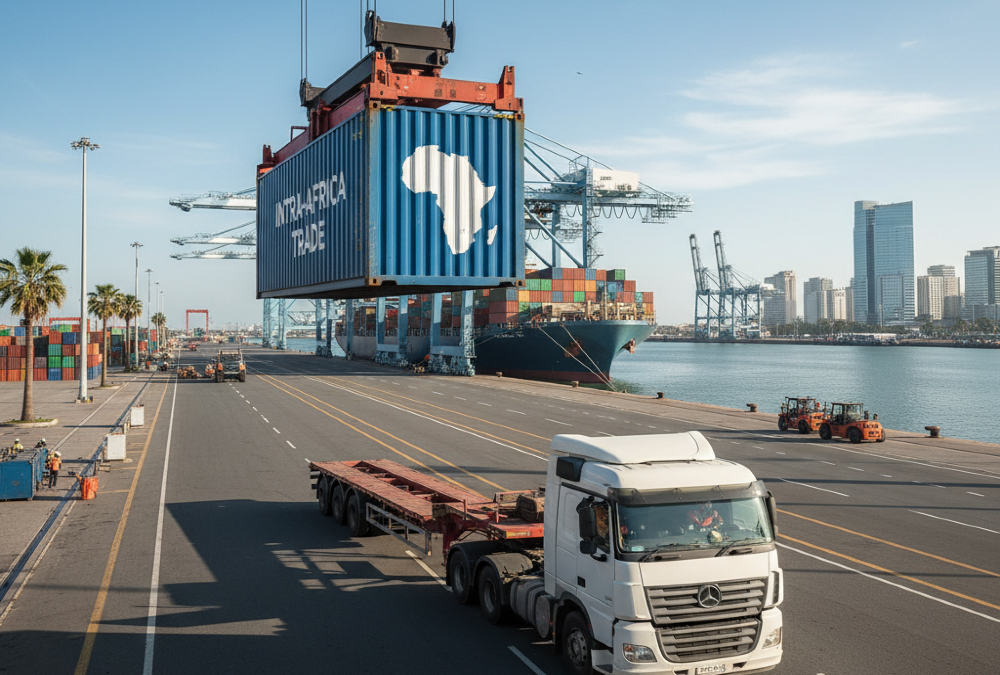
That belief is now being dismantled, not with fanfare, but with freight manifests, customs declarations, and cross-border digital payments. The African Continental Free Trade Area (AfCFTA) – the world’s largest free trade zone by number of participating countries – is quietly rewriting Africa’s economic and psychological script.
With 54 signatory nations, a combined population of 1.4 billion, and a collective GDP exceeding US$3.4 trillion, AfCFTA represents more than a trade pact. It’s the continent’s most ambitious act of self-reinvention since independence – a strategic pivot from fragmentation to fusion, from dependency to interdependence.
Here’s how AfCFTA is transforming Africa – not just on balance sheets, but in mindset:
- From Export Dependency to Intra-African Demand
For decades, African economies exported raw materials to Europe and Asia while importing finished goods – even from neighbors just a few hundred kilometers away. AfCFTA flips this equation. By progressively eliminating tariffs on 90 percent of goods, it incentivizes “Made in Africa, for Africa.” This isn’t just about trade; it’s about economic dignity. - From Siloed Economies to a Unified Marketplace
A Ghanaian agri-processor can now eye shelves in Nairobi, Dakar, or Kigali – not as a distant dream, but as a scalable business strategy. Harmonized rules of origin, simplified customs procedures, and digital trade corridors are turning fragmented national markets into a single continental consumer base. This is how local startups evolve into pan-African brands. - From Commodities to Value Chains
When goods, capital, and talent move freely across borders, raw materials cease to be endpoints – they become inputs. Cocoa beans become premium chocolate. Lithium becomes battery cells. Cotton becomes fashion. AfCFTA enables regional value chains that capture more of the global value-added ladder – on African soil, by African hands. - From Zero-Sum Politics to Win-Win Pragmatism
Perhaps most profoundly, AfCFTA marks a shift from ideological posturing to economic pragmatism. Leaders are discovering that shared prosperity trumps nationalist rivalry. Integration is no longer a rhetorical ideal – it’s a revenue-generating reality.
Challenges Remain – but So Does Momentum
Yes, non-tariff barriers persist. Customs inefficiencies, infrastructure deficits, and regulatory misalignment still slow progress.
Yet implementation is accelerating: the AfCFTA Secretariat has launched its Pan-African Payment and Settlement System (PAPSS), digitized customs pilots are underway in the AfCFTA Adjustment Fund corridors, and private-sector engagement is surging.
History shows that regions that trade together grow together. The European Union began with coal and steel; ASEAN with rice and rubber.
Africa is starting with vision – and scaling with resolve.
AfCFTA isn’t merely reducing trade costs. It’s eroding the mental borders that long kept Africans from seeing themselves as one market, one workforce, one economic destiny.
Africa is no longer waiting for external actors to assign it value. Through AfCFTA, it is building that value – deliberately, collectively, and continentally.
This isn’t just the future of African trade. It’s the rebirth of African identity.
Dishant Shah is a partner at Legion Exim, a company specializing in facilitating the export of high-quality engineering products directly sourced from manufacturers in India to Africa. His areas of expertise include new business development and business management.
