
Opinion
But What Does Africa Want?
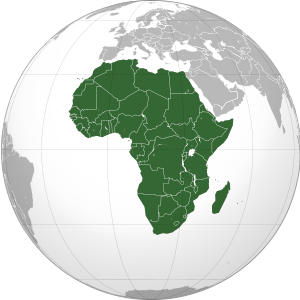
On the government side, our agencies were not coordinated – customs, trade, commerce and private sectors had no strategic direction. What one agency did usually contradicted another: Customs contradicted trade and there were misunderstandings with the private sector. This had to stop. In fact, the AGOA exercise not only highlighted our dire need for a plan; it generated a high level steering committee chaired by the Trade Minister to report to the Prime Minister. We agreed on the need to set up sector and area specific Technical Groups, and a full-fledged AGOA center to oversee the implementation of the National Strategy.
Benefiting Ethiopia and Beyond
Interestingly, our plan has already started to resonate with many countries in Africa – including Zambia and Kenya. Even more importantly, although the current strategy – running from January 1, 2014 to 2018 is U.S. specific and meant to exploit the AGOA opportunity – we also find that if we do this properly, the national AGOA strategy can help us with our national goals and also with improving competitiveness in the export sector.
The issues of finance and human resource are the same and affect the national and continental capacity. This is a huge development, and AGOA has been the impetus to reach for the next phase of Africa’s economic milestones.
The Ideal Partnership Between the U.S. & Africa
Switching to the other side of the Atlantic, I believe that the U.S. is missing out on Africa. Although the U.S. is still helping Africa via programs like AGOA and PEPFAR, the U.S. is still a long way from being a key trading partner for Africa. That place is currently occupied by China and other third countries, including fellow African countries and regional economic communities. The U.S. private sector – save for the big boys like GE and Walmart – is largely missing from Africa. Therefore, if I was to look into an ideal partnership between the U.S. and Africa, it would be one where economic relations were given as much significance as the political and geo-strategic ones. For instance, if you want to do business with the ExIm Bank, this kind of deal takes years to even come to fruition – while China’s state owned enterprises can easily pour in billions of dollars into Africa in a short period of time.
Not only is this a strategic miscalculation on America’s part; this, on its own severely limits the U.S. private sector from chasing for the opportunity in Africa. It also shows that the U.S. neither has a solid strategy for Africa when it comes to an economics agenda, nor a coordinated one at that.
Agencies like the US Trade Development Agency and ExIm Bank are already in place, and through these, the U.S. can build upon various emerging markets work since this is in plenty. These agencies could support USAID instead of what has happened in the past.
Fortunately, this is seemingly starting to change. It seems as though the Obama Administration’s ‘whole-of-government-approach’ is starting to bear fruit; but of course, things need to move much faster if the U.S. is going to achieve its true potential under AGOA or any other program.
But what does Africa want?
At this juncture, someone may ask: But what does Africa want from the U.S.? The answer is quite simple: Africa wants the U.S. to be a key partner in its economic and not only political transformation.
