
Opinion
Why Has Africa Lagged in Development Compared to the Rest of the World?

By Jean Claude Niyomugabo
Africa’s relative underdevelopment compared to other regions of the world is a complex issue rooted in a combination of historical, geographical, political, and environmental factors. While no single explanation fully captures this reality, understanding the interplay between these elements offers insight into the continent’s developmental challenges.
Spanning 54 countries, home to over 1.4 billion people, and rich in cultural, linguistic, and ecological diversity, Africa presents a vast and intricate landscape. This complexity makes it difficult to generalize about its development trajectory.
However, several key themes emerge when examining the persistent economic and social disparities.
The Role of Geography
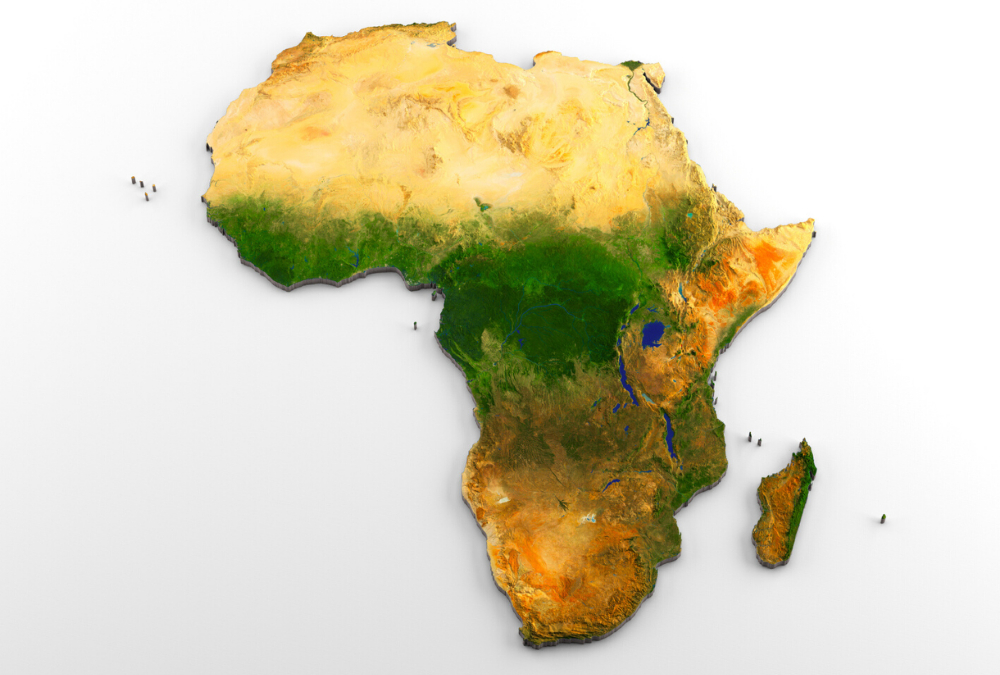
Geography has played a pivotal role in shaping Africa’s development. Covering nearly 30 million square kilometers, Africa is the second-largest continent, yet much of its terrain poses significant challenges.
Approximately 60 percent of its landmass lies within arid zones such as the Sahara and Kalahari Deserts, where agriculture is extremely limited. These harsh environments contribute to food insecurity and hinder sustainable settlement patterns.
In addition to desertification, Africa’s topography includes dense rainforests, rugged plateaus, and mountainous regions. The Congo Basin, one of the most biodiverse areas on Earth, is also among the most difficult to navigate.
Historically, such geographic barriers impeded transportation, trade, and communication, limiting the exchange of knowledge and innovation across regions.
Unlike Europe and Asia, where relatively flat landscapes facilitated early trade routes and cultural diffusion, Africa’s fragmented geography contributed to regional isolation. This isolation slowed the spread of technology and economic integration, making large-scale development more challenging.
Moreover, Africa’s vertical orientation – from tropical rainforests in the center to deserts in the north and south – leads to extreme climate variability. In regions like the Sahel, erratic rainfall patterns have long threatened agricultural productivity.
According to the World Bank (2019), approximately 75 percent of African agriculture depends on rainfall, leaving food production vulnerable to climate change and seasonal unpredictability.
The Legacy of Colonialism
Colonialism left an indelible mark on Africa’s development. From the late 19th century until the mid-20th century, European powers carved up the continent without regard for ethnic or cultural boundaries.
Arbitrary borders created by colonial rulers often grouped rival communities together, sowing the seeds of future conflict.
The exploitation of Africa’s natural resources was central to colonial rule. Countries like the Belgian Congo endured brutal extraction regimes that devastated local populations and ecosystems.
The focus on resource extraction rather than infrastructure development left newly independent nations with fragile economies and weak institutions.
Post-independence governments inherited systems designed not for self-sufficiency but for export-driven resource extraction. As a result, many African states struggled to build robust educational systems, governance structures, and industrial bases necessary for modern economic growth.
Agricultural and Technological Challenges
Agricultural development in Africa was further constrained by environmental and biological limitations. Unlike Europe and Asia, which had access to easily domesticated animals like horses, cows, and oxen, Africa lacked similar species for labor and transport.
This absence hindered mobility, farming efficiency, and urbanization.
While Africa developed indigenous crops such as millet, sorghum, and yams, the slower adoption of high-yield grains like wheat and barley limited agricultural productivity. Coupled with reliance on rain-fed farming, these challenges have made food production inconsistent and vulnerable to external shocks.
Resource Wealth and Economic Underperformance
Despite being rich in oil, minerals, and precious metals, Africa has struggled to convert its natural wealth into broad-based prosperity. The Democratic Republic of the Congo, for instance, holds some of the world’s largest deposits of cobalt and copper – resources essential for modern technologies – but continues to rank among the poorest nations globally.
Historically, extractive colonial economies prevented local value addition, forcing African nations to export raw materials at low prices and import finished goods at higher costs. Even today, only 20 percent of Africa’s mineral wealth is processed locally, according to the African Development Bank (2020).
This lack of industrial capacity limits job creation, technological advancement, and economic diversification.
Corruption, mismanagement, and external interference have also undermined efforts to equitably distribute resource revenues. Rather than fueling development, resource wealth has often fueled conflict, inequality, and elite capture.
Pathways Forward
Despite these deep-rooted challenges, Africa’s future is not predetermined. Strategic investments in infrastructure – especially in transportation, irrigation, and energy – are crucial for unlocking the continent’s potential.
Equally important is investing in education, digital literacy, and entrepreneurship to build a skilled workforce capable of driving innovation.
The rise of mobile technology and digital platforms is already transforming economies across Africa. Mobile banking, e-commerce, and remote learning are opening new avenues for financial inclusion, business expansion, and youth empowerment.
International partnerships, fair trade practices, and responsible investment can also play a supportive role in fostering sustainable development. By addressing historical injustices, leveraging technology, and promoting inclusive governance, Africa can chart a new course toward equitable growth.
Conclusion
Africa’s underdevelopment cannot be attributed to any one cause. It is the result of centuries of geographic constraints, colonial exploitation, limited agricultural tools, and uneven access to global markets.
Yet, these obstacles are not insurmountable.
With targeted policies, strategic investments, and strong leadership, Africa has the opportunity to overcome its past and realize its immense potential. The path forward will require collaboration, innovation, and a commitment to building resilient, inclusive societies across the continent.
Jean Claude Niyomugabo is an entrepreneur and digital communication specialist with a strong passion for Africa’s development. He is dedicated to harnessing the power of social media to drive positive change and enhance livelihoods. With diverse interests and a strategic approach to digital engagement, he strives to create meaningful impact through innovation and connectivity.
