
A Diaspora View of Africa
When will FDI trust Africa’s opportunity?

By Gregory Simpkins
Two decades ago, The Economist magazine labeled Africa as hopeless.
“At the start of the 19th century, Freetown (Sierra Leone) was remote and malarial, but also a place of hope. This settlement for destitute Africans from England and former slaves from the Americas had become the main base in West Africa for enforcing the British act that abolished the slave trade,” the magazine wrote. “At the start of the 21st century, Freetown symbolizes failure and despair. The capital of Sierra Leone may be less brutalized than some other parts of the country, but its people are nonetheless physically and psychologically scarred by years of warfare, and this week they had to watch as foreign aid workers were pulled out. The United Nations peacekeeping mission had degenerated into a shambles, calling into question the outside world’s readiness to help end the fighting not just in Sierra Leone but in any of Africa’s many dreadful wars. Indeed, since the difficulties of helping Sierra Leone seemed so intractable, and since Sierra Leone seemed to epitomize so much of the rest of Africa, it began to look as though the world might just give up on the entire continent.”
The magazine rightfully took a lot of heat for its Afro-pessimism. In fact, their declaration of scant prospects for the continent helped coin that term.
Changing narrative
Since then, analysts have lightened up considerably about the prospects for success on the continent. Nevertheless, no matter how many positive reports there have been in the intervening decades, those who make decisions on Foreign Direct Investment (FDI) are still reluctant to enter African markets, although the African Continental Free Trade Area (AfCFTA) and its promise of a connected continental market system operating under rules that greatly enhance commercial environments in African countries have stimulated greater hope for success in uniting opportunities with investment dollars. Still, the overall narrative about Africa as a lucrative site for investment continues to be more negative than positive despite abundant indications to the contrary.
The Prosper Africa initiative cites agriculture, infrastructure, banking, oil and gas, and telecommunications as the continent’s fastest growing sectors and adds health care as a prime sector for investors. With the world’s youngest and rapidly growing population, and rising household incomes and consumption, Africa, with its typically higher return on investment, would seem like a natural target for investment. In his book, Unlocking Africa’s Business Potential noted scholar Landry Signé says that by 2030, Africa will be home to nearly 1.7 billion people and an estimated US$6.7 trillion worth of consumer and business spending.
Signé estimates that by 2050, the region will have an estimated US$16.1 trillion of combined consumer and business spending, offering tremendous opportunities for Western companies in household consumption (estimated to be US$8 trillion by then) in sectors including food and beverages, housing, hospitality and recreation, healthcare, financial services, education, transport and consumer goods. There also will be, he says, huge opportunities in business-to-business spending.
Even though African economies have grown 5 percent a year on average in the past two decades, global institutional investors continue to watch and wait for their signal to enter African markets
Digital and mobile access is rapidly increasing, with what the Financial Times has labeled some of the fastest-growing mobile phone markets in the world. In sub-Saharan Africa alone, the publication estimates there were 477 million mobile subscribers in 2019, and by 2025, the region will host 614 million mobile phone subscribers and 475 million mobile internet users. The internet also is expected to contribute to at least 5–6 percent of Africa’s total gross domestic product (GDP) by 2025.
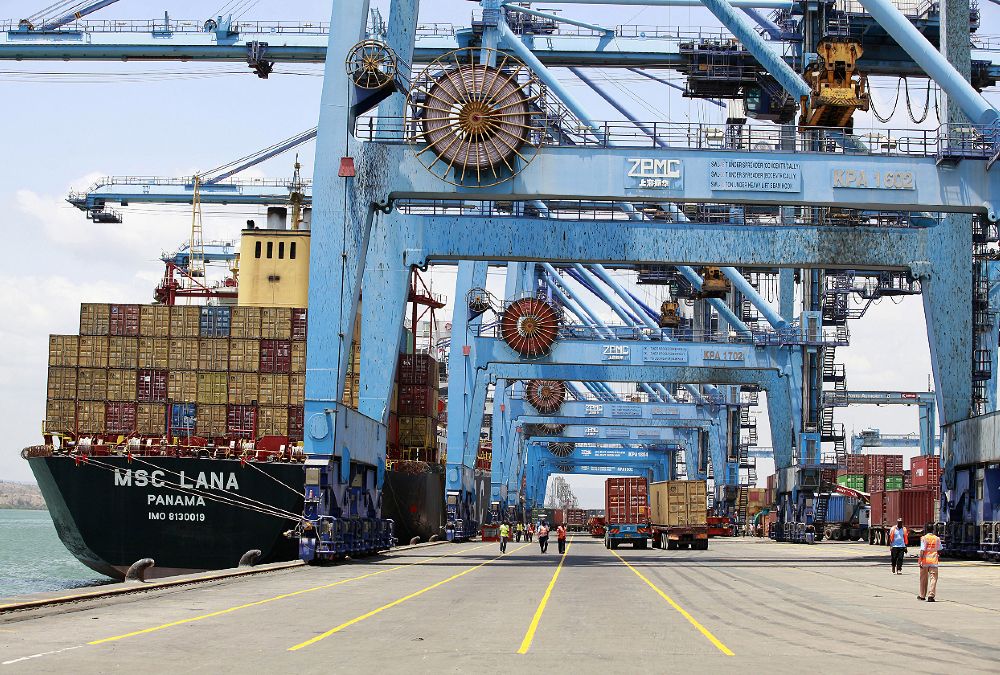
The Financial Times reports that the infrastructure gap also is being closed by African planning with international support, especially that related to international trade. Sub-regional distribution centers are emerging in a number of important port cities in Africa, including Durban and Cape Town in southern Africa, Mombasa in East Africa, Accra/Tema in West Africa and Tunis in North Africa. Goods are brought to these ports from around the world and then transshipped to other areas within the continent.
Africa, which missed out on the Industrial Revolution centuries ago, seems long overdue for mass industrialization to catch up.
Even though African economies have grown 5 percent a year on average in the past two decades, global institutional investors continue to watch and wait for their signal to enter African markets. According to Business Insider Africa, with the rapid slowdown in the U.S. and European economies and fear of recession continuing to loom large in 2023, investors must work harder to find returns.
“Over the past ten years, yields maxed out between 4 percent and 5 percent, and today more than US$10 trillion sits in negative yield bonds. Institutional capital has also remained concentrated in developed markets, as investors sought to optimize for near-term returns rather than sustainable returns through diversification,” the news service states. “The situation has resulted in unprecedented levels of liquidity: global assets under management have grown by more than 40 percent since 2015 and are expected to increase from the US$110 trillion last year to US$145 trillion by 2025. Investors seeking returns need to look to new markets and yet Africa – the demographically most dynamic region of the world – has been stubbornly ignored.”
Investor reluctance
So, with all the evidence accumulated to suggest investing in Africa, why are investors still so reluctant to apply funding? Undoubtedly, it is the continuing stream of negative tends and events as cited by economic analysts.
Business Insider Africa, in a 6 December 2022 report, cited major concerns surrounding the heavy burden of debt servicing, the instability created by election cycles, geopolitics and war, as well as the lingering threat of food insecurity caused by conflict and adverse weather conditions. The news service stated that Africa’s economic recovery had been disrupted in 2022 by a range of internal and external shocks – including adverse weather conditions, rapidly rising inflation rates, higher borrowing costs, and softer demand in major export markets. Some of these factors, the news service states, will subdue growth prospects in the year ahead, but the region is expected to hold steady rather than suffer a major downturn in economic growth.
This same news service a year ago touted 10 African countries as leading economic performers deserving of attention: Nigeria, Egypt, South Africa, Algeria, Morocco, Kenya, Ethiopia, Ghana, Angola and Cote d’Ivoire. Despite the troubling events cited over the past year, Business Insider Africa remained high on the prospects for Senegal. Niger, Rwanda, the Democratic Republic of the Congo, Cote d’Ivoire, Benin and Togo by year’s end.
Even in European countries, which operated as colonial powers in Africa for nearly a century, there is reluctance to go beyond current levels of investment or rhetoric about enhanced investment in Africa. In the United States, businesses and investors constantly seek “low-hanging fruit” in their investment strategies and remain seriously risk averse despite positive prospects in at least some areas of the continent. Meanwhile, China has been busily entering African markets for some time now.
The Financial Times reported last year that China has been Africa’s largest trading partner for 12 years, even though bilateral trade declined by 10.5 percent to US$187 billion in 2019. In November 2021, at the Forum on China-Africa Cooperation (FOCAC) in Dakar, Senegal, China committed US$10 billion in private FDI to Africa over the next 3 years. With fewer regulatory constraints in China, such investment is much easier to apply.
“Currently, 90 percent of Chinese companies that invest in Africa are private companies,” says Dr. Shirley Ze Yu, director of the London School of Economics’ China-Africa Initiative. “Private companies will take on different investment characteristics from the state-owned companies. Rather than investing in energy, transportation, and infrastructure, they will invest in the sectors that are suitable for an Africa middle class, including agriculture, food processing, entertainment, real estate and finance.”
At the African Leaders’ Summit in Washington last December, the Biden Administration pledged to shepherd in a new economic relationship with African countries. The government’s Prosper Africa initiative, through its 17 agency participants, backs up that pledge, as does MiDA Advisors, a collaboration of the National Association of Securities Professionals and the U.S. Agency for International Development. That promise has been echoed by purely private sector organizations such as the Corporate Council on Africa and the U.S. Chamber of Commerce.
It is not too late to repair the damaged U.S. commercial relationship with Africans, many of whom feel disappointed by what they consider a lack of engagement by the United States. To help unlock the doors of U.S. investment in Africa, there must be a concerted effort within all media covering the continent to increase the legitimately positive coverage of commercial opportunities and partnerships in Africa – not to paint an unrealistic scene, but also not to focus unduly on the kind of news that discourages business people and investors from engaging in a genuine assessment of what commercial involvement in Africa actually offers.
Gregory Simpkins, a longtime specialist in African policy development, is the Principal of 21st Century Solutions. He consults with organizations on African policy issues generally, especially in relating to the U.S. Government. He also serves as Managing Director for the Morganthau Stirling consulting firm, where he oversees program development and implementation. He further acts as a consultant to the African Merchants Association, where he advises the Association in its efforts to stimulate an increase in trade between several hundred African Diaspora small and medium enterprises and their African partners.
