
Editorial
The Test of Political Strength and Maturity
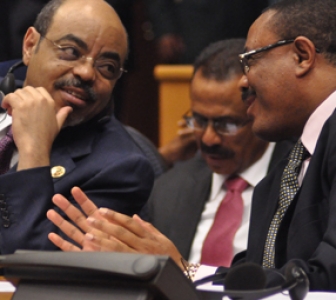
Nothing tests a political entity’s strength and maturity like transitioning from one leader to another. Internal strife or disaster may test a community or continent: but the passing of leadership from a generation, a general, a gender or a gentleman is what separates the men from the boys. That is the central reason for why countries such as Britain and the U.S. stand apart from Russia and Venezuela. It is not just the economics [stupid] for this facet is usually trumped by politics. The ones who control the piper control the dance.
On the other hand, although we could rely on political systems, political power usually rests in the hands of one man [or woman]. In a testament to how fortunate some countries are, the U.S. was able to navigate the political storms that came with George W. Bush. After launching a justifiable war against those who attacked his country, the then U.S. president went on to squander the world’s goodwill towards America by invading Iraq, declaring certain nations ‘The Axis of Evil’ and even leading his fellow ‘compassionate conservatives’ into what some have termed ‘social darwinism!’
All that notwithstanding, America’s political system – with its self healing or corrective ability every four years [in electing their president], every six years [in electing their senators] and every two years [in electing their representatives] – seems to have displayed remarkable staying power, and, once again, stands to elect their chief executive this November.
Seminally, many African and Caribbean nations do not have this predictable privilege. Most black people do not know what it means to have the opportunity or even the luxury of choosing The One Who Will Lead Them. This may be a new phenomenon for them considering many African leadership positions were hereditary. Nonetheless, what is important here is the essence of political transition. To the vast majority of the Africans, while the battle for the throne was either decided in the wrestling ring or through prowess at war, transition in modern times has not been as black and white. Their own leaders cannot amicably agree on who will be the decider and the one who aportions the goods in society.
Long story short: The Black World’s political transitions leave a lot to be desired. Yes – a few countries and nations have been really mature about their passing the baton. Jamaica stands apart as an example of such discipline. Botswana is another. South Africa has been fortunate since de Klerk ‘allowed’ Mandela in 1994 to lead Mbeki into ‘losing’ to Zuma. But across Africa, there are just too many strongmen. Angola, Uganda and even Rwanda have strongmen in dos Santos, Museveni and Kagame respectively. And a few days ago, Ethiopia’s premier, Meles Zenawi mysteriously passed away in a European hospital ‘robbing’ Africa of one of it’s strongest strongmen.
To this incident, The Economist made an important comment: ‘Mr. Meles’ death exposes the dangers of building a state around one man, no matter how competent.’ Now, juxtapose this with what the same newspaper said about Ghana’s president, John Atta Mills who died less than a month ago: African leaders dying in office is often a sign of rottenness, they opined. The exception to this rule, they argued, was that on July 24th 2012, within hours of the sudden end from cancer of Ghana’s president, his deputy, John Mahama, was sworn in with impressive constitutional calmness to replace him. It seems as though Ghana, according to this same paper, was spared the ravages that Ethiopia may have to bear namely years of misrule capped only by a hushed-up death.
Ethiopia does not seem to be as fortunate. It is apparent that the brainy Meles Zenawi brought his nation back from the doldrums in 1991 by doing the important stuff whilst building a cult of ‘yes’ men around himself. There’s danger to all this – and history shows that the throne has to have an occupant. Thus, while political processes continue behind closed doors, Hailemariam Desalegn, acting prime minister, is STILL expected to be formally sworn in at an emergency parliament session at “any time.” Ethiopians and the world await word on when Mr. Hailemariam will be formally sworn in. Parliament was set to install him last Thursday but the session was canceled.
Under the circumstances, good ole boring [constitutional] predictability is prefered. If this Ethiop from a minority tribe is ‘allowed’ to be leader of his country, he will hold this position until 2015 when the next election is due. There should be a big sigh of relief for Africa as a whole if and when this happens with the dictum that if Ethiopia can do it, so can Uganda [whose president has been in power since 1986] and [heaven help us] Zimbabwe. After all, Malawi was able to move past a dead ruler. Interestingly, for Africa in 2012, death in the throne seems to be the saving grace for the people on the continent! What a conundrum!
Dennis Matanda,
Editor – [email protected]
Editor’s Note: For the first edition of this editorial, we erred in referring to Zambia’s dead ruler instead of Malawi. We apologize for this factual error and have, since then, redacted accordingly.
